

3 hrs ago
Pune Man’s Rs 4 Crore Corpus Challenges FIRE Target
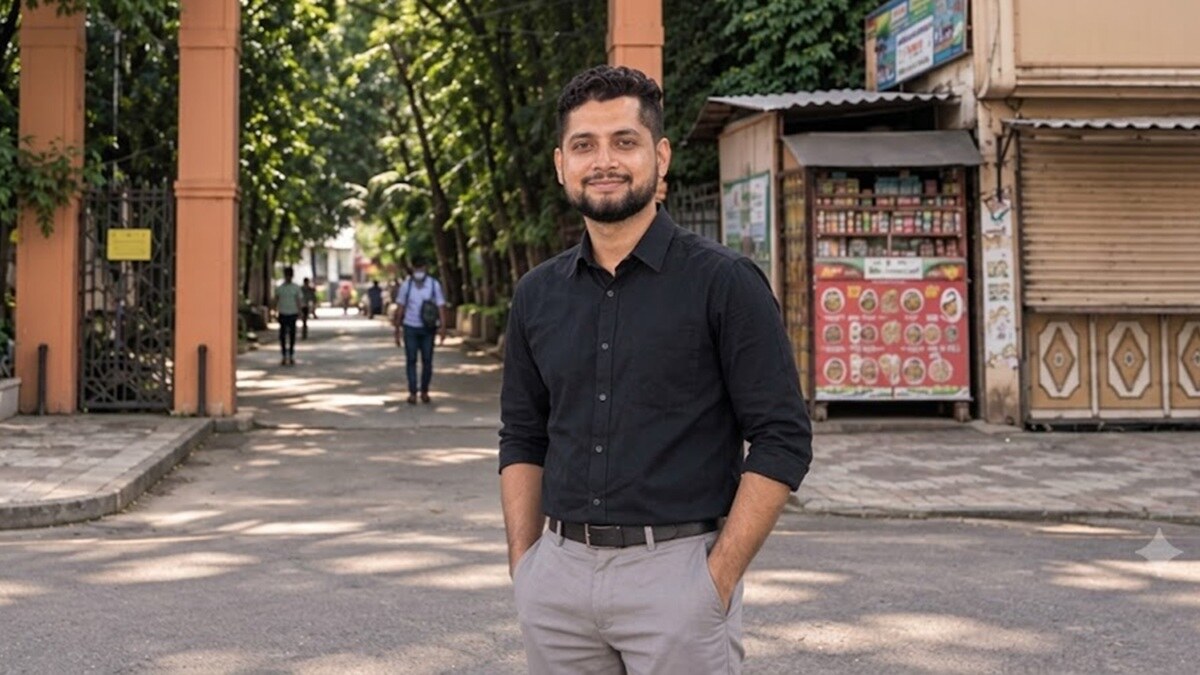
Shubh Patil is a 35-year-old technology professional from Pune.
He has saved and invested about Rs 4 crore.
His salary grew from Rs 3.9 lakh a year to around Rs 40 lakh.
He has no loans and nobody depends on his income.
He wants to retire early and live in a smaller city.
He plans to spend about Rs 12 lakh each year after retiring.
The article says his current money might already be enough for that lifestyle if his investments perform reasonably.
However, he wants Rs 10 crore, which may require unusually high investment returns or much larger savings.

Shubh Patil, 35, built roughly Rs 4 crore over 13 years through rising technology salaries, savings and investments.
His annual package increased from Rs 3.9 lakh in 2013 to about Rs 40 lakh at Salesforce in 2026.
He has no debt or dependents and plans to leave salaried work after reaching Rs 10 crore within five years.
Based on planned annual spending of Rs 12 lakh, his existing corpus represents a 3% withdrawal rate and may already support his target lifestyle.
Reaching Rs 10 crore by 2031 would require roughly 18% annual returns, while a 12% return could produce about Rs 7.6 crore.
- Who
- Shubh Patil, a 35-year-old technology professional from Pune.
- What
- He has accumulated roughly Rs 4 crore and is pursuing financial independence and early retirement.
- Where
- He grew up in Satara, studied and worked in Pune, and has also worked in Hyderabad; he plans to retire in a smaller city.
- When
- He began working and saving in 2013, earns about Rs 40 lakh annually in 2026, and aims to reach Rs 10 crore within five years.
- Why
- He wants to leave salaried employment, travel, and live simply on about Rs 12 lakh a year without depending on a job.
Retire Nearer to Current Corpus
Build a Larger Retirement Buffer
Whether Rs 10 crore is necessary
Retire Nearer to Current Corpus
With Rs 4 crore and planned annual spending of Rs 12 lakh, a 3% withdrawal rate suggests he may already be close to financial independence.
Build a Larger Retirement Buffer
Because retirement could begin at 40 and last 50 years or more, healthcare inflation, emergencies and the absence of dependents or a spouse as a fallback justify a larger safety margin.
Reaching the five-year target
Retire Nearer to Current Corpus
The Rs 10 crore goal may be unnecessarily demanding because the article estimates that Rs 7 crore to Rs 8 crore could already exceed his spending needs.
Build a Larger Retirement Buffer
The target provides additional protection against uncertain market returns, changing healthcare costs and a very long retirement.
Portfolio allocation
Retire Nearer to Current Corpus
Moving idle dollar cash into US-based ETFs and reducing concentration could improve how his existing wealth is deployed.
Build a Larger Retirement Buffer
Keeping substantial exposure to US technology assets may support higher growth, although it also links his investments and employment to the same sector.
Key facts
- Current corpus
- Approximately Rs 4 crore, with no liabilities.
- Salary progression
- Rs 3.9 lakh in 2013 to about Rs 40 lakh in 2026.
- Annual spending
- About Rs 14.4 lakh currently, including Rs 6 lakh for travel and hobbies.
- Planned retirement spending
- Approximately Rs 12 lakh per year after moving to a Tier-2 city.
- Monthly investing
- Rs 70,000 through SIPs, divided among index, small-cap, flexi-cap and multi-cap funds.
- Largest asset holdings
- Indian mutual funds worth Rs 1.2 crore and US technology RSUs worth about Rs 1 crore.
- Five-year projection
- At a 12% return, his corpus could reach about Rs 7.6 crore; Rs 10 crore would require roughly 18% annual returns with current contributions.
Quotes
Shubh Patil
Pune-based technology professional featured in the FIRE journey
“I know that reaching Rs 10 crore in five years is an ambitious target. It will depend on my savings, investment returns and market conditions. I do not want to depend only on high returns.”
 financialexpress.com
“Salary growth was one of the biggest reasons behind my financial progress. But earning more is only one part of the story. Saving and investing that money was equally important.”
financialexpress.com
Sources
Related news
Engineer Builds Rs 1.03 Crore While Supporting Two Homes

How Consistent Investing Could Take ₹25,000 to ₹1 Crore

From Rs 2,500 to Rs 70,000: Pune Investor’s Wealth Lessons

Can Rs 3 Crore Safely Fund Retirement at Age 40?

How a Rs 2,500 Salary Became Rs 6 Crore

Delhi Saver Targets Rs 3 Crore Without Stocks

Jacob Coxon’s Resignation Reignites Debate Over AI’s Existential Risks
Mustafa Suleyman Warns of AI Becoming a New Silicon Species

King Charles Urges AI Leaders to Keep Humanity in Control

Microsoft AI Chief Warns Claude Could Threaten Humanity
