2 weeks ago
Delhi Police defends CJP protest force, denies nail-fitted lathis

A group called the Cockroach Janta Party held a big protest in Delhi in July.
The protesters wanted the Education Minister, Dharmendra Pradhan, to quit because they said there were problems in the education system.
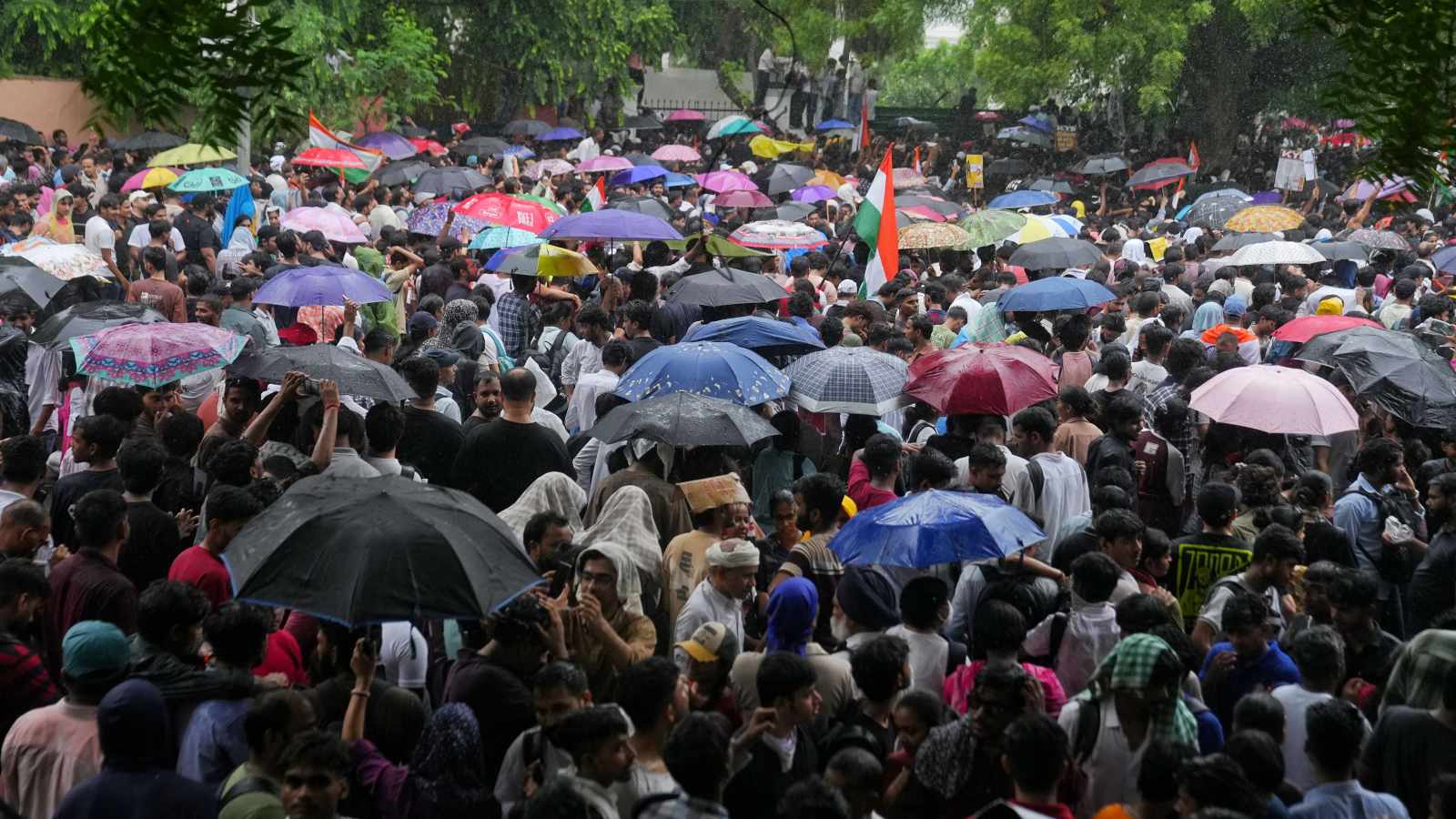
On 20 July, thousands of protesters tried to march to Parliament.
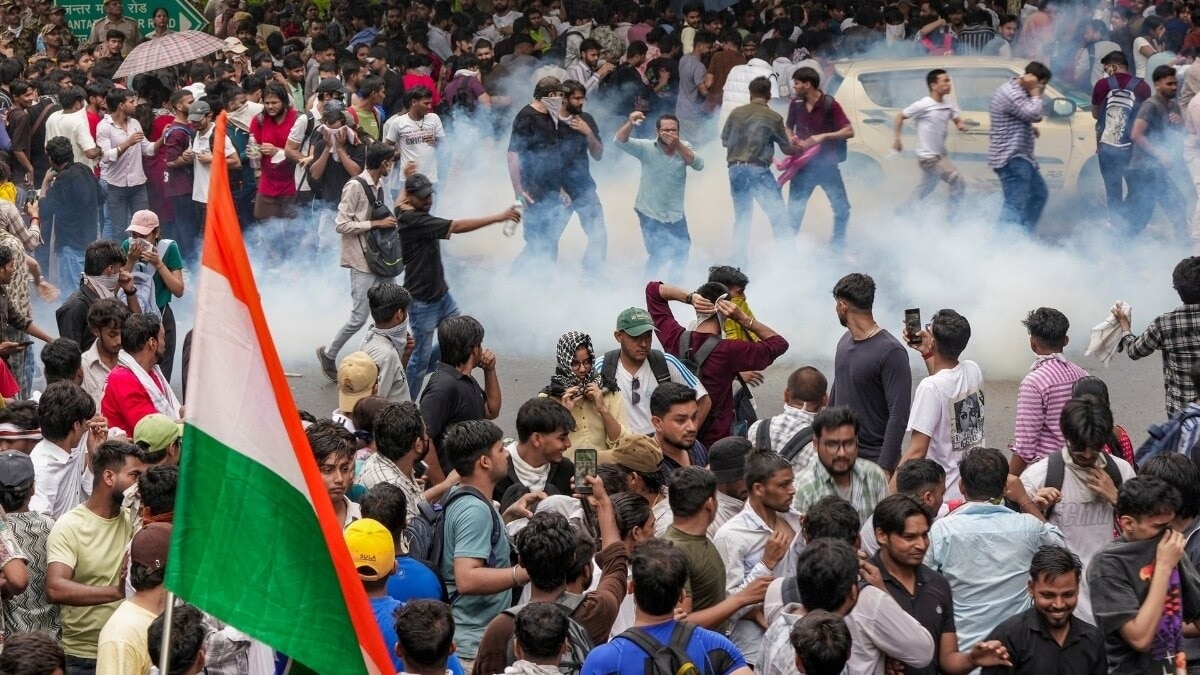
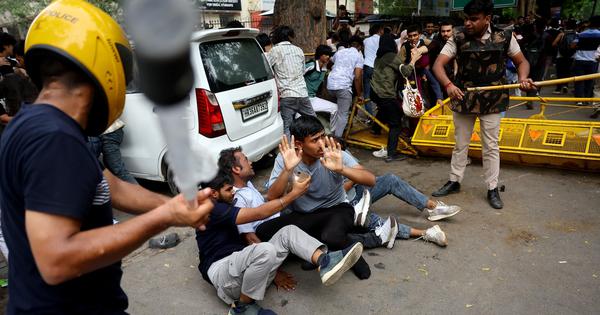
Police stopped them, using tear gas and sticks, and many people got hurt on both sides.
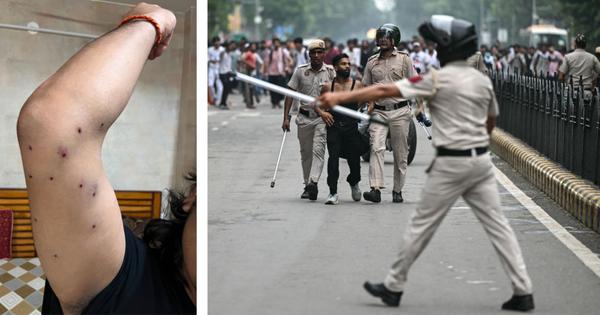
Some protesters said the police were too rough and even used sticks with nails in them.
The police told the Supreme Court, India's highest court, that they were very careful and only used as much force as needed.
They said the protesters broke through several layers of barricades, which is why they had to step in.
About 5,000 police officers faced more than 30,000 protesters, and more than 240 officers and around 200 protesters were injured.
The police also said a face-scanning system only flags people who already have criminal records.
The court is now checking whether the police acted fairly.

Delhi Police told the Supreme Court it exercised "maximum restraint" and used only "minimum required force" against CJP protesters during the 20 July "Chalo Sansad" march.
The police rejected claims that personnel used nail-fitted lathis, saying the allegation rested on a "solitary video" of a stick with a national flag and that no medico-legal certificate documented nail injuries.
Roughly 5,000 police personnel were deployed against more than 30,000 protesters spread over three kilometres; more than 240 police/security personnel and about 200 protesters were injured.
Facial recognition technology flagged 2,873 people linked to criminal records between 20 and 26 July, including 92 named in over 10 criminal cases and 47 history-sheeters.
A Rapid Action Force report recorded at Parliament Street police station said anti-riot guns were fired twice on a DCP-rank officer's instructions, despite Delhi Police denying pellet guns were used.
- Who
- The Delhi Police, which filed an affidavit before the Supreme Court defending its handling of a protest by the Cockroach Janta Party (CJP), whose members demanded Education Minister Dharmendra Pradhan's resignation.
- What
- Delhi Police defended its use of force during the CJP's 20 July "Chalo Sansad" march, denying excessive force and the use of nail-fitted lathis, while addressing its facial recognition system.
- Where
- Jantar Mantar and the Parliament Street police station in New Delhi, as protesters attempted to march towards Parliament.
- When
- The march took place on 20 July; the police filed their affidavit nearly a month later on a Tuesday, with the RAF's report recorded on 22 July.
- Why
- Protesters were demanding accountability over alleged irregularities in the education system and the resignation of Education Minister Dharmendra Pradhan; petitions alleged police used excessive force.
Protesters and Petitioners
Delhi Police
Use of force during 'Chalo Sansad' march
Protesters and Petitioners
Police used excessive force — lathicharge, tear gas and alleged pellet guns — against protesters demanding the Education Minister's resignation.
Delhi Police
Personnel exercised "maximum restraint" and used only "minimum required force" after protesters became violent and breached multiple layers of barricading.
Nail-fitted lathis
Protesters and Petitioners
Footage shows police used nail-fitted lathis, causing injuries to protesters.
Delhi Police
The claim rests on a solitary video showing a stick with a national flag, possibly carried by a protester; no medico-legal certificate documented nail injuries.
Use of anti-riot guns
Protesters and Petitioners
RAF personnel fired anti-riot guns twice on the instructions of a DCP-rank officer, as recorded in an official diary entry.
Delhi Police
Delhi Police denied that pellet guns were used against demonstrators.
Key facts
- Incident
- "Chalo Sansad" march by CJP protesters on 20 July
- Location
- Jantar Mantar, New Delhi
- Protest demand
- Resignation of Education Minister Dharmendra Pradhan
- Police deployment
- About 5,000 personnel for more than 30,000 protesters
- Injuries
- More than 240 police/security personnel and about 200 protesters
- Facial recognition flags
- 2,873 people with prior criminal records flagged (20–26 July)
- RAF report
- Anti-riot guns fired twice on DCP's instructions, per 22 July diary entry
- Legal proceeding
- Petitions before the Supreme Court alleging excessive police force
Quotes
Deputy Commissioner of Police Sachin Sharma
Head of Delhi Police’s New Delhi district
“"The footage cited in support of the allegation was based on only a solitary video."”
 livemint.com
Sources
Related news

Delhi Police Deny Excessive Force During CJP's NEET Protest March
Delhi Police tells Supreme Court plainclothes cops were crowd control
Delhi Police denies excesses in July 20 protest clashes
Ten persons injured by pellets during Delhi Parliament march: RTI

Rahul Gandhi Sit-In Leads to FIR Over Pellet Injuries
Rijiju denies serious injuries in student protests amid contradictory evidence

Two Years After RG Kar Doctor's Rape-Murder, Case Remains Unresolved

ED widens Chhattisgarh probes with two arrests and searches

Delhi High Court Orders Madhya Pradesh to Pay Advocate Dues

Haryana sanitation workers’ strike puts BJP government under pressure
Orissa High Court Says Brothel Customers Cannot Face Trafficking Charges