

1 hr ago
Standing MRI Offers Weight-Bearing Views For Selected Spine Problems
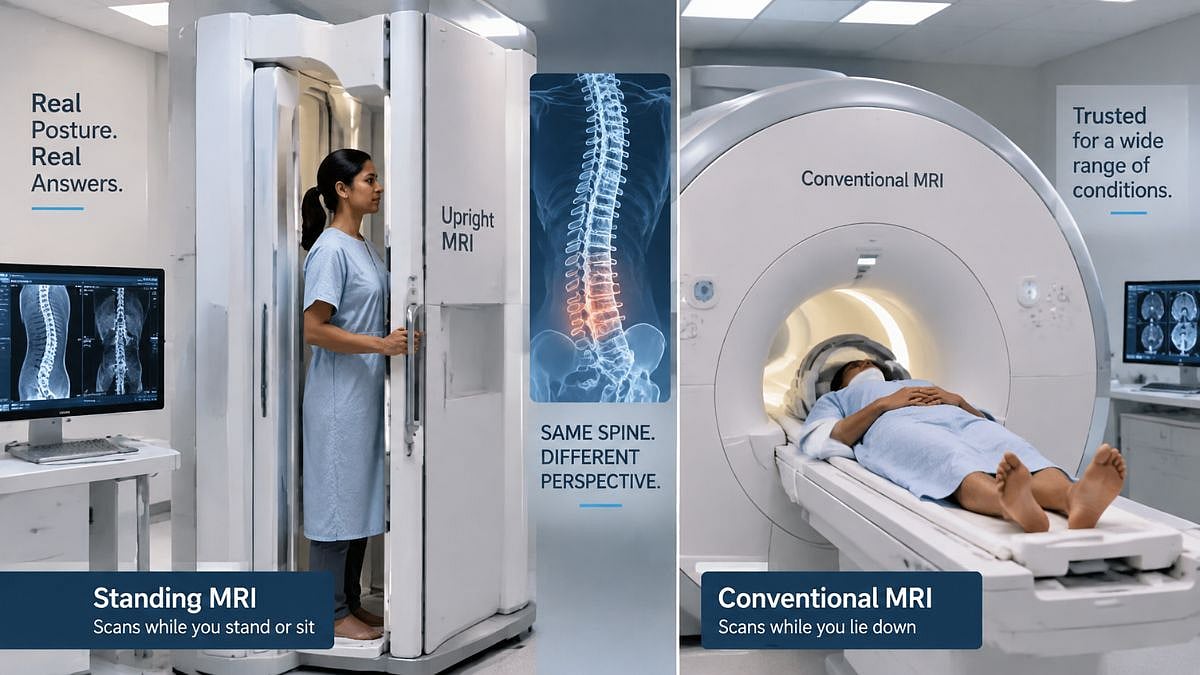
A standing MRI is a special scan that can take pictures while a person is sitting or standing.
Most regular MRI scans are done while the person lies down.
Some back or joint problems appear only when the body is carrying its normal weight.
In those cases, a standing MRI may give doctors extra information.
It is not automatically better than a regular MRI.
Regular MRI machines usually create sharper pictures and work well for most patients.
Standing MRI can feel easier for people who dislike enclosed spaces.
A doctor should decide which scan is appropriate for the patient’s symptoms.

Upright MRI scans the spine or joints while a patient is standing or sitting under normal body weight.
Doctors may use it for selected cases involving spinal instability, alignment problems, narrowing, disc issues, or weight-bearing joints.
A conventional MRI generally produces more detailed images and remains sufficient for most routine examinations.
Upright MRI may be more comfortable for claustrophobic patients but still requires them to remain still.
The scan can cost nearly twice as much as a routine MRI and is available at limited centres in Mumbai and Bengaluru.
- Who
- Doctors and patients, including a Bollywood actor who reportedly underwent the scan before lumbar-spine surgery.
- What
- A standing or upright MRI examines the spine and joints while the body is sitting or standing under weight.
- Where
- The discussion focuses on Mumbai, with limited availability also reported in Bengaluru.
- When
- The article is dated September 19, 2026.
- Why
- To evaluate problems that may become more visible during standing, bending, walking, or other weight-bearing conditions.
Key facts
- Primary purpose
- To assess how the spine or joints behave under physiological loading.
- Possible uses
- Selected cases of spinal stenosis, spondylolisthesis, spinal instability, alignment problems, disc issues, hip impingement, knee alignment, and ligament-related problems.
- Image quality
- Upright systems generally produce less detailed images than conventional 1.5T or 3T MRI machines.
- Patient position
- Patients may be scanned while standing or sitting instead of lying flat.
- Cost
- The scan can be almost twice as expensive as a routine MRI.
- Availability
- The technology is available at a limited number of centres in Mumbai and Bengaluru.
- Radiation
- MRI does not use ionising radiation.
Quotes
Dr Dhiraj Sonawane
Head of the Orthopaedic Department at Sir JJ Hospital
“The upright MRI has specific indications. It is a dynamic MRI, but the quality of imaging is not as good as a conventional MRI. For 99.99% of routine MRI examinations, conventional MRI is sufficient.”
 freepressjournal.in
“Some patients have problems that increase when they stand or bend, but these may not be visible in the same way when they are lying down. In such cases, an upright MRI can show the problem better.”
freepressjournal.in
Sources
Related news

Sharat Saxena’s Standing MRI Before Spine Surgery Explained
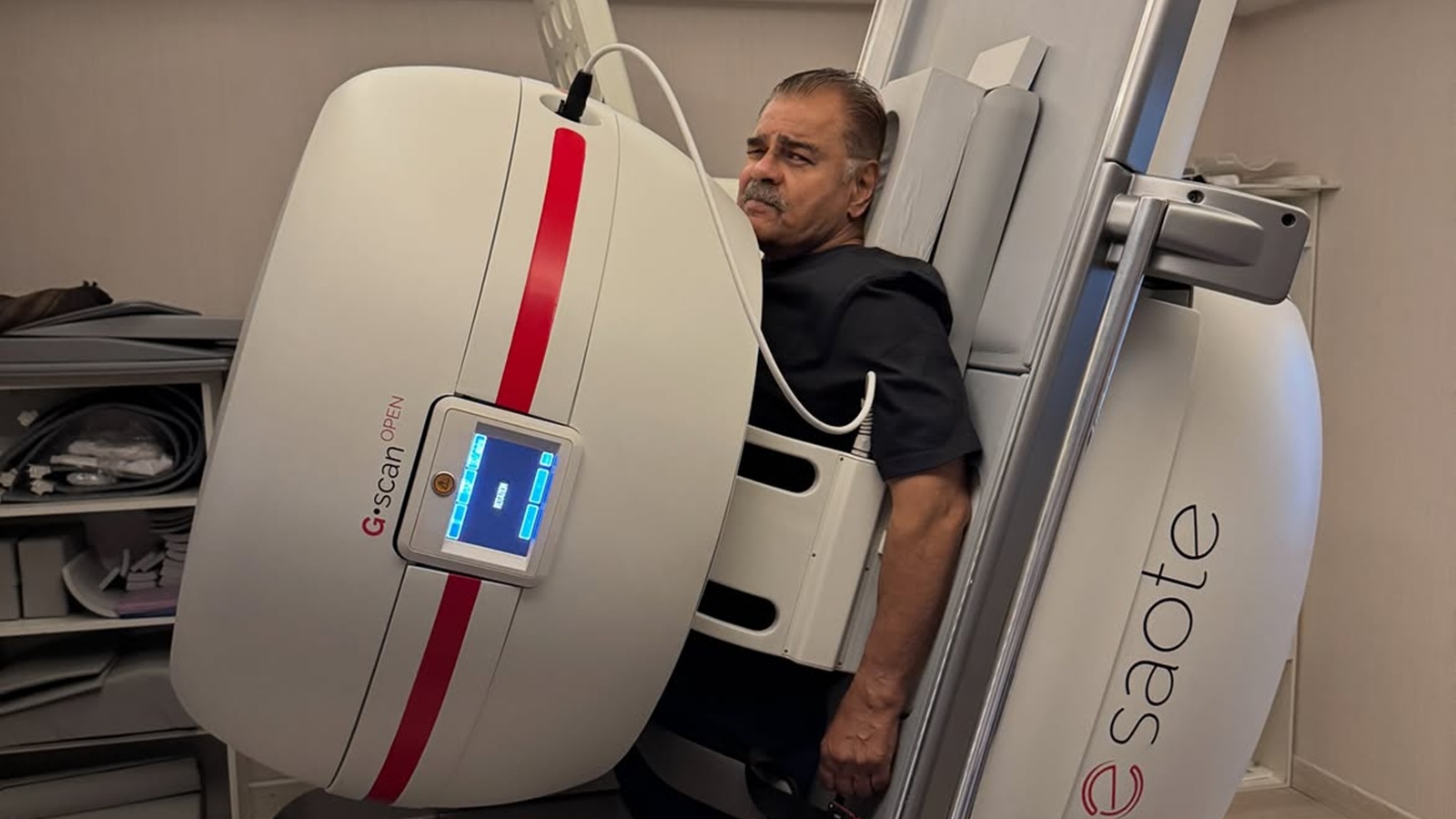
Sharat Saxena Undergoes Standing MRI Before Lumbar Spine Surgery

How Teachers Can Protect Their Knees and Back

Experts Warn Against Ignoring Back and Neck Pain

SRV Hospitals Launches Robotic-Assisted Joint Replacement Centre In Chembur

Meril Launches HALO Stem and Latitud Revision Cup

Roastery Coffee House Brings Its Coffee Home to Bengaluru

NRI in UK Says AI and Taxes Killed Work Motivation

Magnus Carlsen Reveals a Warmer Side in Rare Interview

Asian Games Invite Viewers to Appreciate Elite Sporting Skill