2 hrs ago
Supreme Court Sends Great Nicobar Project Challenge Back to High Court

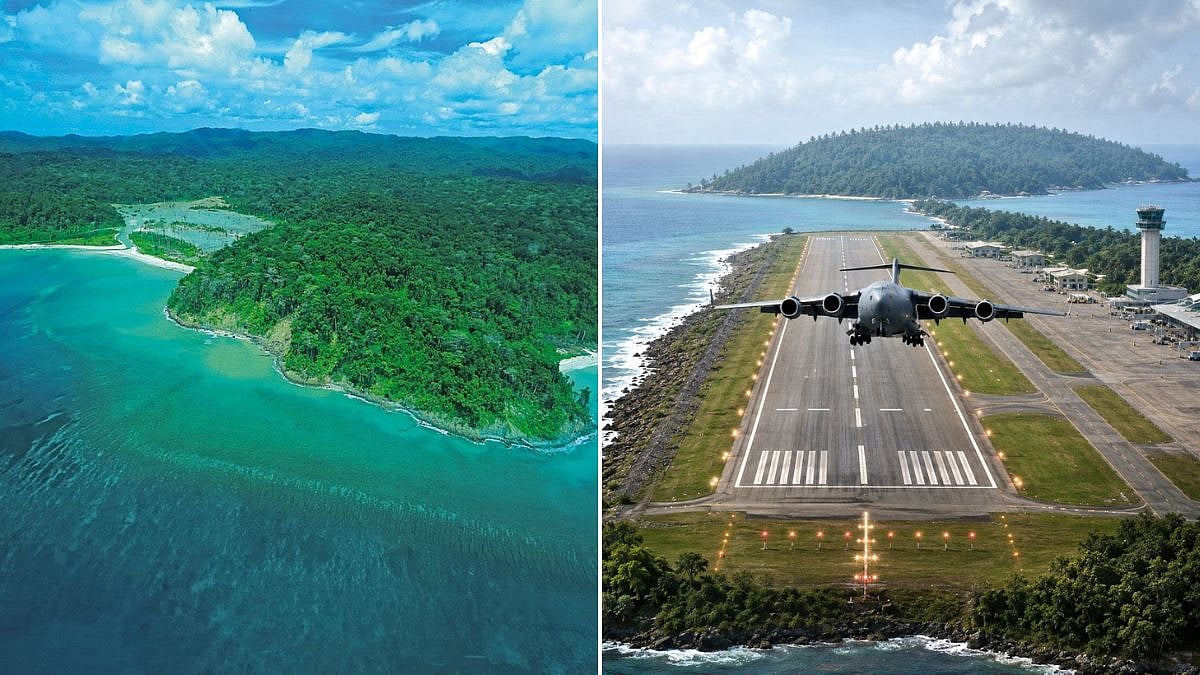
The Great Nicobar project is a plan to build major infrastructure on an island.
Some people have asked the Calcutta High Court to review government actions connected to the project.
They say it could harm forests and affect the lives and cultures of tribal communities.
The government says the project is important and has questioned whether one petitioner can bring the case.
It also pointed to earlier environmental proceedings.
The Supreme Court did not decide whether the project or the petitions are right or wrong.
It declined to stop the High Court case and asked that court to move it along.
The High Court is expected to try to hear the cases on November 25 and 26.
The dispute includes questions about the environment, tribal rights and the project’s importance.

The Supreme Court declined the Centre’s request to halt Calcutta High Court proceedings challenging the Great Nicobar project.
It asked the High Court to complete pleadings in connected cases and try to hear them on November 25 and 26.
The Centre questioned petitioner Meena Gupta’s legal standing and cited earlier National Green Tribunal proceedings on environmental clearance.
Respondents said tribal communities are affected, and the Tribal Council applied to join the case; the dispute raises concerns about Shompen and Nicobarese rights and culture.
The petitions allege environmental and Forest Rights Act concerns over a project estimated to cost ₹72,000 crore; the Supreme Court did not decide the merits.
- Who
- The Union government, petitioner Meena Gupta, respondents including tribal interests, and the Supreme Court and Calcutta High Court.
- What
- The Supreme Court declined to halt High Court proceedings challenging government actions related to the Great Nicobar project and urged a prompt hearing.
- Where
- The case is before the Calcutta High Court; the project is on Great Nicobar Island in the Andaman and Nicobar Islands.
- When
- The Supreme Court acted on Monday; the High Court is scheduled to try to hear the cases on November 25 and 26. The article was published October 5, 2026.
- Why
- The Centre sought to preserve its objections to the petitions’ maintainability, while petitioners raise environmental and tribal-rights concerns.
Centre’s position
Petitioners’ and respondents’ position
Petitions’ maintainability
Centre’s position
The Centre challenged Meena Gupta’s legal standing and raised concerns about multiple proceedings, noting that environmental clearance had been considered by the National Green Tribunal.
Petitioners’ and respondents’ position
The High Court rejected the preliminary objection, saying there is no fixed rule for standing in public-interest cases and genuine causes involving vulnerable communities may be raised by others.
Project importance and judicial review
Centre’s position
The Centre described the project as nationally important and strategically valuable, and argued for keeping its maintainability objections open.
Petitioners’ and respondents’ position
The petitions challenge government actions over alleged environmental and legal concerns; the High Court said a project’s scale or importance does not put it beyond judicial review.
Tribal culture and rights
Centre’s position
The Centre said it was referring to people integrated with the mainstream, and argued there was no loss of habitation for indigenous tribal people.
Petitioners’ and respondents’ position
Respondents highlighted potential effects on the Shompen and Nicobarese; Justice Joymalya Bagchi said preservation of culture is constitutionally protected.
Key facts
- Estimated project cost
- ₹72,000 crore
- Planned container terminal capacity
- 14.2 million twenty-foot equivalent units
- Planned airport capacity
- 4,000 peak-hour passengers
- Planned power plant
- 450 MVA gas-solar plant
- High Court hearing dates
- November 25 and 26; year not stated
- Environmental tribunal cited
- National Green Tribunal
- Law cited in petitions
- Scheduled Tribes and Other Traditional Forest Dwellers (Recognition of Forest Rights) Act, 2006
Quotes
Justice Joymalya Bagchi
Supreme Court judge on the three-judge Bench.
“Somebody comes and files a petition years later, and then three different petitions try to challenge it in three different ways. Then they say the tribals are affected and they are not before the Court. Now they have got impleaded.”
 freepressjournal.in
“Do they become integrated completely with the mainstream, or do we keep them with their unique identity and the identity of their culture? Preservation of culture is a constitutionally protected fundamental right.”
freepressjournal.in
Sources
Related news

Supreme Court Rejects Centre's Plea Over Great Nicobar Petitions
Congress Challenges Centre's Supreme Court Plea on Great Nicobar Project
Uttarakhand High Court Rejects Early Challenge to Proposed Haldwani Shift

NGT Seeks Environmental Details From Telangana Over Musi Project

CJI Calls Supreme Court Banyan Tree Of Environmental Justice
Supreme Court Sends Trinamool Signboard Row Back to Calcutta HC

Supreme Court Seeks 24-Hour Monitoring to Improve Delhi Safety

Supreme Court Clarification Sparks Questions Over Form 6 Changes

Health Activists Seek Ceilings on Hospital Charges and Medicine Margins

Supreme Court Pauses Coercive Action Against Tata Chemicals
BMC Proposes ₹13.35-Crore Shelters for Stray Dogs