

1 hr ago
How 1982 Asian Games Sparked India’s Colour TV Revolution
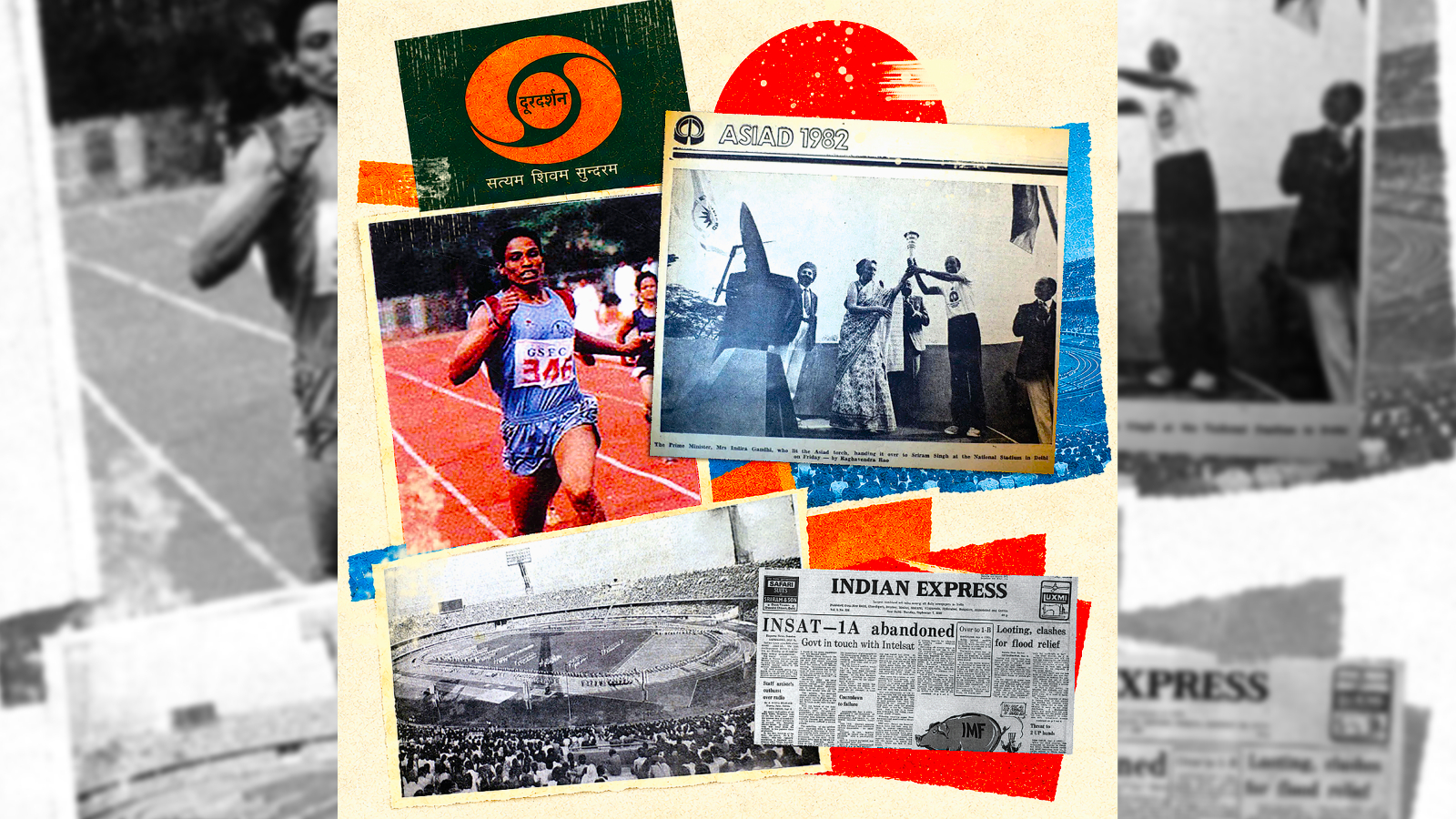
In 1982, India hosted the Asian Games.
The government wanted people to watch them in colour.
ISRO prepared INSAT 1A to help send television signals.
But the satellite developed problems and was deactivated before the Games.
The Soviet Union then offered a satellite as a backup.
Doordarshan built more stations and added equipment for broadcasts.
Many people bought or imported colour televisions to watch.
The Games made colour television much more popular across India.
By the 1984 Los Angeles Olympics, colour TVs had become common in many homes.

Prime Minister Indira Gandhi wanted the 1982 Asian Games broadcast in colour.
ISRO’s INSAT 1A satellite developed problems and was deactivated before the Games.
The Soviet Union provided an alternative satellite for broadcasting the event.
Doordarshan expanded its infrastructure, adding television stations, outside-broadcast vans and mobile cameras.
Demand for colour televisions surged, helping popularize them across India before the 1984 Olympics.
- Who
- The Indian government, ISRO, Doordarshan and Indian television viewers were central to the effort.
- What
- India developed a nationwide colour television broadcast system for the 1982 Asian Games.
- Where
- The broadcast effort took place in India, with satellite work involving facilities in Hassan and Palo Alto and a launch from Florida.
- When
- The satellite was launched on April 10, 1982, INSAT 1A was deactivated on September 6, and the Games took place in November 1982.
- Why
- The government wanted the Asian Games shown in colour and used the event to expand television broadcasting.
Key facts
- Event
- 1982 Asian Games
- Broadcast goal
- Televising the Games in colour
- Primary satellite
- INSAT 1A, India’s first multipurpose operational satellite
- Launch date
- April 10, 1982
- Satellite setback
- INSAT 1A was deactivated on September 6, 1982, after problems including failure of its solar sail to deploy
- Broadcast backup
- The Soviet Union provided a satellite after INSAT 1A failed
- Customs revenue
- Imported colour televisions generated about Rs 70 crore in customs revenue, according to a 1982 India Today report
Quotes
Pramod Kale
Former Project Director of INSAT 1 and Padma Shri awardee
“During the launch, immediately within a few hours, we noticed that there was a problem. It was sorted out before the satellite reached its final orbit. But in the final orbit, we had another problem: the solar sail did not deploy. The satellite was heating up. We were not certain how many hours we could actually support the broadcasting operations.”
 indianexpress.com
“After I narrowly missed out on a medal at the Olympics, Kerala Chief Minister K. Karunakaran said, ‘For us, it is like you have won a medal’, and he gave me a colour television. It was a Keltron TV made in Kerala. Once you start watching colour television, you will never go back to black-and-white television.”
indianexpress.com
Sources
Related news

India’s Asian Games Flag Ceremony Disrupted Amid Nagoya Chaos

Asian Games Return to Japan Amid Decades of Controversy
From a Delhi Flat to India’s Billion-Rupee Sports Economy

How India Won Its First Asian Games Hockey Gold
Manu Bhaker Named India Flag-Bearer Amid Asian Games Chaos
DUSU Leaders Who Later Shaped India’s Political Landscape
NC and Congress Split Over Proposed Charges on UPI

Opposition Demands Rollback of New UPI Merchant Fee

Rahul Gandhi Demands Rollback of Proposed UPI Fee
