1 hr ago
Scientists Trace Cancer Spread Between Identical Twins Before Birth
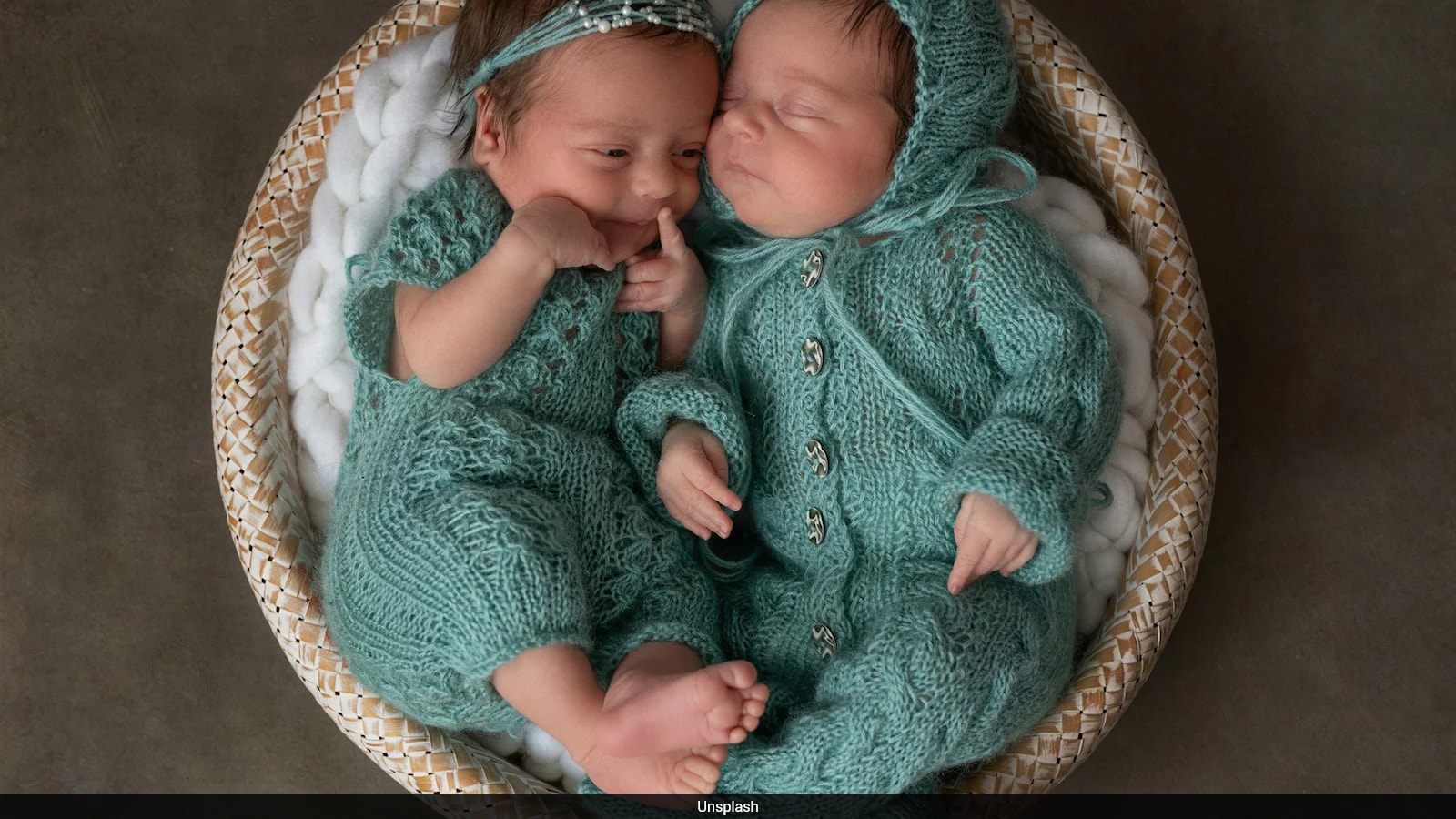
Scientists studied two identical twin sisters who had the same rare cancer.
They looked at DNA from the babies, their tumours and the placenta they shared.
The tumours had the same unusual genetic change.
Other DNA clues suggested that the cancer started in one twin and reached her sister through the placenta.
The researchers estimated that this happened during pregnancy, but they could not watch the cells move.
They also found signs that ordinary cells had passed between the twins.
The sisters died soon after birth, and their family agreed to examinations to help with the research.
Because this was only one pair of twins, it does not tell us how often this happens.
Sharing a placenta does not mean cancer will necessarily spread between twins.

Researchers studied identical twin sisters Amelia and Amaya, who had the same rare cancer shortly after birth.
Both twins’ tumours contained the same fusion of the MN1 and ZNF341 genes.
Genetic markers indicated that the cancer began in one twin and spread to the other through their shared placenta.
Researchers estimated that the tumour developed toward the end of the first trimester and likely spread late in the second trimester.
The sisters died soon after birth; the study examined one pair and does not show how often this kind of spread occurs.
- Who
- Researchers studying identical twin sisters Amelia and Amaya.
- What
- DNA analysis suggested that cancer began in one twin and crossed the shared placenta to the other.
- Where
- In the womb, between the twins through their shared placenta.
- When
- The cancer was estimated to have developed toward the end of the first trimester and spread late in the second trimester.
- Why
- The study aimed to trace how the cancer developed and spread and to inform research into childhood cancer and early human development.
Key facts
- Publication
- Nature Communications
- Twins
- Amelia and Amaya, identical twin sisters
- Shared tumour finding
- Tumours in both babies carried a fusion of the MN1 and ZNF341 genes.
- Samples examined
- 10 tumour samples, 12 normal tissue samples and 23 placental samples.
- Estimated cancer development
- Toward the end of the first trimester.
- Estimated transfer
- Most likely late in the second trimester.
- Study limitation
- The research examined one pair of twins; the timing estimates rely on assumptions about mutation accumulation.
Sources
Related news

Scientists Reveal How DNA Molecules Overcome Repulsion to Pair

Chinese Doctors Shrink Unborn Baby’s Lung Tumour Without Incision

Why Most Breast Cancers Aren’t Genetic and Who Should Test

Bone Marrow Mismatch Leads to Rape Investigation in Gujarat

Wrong Cancer Medicines Given to 100 Patients: Risks Explained

Study Finds Infections May Cause One in Eight New Cancers

Narwhal Tusk’s Opposing Spirals Reveal Secrets of Stability

DNA damage may drive Huntington's disease, opening new treatment path
BCG Vaccine Shows Promise in Preventing Alzheimer's Disease

Gut Signals Boost Memory via Vagus Nerve, Study Finds