2 hrs ago
Gen Z's Always-Online Life Linked to Rising Anxiety
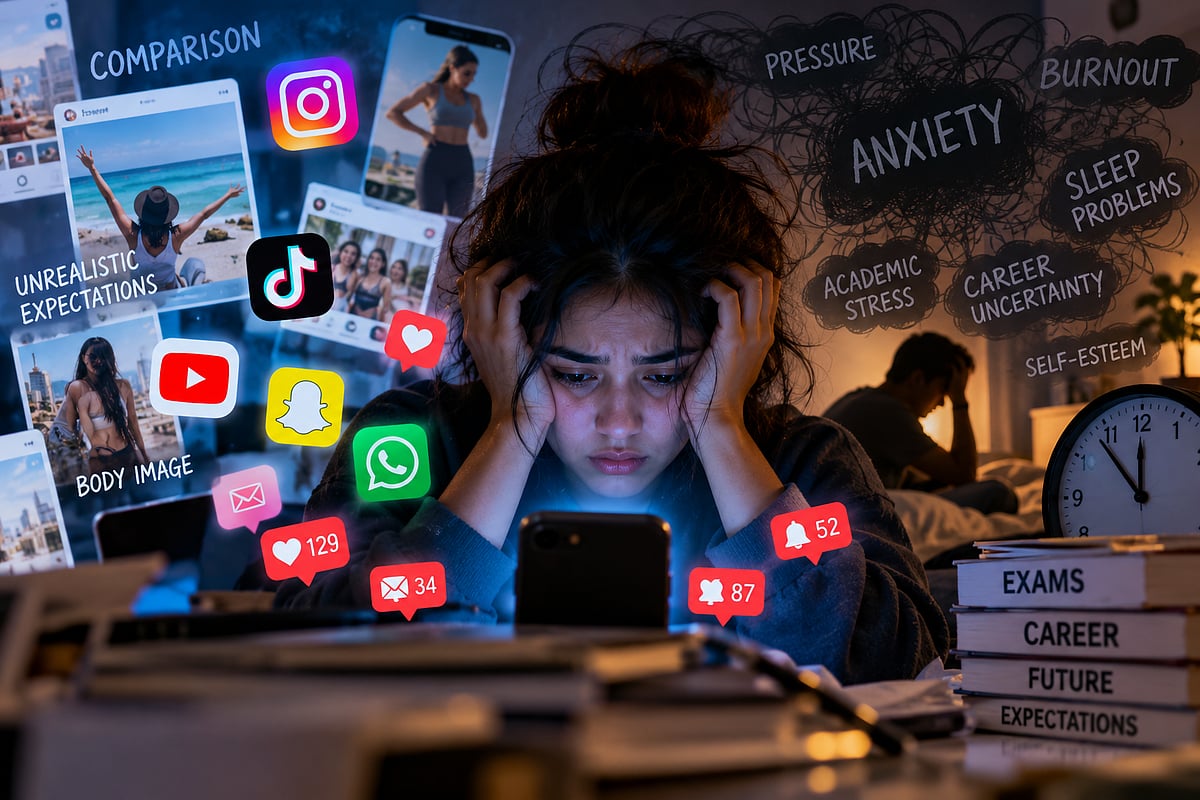
Many young people feel stressed because they are connected to the internet so much.
One doctor calls the constant feeling of being on alert “ambient anxiety.”
News, school pressures and worries about the future can add to that stress.
Social media may make people compare themselves with others.
Late-night screen use and frequent notifications can also affect sleep and focus.
Signs of a problem can include worrying a lot, feeling irritable or losing interest in things.
Doctors suggest taking breaks from phones, getting outside, staying active and spending time with people in person.
They also say to ask a professional for help when stress starts affecting everyday life.

Psychiatrists cited anxiety, depressive symptoms, burnout, sleep problems and concentration difficulties among concerns affecting young people.
Global news, academic competition, career uncertainty and pressure to succeed early may contribute to what one doctor called “ambient anxiety.”
Doctors said social media can intensify comparison and expose users to constant notifications and unrealistic lifestyle and beauty standards.
Warning signs include persistent worry, irritability, sleep changes, poor concentration, withdrawal and loss of interest.
Suggested steps include regular sleep, physical activity, offline time, screen-free breaks and seeking professional help early.
- Who
- Gen Z and other young people; two consultant psychiatrists, Dr Rahul Mathur and Dr Apurva Tiwari, discussed the concerns.
- What
- The article describes how constant connectivity and social media may contribute to anxiety and other mental health concerns.
- Where
- Indore, Madhya Pradesh, is given as the dateline.
- When
- No specific date is stated.
- Why
- The article points to social comparison, constant stimulation, global news, academic competition, career uncertainty and other pressures.
Key facts
- Location
- Indore, Madhya Pradesh
- Experts quoted
- Dr Rahul Mathur and Dr Apurva Tiwari, consultant psychiatrists
- Screen-time recommendation
- Switch off screens 60–90 minutes before bedtime
- Break recommendation
- Take 5–10-minute phone-free breaks
- Possible warning signs
- Persistent worry, irritability, sleep changes, poor concentration, withdrawal and loss of interest
- Recommended supports
- Regular sleep, outdoor activity, offline time, physical activity, real-life connections and early professional help
Sources
Related news
Anxiety Disorders Affect 470 Million, WHO Highlights Warning Signs

Why Exhausted Social Users Are Choosing Ordinary Lives

Delnaaz Irani Says Likes and Comments Don't Define Self-Worth

Sleep Tourism and Bed Rotting Turn Rest Into Rebellion

India’s Gen Z Faces Dating-App Fatigue From Too Many Beginnings
Gen Z Trades Higher Salaries for Work-Life Balance

India, West Indies Arrive in Indore for Third T20

India and West Indies Rest Before Third T20I in Indore

Sunil Gavaskar to Launch Book on Sanjay Jagdale’s Cricket Legacy

Seven Indore Police Personnel Suspended After Assault Allegations