2 weeks ago
Ahmedabad teaches waste sorting at traffic signals after court order

In Ahmedabad, a city in India, adults waiting at red traffic lights learned something new.
City workers stood at a busy road with four big bins and everyday rubbish like food scraps and plastic wrappers.
They asked people to guess which bin each piece of waste belonged in.
The city wants everyone to sort rubbish at home into four groups.
Wet waste is food leftovers that can become compost.
Dry waste is paper, plastic and metal that can be recycled.
Sanitary waste, like used pads, must be wrapped up carefully to keep workers safe.
Hazardous waste, such as old batteries and medicines, can poison the soil.
India's Supreme Court told cities they must manage waste properly, and Ahmedabad makes a lot of rubbish every day.
Teaching lessons at traffic lights is a simple way to help people remember what to do at home.

Ahmedabad Municipal Corporation (AMC) staff ran a roadside demonstration at a busy traffic signal, asking waiting commuters to sort waste into four labelled bins.
On 19 February 2026, a Supreme Court bench of Justices Pankaj Mithal and S V N Bhatti directed cities to enforce solid waste management rules, linking clean surroundings to the fundamental right to life.
Ahmedabad generates nearly 3,200 tonnes of solid waste daily, but only about 29% is currently segregated at source.
The four-bin system separates wet, dry, sanitary and domestic hazardous waste, with hazardous items like medicines and batteries requiring special handling.
Between January 2025 and May 2026, AMC issued over 3.54 lakh notices for sanitation violations and recovered nearly Rs 16.95 crore in penalties.
AMC has warned residents against dumping or burning waste in public spaces as enforcement of the city's waste rules becomes stricter.
- Who
- Ahmedabad Municipal Corporation (AMC) staff, following a Supreme Court bench of Justices Pankaj Mithal and S V N Bhatti
- What
- Roadside demonstrations teaching commuters to sort household waste into four categories: wet, dry, sanitary and domestic hazardous
- Where
- At a busy traffic signal in Ahmedabad, India
- When
- On a recent morning at a city junction; the Supreme Court order was issued on 19 February 2026
- Why
- To improve Ahmedabad's low 29% source-segregation rate and comply with Supreme Court directions linking clean surroundings to the fundamental right to life
Key facts
- City
- Ahmedabad, India
- Daily solid waste generation
- ~3,200 tonnes
- Waste segregated at source
- Only about 29%
- Waste categories
- Wet, dry, sanitary and domestic hazardous
- Supreme Court order date
- 19 February 2026
- Notices issued (Jan 2025-May 2026)
- Over 3.54 lakh
- Penalties recovered
- Nearly Rs 16.95 crore
- India's daily municipal solid waste
- ~170,000 tonnes (CPCB data)
Sources
Related news

VMC Prioritizes Scientific Waste Management, Urges Public Participation in Parks
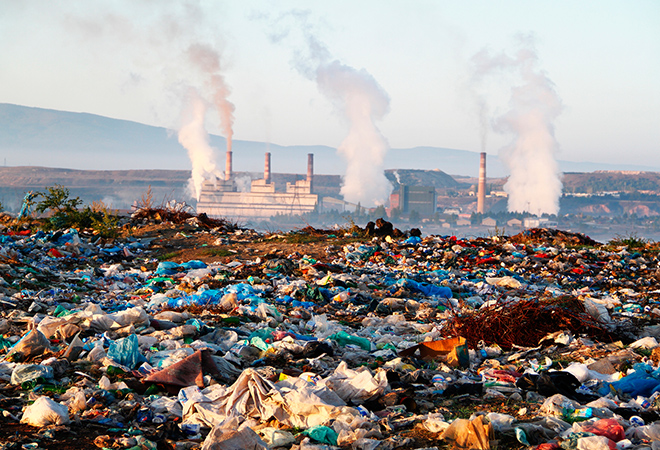
Supreme Court Orders Nationwide Action on Unmanaged Solid Waste

Chhatrapati Sambhajinagar Commissioner Calls for Innovative Waste Management

Chennai GCC Sets September 1 Waste Segregation Deadline

Bengal Rolls Out QR System To Monitor Waste Segregation

Hyderabad faces mounting civic waste crisis with rising daily garbage
Two Years After RG Kar Doctor's Rape-Murder, Case Remains Unresolved

ED widens Chhattisgarh probes with two arrests and searches

Delhi High Court Orders Madhya Pradesh to Pay Advocate Dues
Haryana sanitation workers’ strike puts BJP government under pressure
Orissa High Court Says Brothel Customers Cannot Face Trafficking Charges