

1 week ago
Sarvam’s $10 Billion AI Bet Faces Frontier Test
Sarvam is an Indian AI company that wants to build a very powerful computer model.
Its CEO says $10 billion could help it catch up with the best AI models available today by next Independence Day.
However, the best AI companies will also keep improving during that time.
Experts disagree about what Sarvam needs most: some emphasize talented researchers, while others emphasize computers and data.
Sarvam already works with 22 Indian languages.
It could focus on AI for Indian languages, government services, banks and other businesses instead of trying to beat every global model.
This kind of AI could be cheaper, more open and controlled within India.
Sarvam’s planned very large model is still months away, so its final results are uncertain.

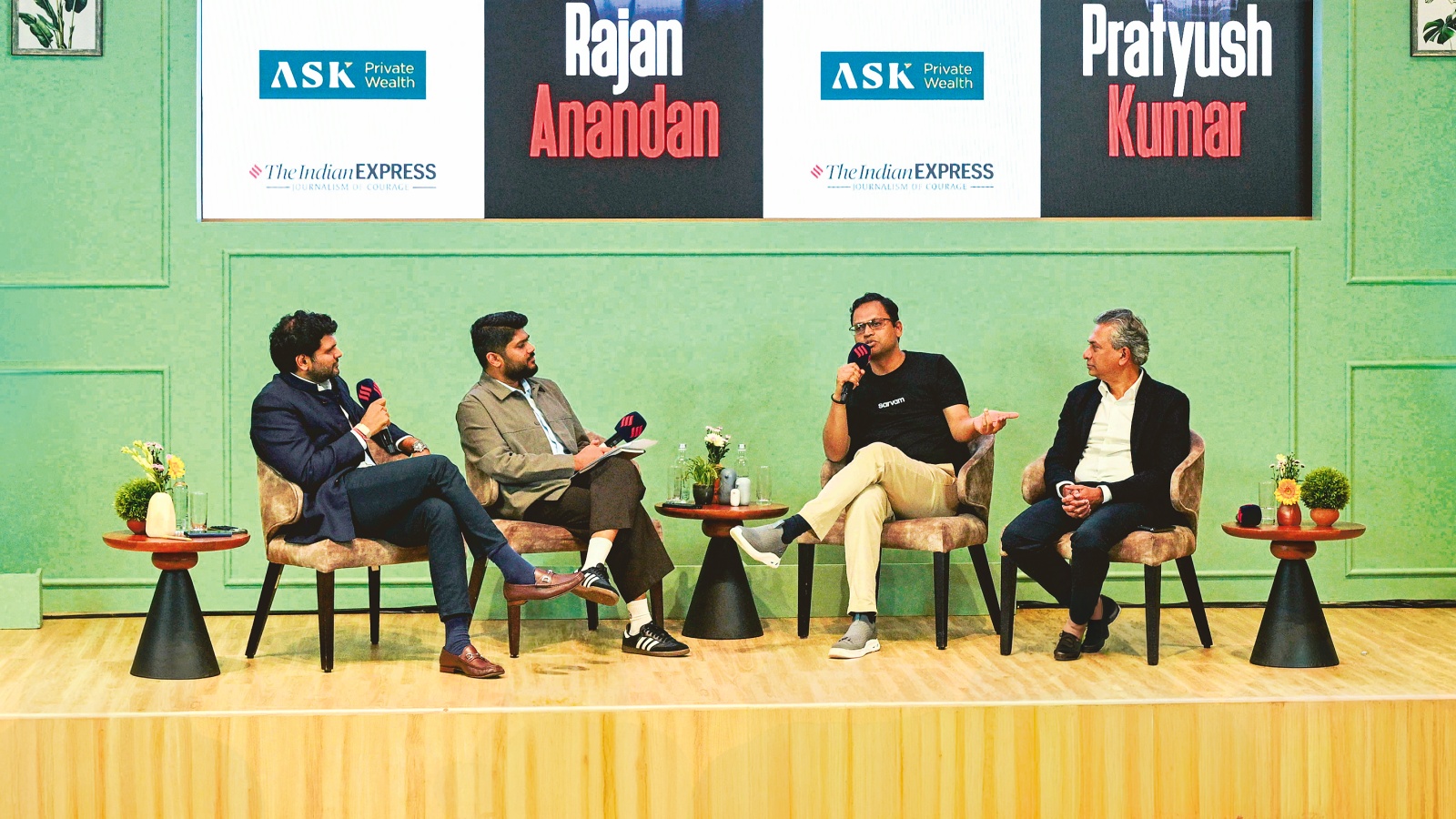
Sarvam CEO Pratyush Kumar says $10 billion invested now could reach today’s AI frontier by India’s Independence Day next year.
The company has raised about $350 million, including a $75 million Series B extension from NVIDIA in August.
Experts say staying at the frontier will require research depth, compute, training efficiency, data and scarce world-class talent.
Sarvam may have a stronger opportunity in sovereign, multilingual and voice AI tailored to Indian enterprises and public services.
Sarvam has appointed Mistral AI and Thinking Machines Lab founding member Devendra Chaplot as an adviser for its planned trillion-parameter model.
- Who
- Sarvam, led by co-founder and CEO Pratyush Kumar, along with advisers and AI-industry experts.
- What
- The company is considering whether massive investment could help it reach and remain at the global AI frontier.
- Where
- When
- Kumar made the investment estimate earlier this month; the target is India’s Independence Day next year. Sarvam’s largest planned model is still months away.
- Why
- To build a foundation model comparable with leading offerings from OpenAI, Anthropic and Google, while potentially serving Indian-language and sovereign-AI needs.
Frontier-model expansion
Focused sovereign-AI strategy
Can money close the gap?
Frontier-model expansion
Kumar argues that $10 billion could provide the compute, chips, infrastructure and hiring needed to reach the current frontier within about a year.
Focused sovereign-AI strategy
Experts say capital alone may not be enough because global labs will continue advancing, making it much harder to match the frontier of that future time.
Main constraint
Frontier-model expansion
Pratyush Choudhury says compute and data are the bigger limitations, arguing that researchers will come when they have enough infrastructure to experiment and train large models.
Focused sovereign-AI strategy
Jaspreet Bindra and Pramod Gosavi emphasize research depth and the difficulty of attracting a small pool of experienced, world-class AI researchers.
Best competitive opportunity
Frontier-model expansion
A frontier model comparable with OpenAI, Anthropic and Google offerings would position Sarvam in the general-purpose AI race.
Focused sovereign-AI strategy
Other experts say Sarvam need not beat GPT or Gemini at everything and could build a more defensible business around cheaper, open, sovereign and multilingual AI for Indian needs.
Key facts
- Capital raised
- About $350 million cumulatively.
- NVIDIA investment
- A $75 million Series B extension in August.
- Proposed investment
- Kumar said $10 billion invested today could reach the current frontier by Independence Day next year.
- Language coverage
- Sarvam works across 22 Indian languages.
- Planned model
- A trillion-parameter frontier model is being planned.
- Key adviser
- Devendra Chaplot, a founding member of Mistral AI and Thinking Machines Lab.
- Commercial focus
- Potential uses include multilingual and voice AI, government services, regulated industries and enterprise systems.
Quotes
Jaspreet Bindra
Co-founder and CEO of AI&Beyond
“The gap is actually not as big as it looks. If we were to invest $10 billion today, we could reach the frontier by Independence Day next year.”
 financialexpress.com
“A couple of years ago, we were completely confident that India couldn’t be a player in the AI foundation layer.”
financialexpress.com
Sources
Related news

Sarvam AI's India moment: trillion-parameter model, Nvidia-backed funding
India’s AI Race Gains Momentum, But Jobs Remain Uncertain
BharatGen CEO Rishi Bal champions India's ground-up sovereign AI models

Alphabet Shares Slide as AI Talent Departures Fuel Investor Concerns

US Urges G20 Lighter AI Rules as China Advances

AI-Enabled Travel-Photo Analysis Gives Scammers Precise Clues

Google Reportedly Moves 90 AI Safety Experts From DeepMind
Former Google Researchers Propose Human-AI Judges Against Rogue Models
