2 hrs ago
Indian Factories Cut Investment as Employment Reaches Record High

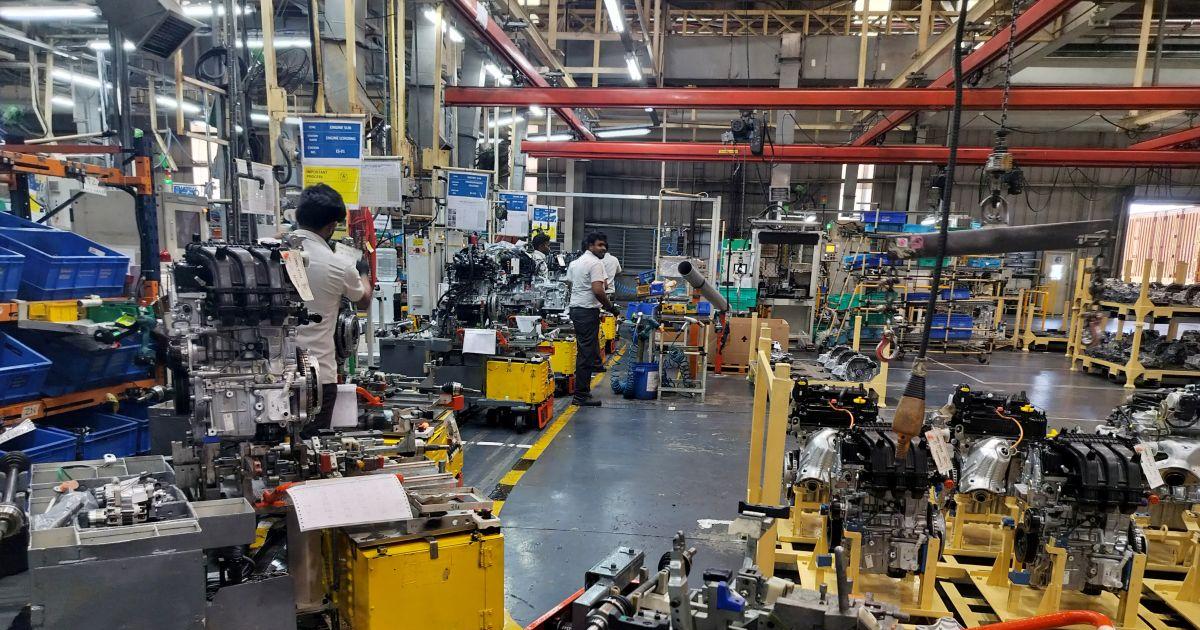
Indian factories hired more people than ever in FY25.
However, they spent less on new buildings, machines, and equipment.
New investment fell 8% from the previous year.
This suggests many factories added workers while using facilities they already had.
The amount produced by each worker changed very little.
Factory profits rose by 5%, while wages rose by 5.3%.
An economist linked the investment slowdown to unusually high investment in the previous two years and weaker demand in some consumer-goods markets.
He also said investment in industries such as steel and power can happen in large bursts rather than every year.

Gross fixed capital formation in Indian factories fell 8% to ₹63,497 crore in FY25, the first decline since FY21.
Manufacturing employment reached a record high despite the investment slowdown.
Fixed capital per worker grew 3.1%, down from 5.9% in FY24, indicating greater use of existing capacity.
Worker productivity fell 0.4% in FY24 and rose only 0.5% in FY25, an unusually weak two-year stretch in ASI records.
Profit per factory rose 5% to ₹4.33 crore, while wages per worker increased 5.3% to ₹2.28 lakh in FY25.
- Who
- Indian registered factories, manufacturing workers, the Annual Survey of Industries, and economist Madan Sabnavis.
- What
- Factories reduced gross fixed capital formation by 8% in FY25 while manufacturing employment reached a record high.
- Where
- India, with state-level results reported for states including Odisha, Sikkim, and Gujarat.
- When
- Financial year 2024-25, with ASI data published after a one-year lag.
- Why
- The slowdown was attributed by Madan Sabnavis to a base effect after two years of strong capital formation, weaker private-sector and consumer-goods investment, demand pressures, and the uneven timing of infrastructure investment.
Investment slowdown as adjustment
Employment-led factory expansion
Meaning of lower investment
Investment slowdown as adjustment
The slowdown may reflect a base effect after unusually strong capital formation in FY23 and FY24, along with weaker private-sector and consumer-goods investment.
Employment-led factory expansion
Factories continued expanding employment, suggesting that businesses were using existing capacity rather than immediately building new facilities.
Effect on productivity
Investment slowdown as adjustment
Weak capital addition coincided with productivity falling 0.4% in FY24 and rising only 0.5% in FY25.
Employment-led factory expansion
Record employment and rising profits indicate that factories still expanded activity, even though output per worker showed little improvement.
Key facts
- Gross fixed capital formation
- Fell 8% in FY25 to ₹63,497 crore.
- Previous investment growth
- GFCF rose 77% in FY23 and 18% in FY24.
- Employment
- Manufacturing employment reached a record high in FY25.
- Fixed capital per worker
- Rose 3.1% in FY25, compared with 5.9% in FY24.
- Worker productivity
- Fell 0.4% in FY24 and rose 0.5% in FY25.
- Profit and wages
- Profit per factory rose 5% to ₹4.33 crore; wages per worker rose 5.3% to ₹2.28 lakh.
- Highest state productivity
- Odisha recorded output of ₹1.42 crore per person engaged in FY25.
Quotes
Madan Sabnavis
Chief economist at Bank of Baroda
“It is mainly because of the private sector slowing down, but it will be more in terms of the consumer goods segment. That is a segment which had a pushback on account of inflation, rural demand, urban demand at that time. So I would say that is the reason why investment from this segment has slowed down.”
 rediff.com
“There are two years of high capital formation, so there is a tendency for growth to come off — that’s a base effect.”
rediff.com
Sources
Related news
India Manufacturing Jobs, Wages Accelerated During FY25 Survey
Factory wages rose 5% as Jharkhand recorded only decline
India’s Manufacturing Workforce Tops 21 Million as Factories Grow

India’s Manufacturing Grows, But Formal Jobs Remain Limited

Tamil Nadu Retains India’s Manufacturing Lead in ASI 2024-25
India’s Industrial Output Hits 8% in August, Manufacturing Leads

Chhattisgarh Land Dispute Expands Over Plot and General Entry

Sambhv Steel Tubes Reports Strong Q2 FY27 Sales Growth

Salt Lake Area Durga Puja Guide Highlights Kolkata’s Diverse Themes

Chhattisgarh and West Bengal Lead Sub-Junior Basketball Knockouts