

1 month ago
India's First Geothermal Power Project Inaugurated in Puga Valley
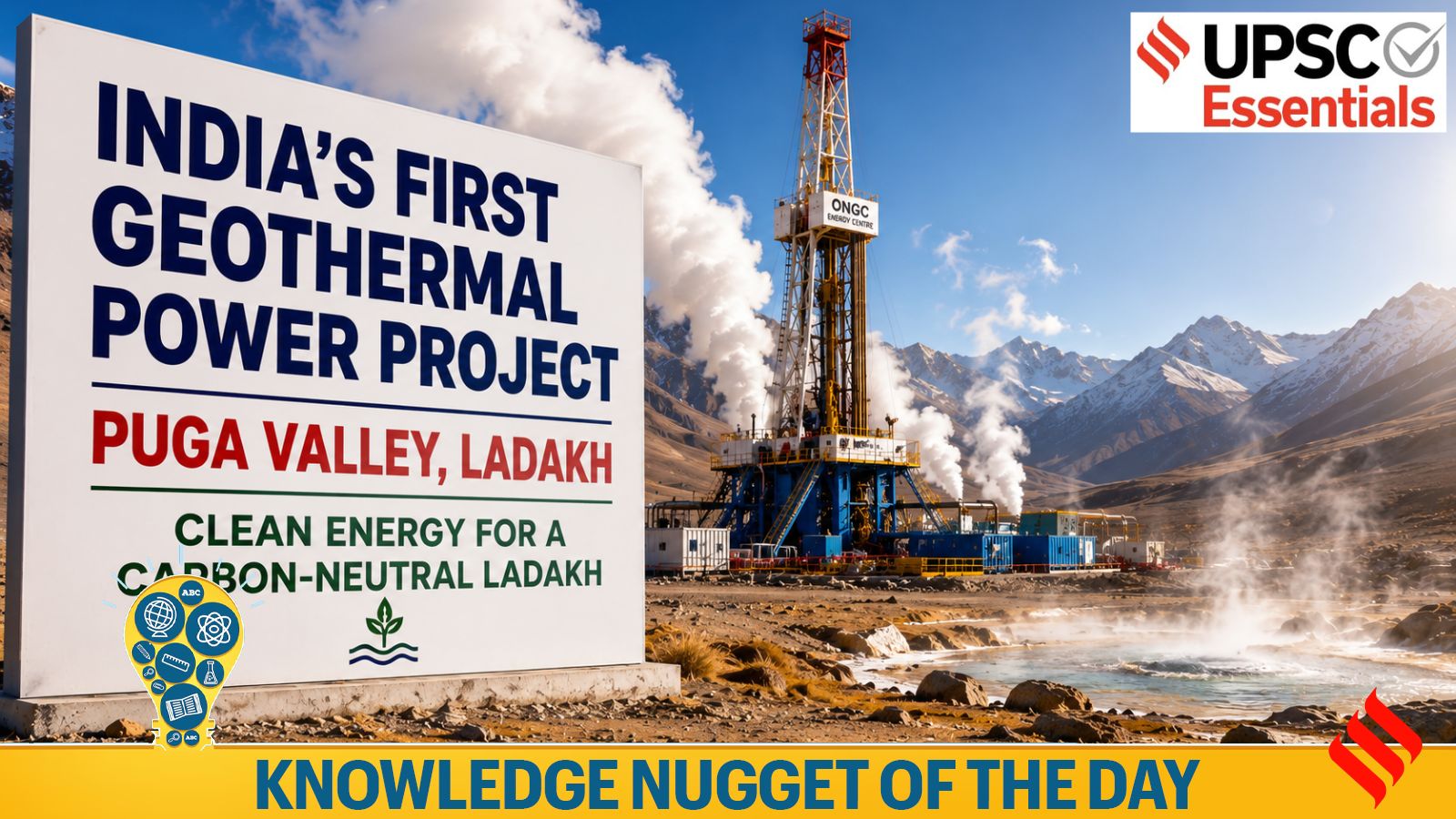
India has started its first geothermal power project in Puga Valley, Ladakh.
This project includes two deep wells that are over 1,000 meters deep and located at a height of over 14,000 feet.
The project is part of India's efforts to use clean energy and reduce carbon emissions.
Geothermal energy uses the heat from inside the Earth to produce electricity.
This type of energy is reliable and can be used continuously, unlike solar or wind energy.
The government has also released a policy to promote geothermal energy and achieve the goal of net-zero carbon emissions by 2070.
There are many hot springs in India that can be used for geothermal energy, and the government is working with other countries and research institutions to develop this technology further.

India's first and deepest geothermal wells were inaugurated in Puga Valley, Ladakh on 17th July.
The project is part of the Clean India mission and aims to set up India's first geothermal power project.
The two wells are 1,000 meters deep and located at a height of over 14,000 feet.
The National Policy on Geothermal Energy 2025 was released to promote geothermal energy in India.
Geothermal energy uses the heat from the Earth's interior to produce electricity and is a reliable source of energy.
- Who
- Lieutenant Governor VK Saxena, Oil and Natural Gas Corporation (ONGC) Energy Centre, Ministry of New and Renewable Energy (MNRE)
- What
- Inauguration of India's first and deepest geothermal wells in Puga Valley, Ladakh
- Where
- Puga Valley, Ladakh
- When
- 17th July
- Why
- To advance India's Clean India mission and achieve carbon-neutral goals, and to set up India's first geothermal power project
Proponents of Geothermal Energy
Critics of Geothermal Energy
Environmental Impact
Proponents of Geothermal Energy
Geothermal energy is clean and has minimal environmental impact, contributing to India's carbon-neutral goals.
Critics of Geothermal Energy
Geothermal projects can disrupt local ecosystems and may have unforeseen environmental consequences.
Economic Viability
Proponents of Geothermal Energy
Geothermal energy provides a reliable and sustainable source of electricity, reducing dependence on fossil fuels.
Critics of Geothermal Energy
The initial investment and infrastructure costs for geothermal projects are high, making them economically unviable in the short term.
Key facts
- Location
- Puga Valley, Ladakh
- Inauguration Date
- 17th July
- Depth of Wells
- 1,000 meters
- Height of Wells
- Over 14,000 feet
- Project Capacity
- 1 MW pilot geothermal power project
- Policy
- National Policy on Geothermal Energy 2025
- Geothermal Potential
- 10.6 GW
- Global Geothermal Capacity
- Less than 17 GW
Quotes

U.S. Department of Energy
U.S. federal agency responsible for energy policy
“In an EGS, fluid is injected deep underground under carefully controlled conditions to create new fractures and cause pre-existing fractures to re-open, creating permeability. Increased permeability allows fluid to circulate throughout the more fractured hot rock, and the fluid becomes hot as it circulates”
 indianexpress.com
Sources
Related news

Extraction 3 Cast Adds Pierce Brosnan, Don Lee, and More

Satish Gujral Honoured with Commemorative Postage Stamp on Birth Centenary
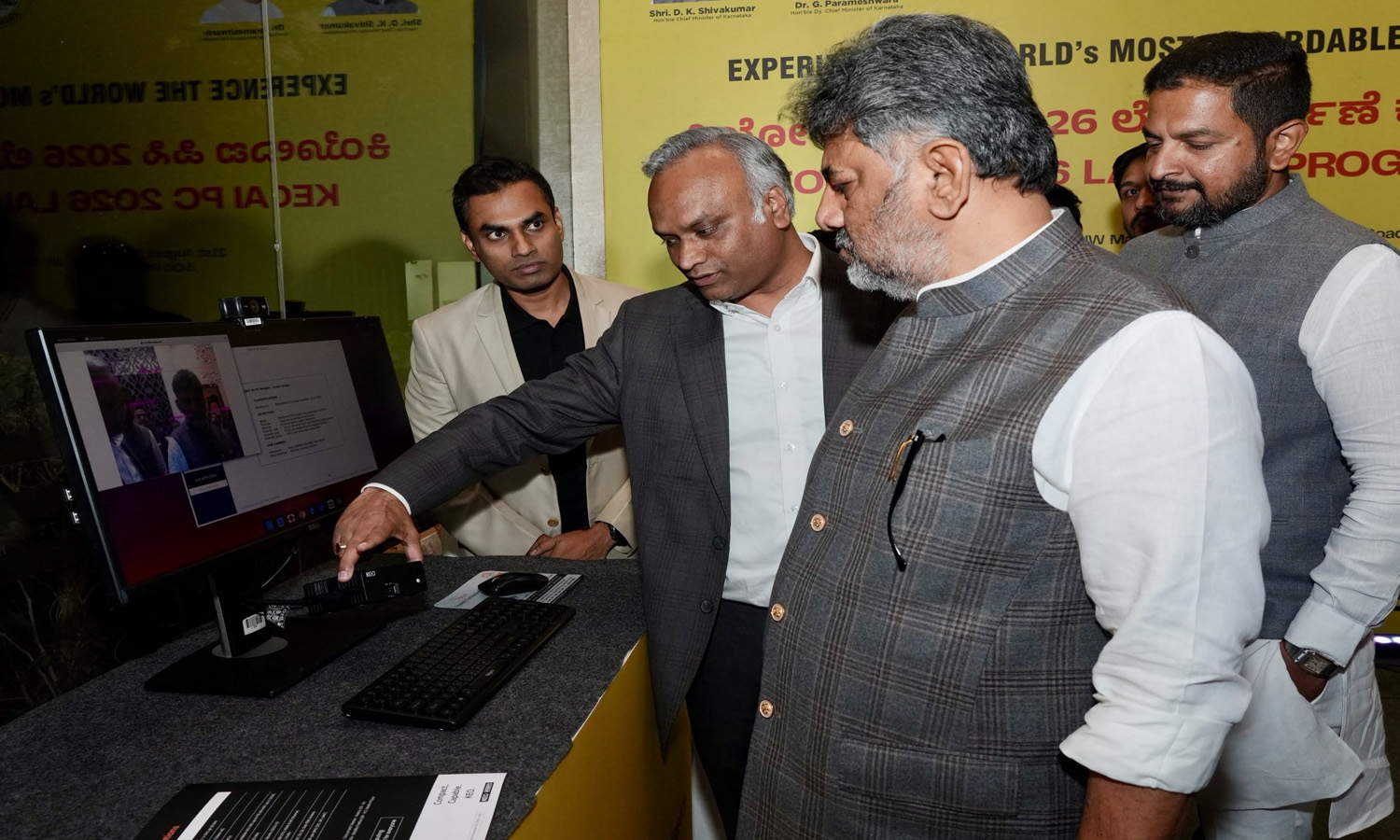
Bengaluru Engineers Develop Affordable AI PC KEO

Professor, Five Students Arrested in IGKV Paper Leak
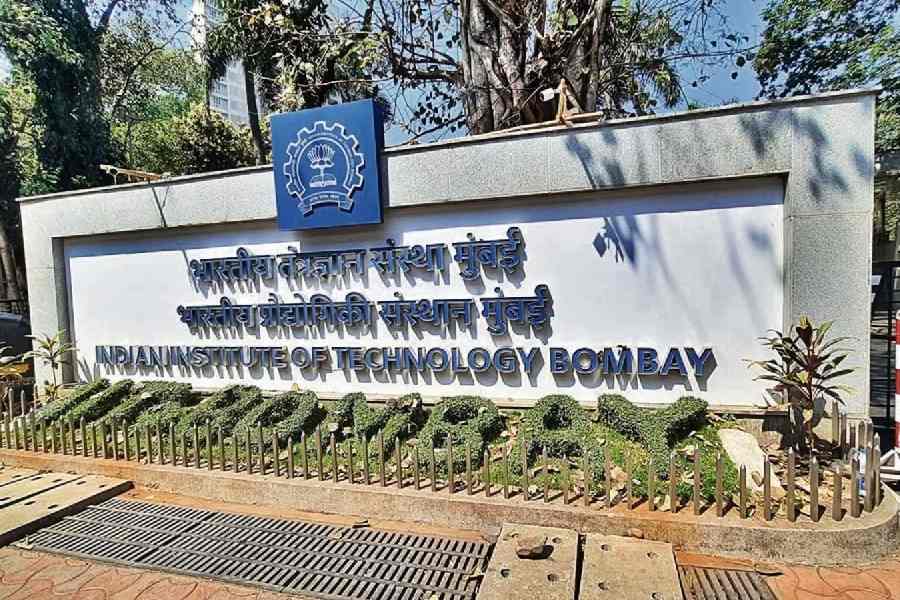
IIT Bombay Launches E-PG Diploma In Computer Science And AI
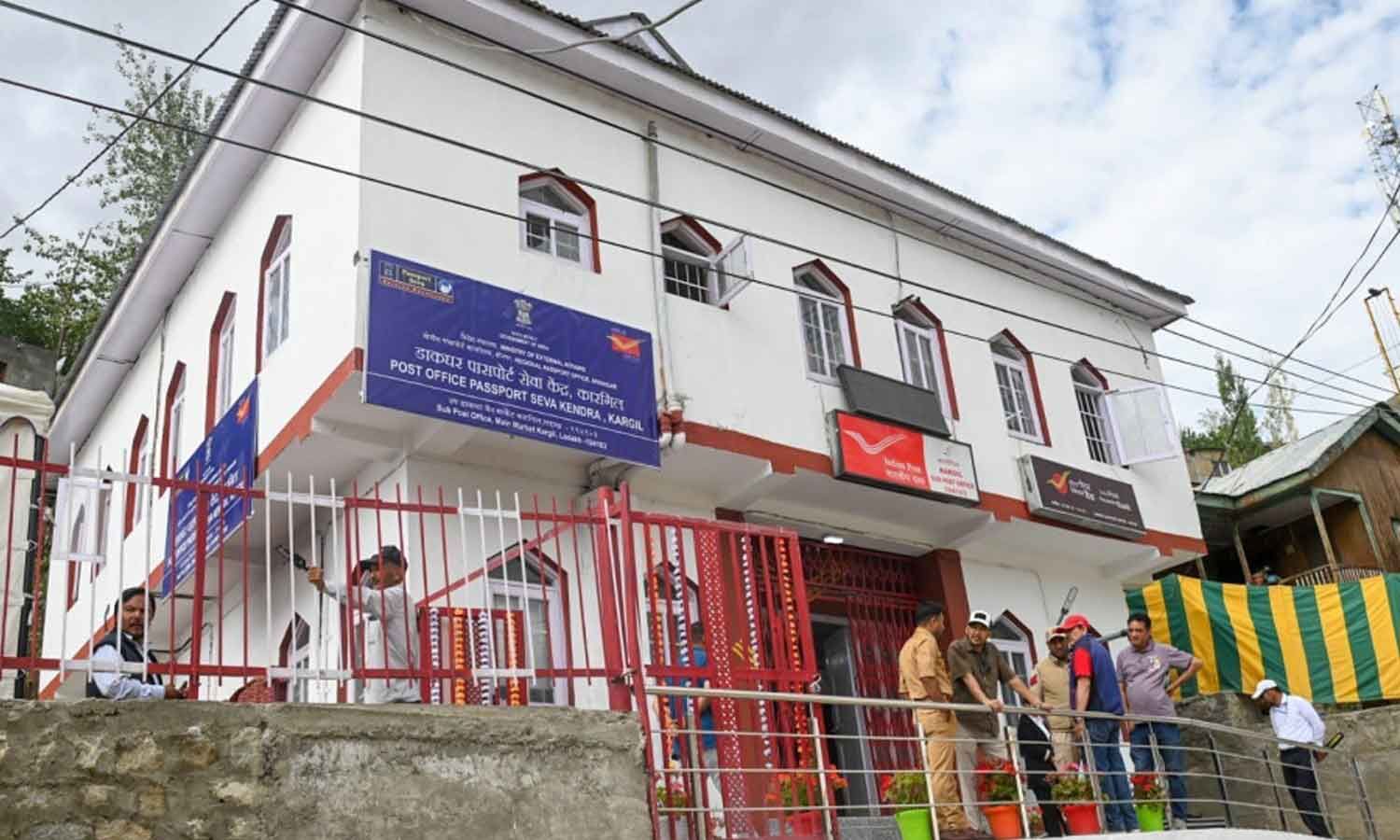
Kargil Opens Second Passport Seva Kendra, Easing Travel
Kargil Alliance Backs March Marking Leh Protest Deaths

Kargil Leaders Back Ladakh Statehood and Justice March

Population Enumeration Begins in Snow-Bound Jammu and Kashmir, Ladakh

Saxena Flags Off Inaugural Ladakh Bike Week 2026
