8 hrs ago
After euthanasia, Harish Rana’s parents rebuild lives, seek organ recipient
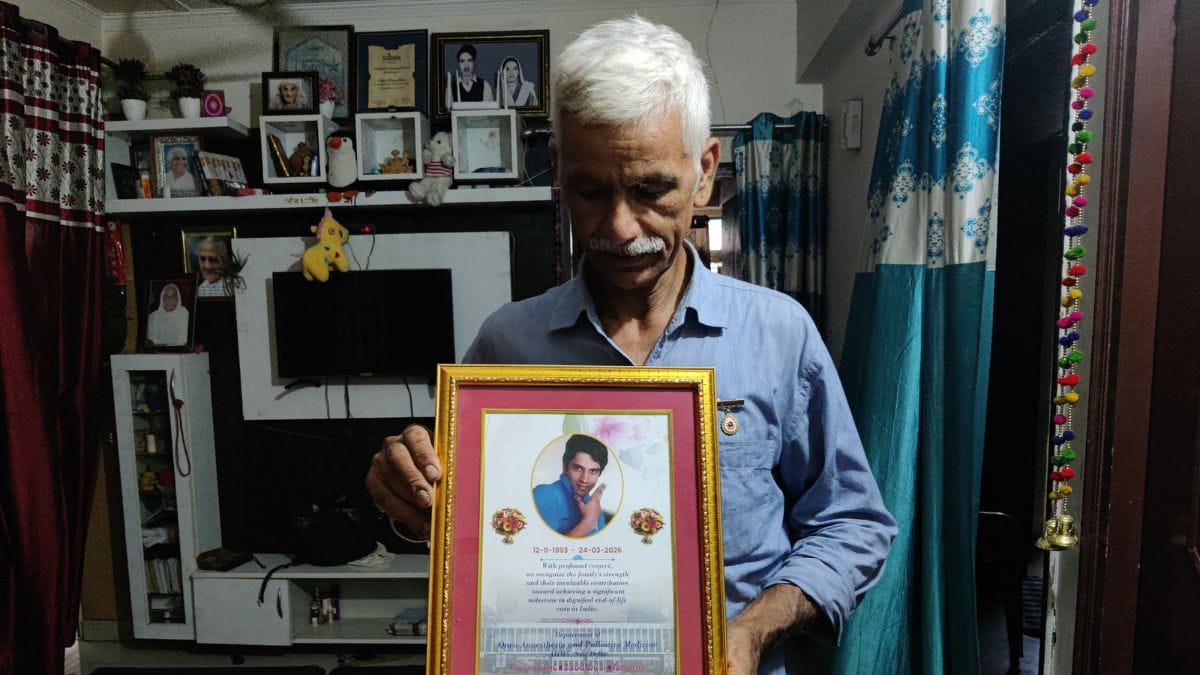
Harish Rana was badly injured in an accident and stayed in a condition where he could not speak, eat, drink or move by himself.
His parents cared for him at home for 13 years.
The Supreme Court allowed doctors to stop artificially keeping him alive.
His food and water were reduced slowly and safely over 11 days.
After Harish died, his parents had to learn how to live without caring for him every hour.
His father now runs a small food stall, and his mother looks after the home and their granddaughter.
The family gave his organs to help other people.
They were told that Harish’s eyes are now being used by someone else.
His parents say this gives them comfort, but they are still grieving and adjusting.

The Supreme Court permitted Harish Rana’s parents to withdraw his life-sustaining treatment after he spent 13 years in a persistent vegetative state.
Harish’s food and water were gradually reduced under medical supervision over 11 days before his death.
His parents, Ashok and Nirmala Rana, are adapting to life without the daily caregiving that had structured their family’s lives.
Ashok now runs a government-supported food kiosk in Ghaziabad, while Nirmala manages the household and cares for their granddaughter.
The family donated Harish’s organs and was told that his eyes were transplanted, prompting his mother to hope she can meet the recipient.
- Who
- Harish Rana, his parents Ashok and Nirmala Rana, the Supreme Court, and medical teams at the All India Institute of Medical Sciences.
- What
- The Supreme Court permitted withdrawal of Harish Rana’s life-sustaining treatment after 13 years in a persistent vegetative state; he later died and his organs were donated.
- Where
- Harish was cared for at the family’s home in Ghaziabad and spent his final 11 days at the All India Institute of Medical Sciences.
- When
- The court issued its order on March 11; Harish died five months before this account was published, after 11 final days at the hospital.
- Why
- His parents said his condition left him unable to eat, drink, speak or move independently, and they worried about who would care for him as they grew older.
Case-specific permission
Caution against broad application
Meaning of the court’s decision
Case-specific permission
The Rana family and the Supreme Court described the decision as allowing Harish to leave with dignity rather than artificially prolonging his life.
Caution against broad application
The family cautions that the judgment should not be treated as an automatic template for every person in a similar condition.
Use as a legal precedent
Case-specific permission
Ashok Rana’s lawyer said the case could help establish a path for other families facing similarly difficult situations.
Caution against broad application
Nirmala Rana said each case must be considered individually, noting that another patient may be young or conscious and therefore not comparable to Harish.
Key facts
- Court decision
- The Supreme Court allowed withdrawal of Harish’s life-sustaining treatment on March 11.
- Duration of illness
- Harish lived in a persistent vegetative state for 13 years after a 2013 fall.
- Final treatment period
- Food and water were gradually reduced under medical supervision over 11 days.
- Family location
- The Ranas moved from Dwarka to Ghaziabad in 2021 to make medical care more affordable.
- Father’s livelihood
- Ashok Rana runs Poshak Aahar Corner, selling sprouts, sandwiches and fruit.
- Kiosk cost
- Ashok said he spent about Rs 70,000 on fibre sheets and appliances for the stall.
- Organ donation
- The family donated Harish’s organs and was told his eyes were given to another person.
Quotes

Supreme Court of India
The court that authorized withdrawal of Harish’s life-sustaining treatment
“He is still alive for us. We can’t see him, but his eyes are still seeing the world through someone. Someone has benefited, so he is alive for us”
 theprint.in
“You are not giving up on your son. You are allowing him to leave with dignity.”
theprint.in
Sources
Related news

Orphan-turned-humanitarian Annam Srinivasa Rao: A Life of Compassion
Family of three dies in Varanasi pilgrimage tragedy
Mumbai Businessman's Daughters Attend Last Rites Via Video Call

Moshi Tragedy Victim's Wife Dies by Suicide Amid Harassment Allegations

Remembering Champabai, the invisible domestic helper who raised family
Two Years After RG Kar Doctor's Rape-Murder, Case Remains Unresolved

ED widens Chhattisgarh probes with two arrests and searches
Delhi High Court Orders Madhya Pradesh to Pay Advocate Dues
Haryana sanitation workers’ strike puts BJP government under pressure
Orissa High Court Says Brothel Customers Cannot Face Trafficking Charges