2 weeks ago
AI Cannot Decode Dugong Calls Yet, Say Scientists
Some people are trying to use computers to understand what animals say to each other.
Big projects are trying to figure out the songs of whales.
But scientists who study dugongs in the Andaman Islands say computers are not ready for this yet.
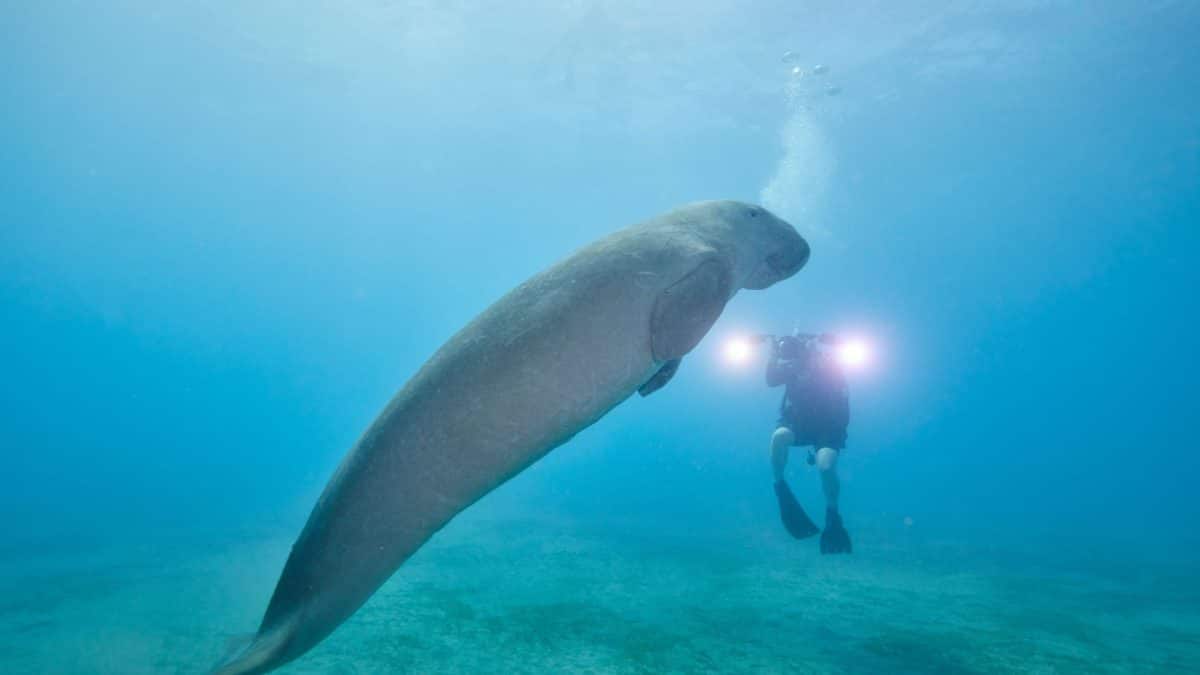
Dugongs are shy sea animals that make sounds under the water.
The scientists record the ocean and listen for dugong calls.
Right now they have to find the calls by hand because computer tools are not good enough.
They are testing a free computer tool called BirdNET to help spot dugong sounds among fish and shrimp noises.
However, they say computers cannot understand what the sounds mean.
The scientists tell us not to believe promises that computers can talk to animals.
They also worry that building big computer systems can hurt the environment.

Scientists Kavya Ramesh and Amisha said AI cannot yet reliably detect dugong calls, so their team relies on manual analysis.
The dugong acoustics project at the Nature Conservation Foundation tracks dugong populations in the Andaman Islands via passive acoustic monitoring.
The team is exploring BirdNET, an open source Cornell University tool, to detect dugong calls amid sounds like fish and snapping shrimp.
Researchers said understanding the meaning of dugong vocalisations remains a distant, active area of research.
Kavya and Amisha urged caution about overstating AI's abilities and cited ethical concerns about AI infrastructure's social and environmental impacts.
- Who
- Scientists Kavya Ramesh and Amisha of the Nature Conservation Foundation's Oceans and Coasts Programme, working under Dr Elrika D'Souza.
- What
- The researchers said AI is not accurate or reliable enough to detect or understand dugong calls, so they continue to rely on manual analysis.
- Where
- In the Andaman Islands, where dugong populations are tracked through passive acoustic monitoring.
- When
- Not specified in the articles.
- Why
- Because dugong bioacoustics is still nascent and existing AI tools are insufficiently accurate, and researchers caution against overstating what AI can do.
Cautious field researchers
AI decoding proponents
Is AI close to understanding animal communication?
Cautious field researchers
AI is not at a level where it can even detect dugong calls reliably, let alone understand their meaning; understanding remains a distant goal for lesser-studied species.
AI decoding proponents
Projects like CETI, which is working to decode sperm whale communication, add to the sense that a breakthrough in interspecies understanding might be within reach.
How should AI be used in animal research?
Cautious field researchers
AI should only help ease the workload of detecting calls in large data volumes, with human researchers continuing to manually validate outputs; the team also holds broader ethical concerns about AI infrastructure's social and environmental impacts.
AI decoding proponents
AI has been pitched as the tool that will finally let humans decode what animals say, and machine learning based acoustic detection models already exist for other bird and marine mammal species.
Key facts
- Project
- Dugong acoustics project
- Organization
- Nature Conservation Foundation, Oceans and Coasts Programme
- Lead researcher
- Dr Elrika D'Souza
- Researchers quoted
- Kavya Ramesh and Amisha
- Location
- Andaman Islands
- Method
- Passive acoustic monitoring
- AI tool explored
- BirdNET (open source, developed by Cornell University)
- Current analysis method
- Manual analysis; no AI-assisted analysis yet
Quotes
Kavya Ramesh
Researcher on dugong acoustics, Nature Conservation Foundation
“We haven't had an AI‑assisted analysis and still rely on manual analysis as there are no AI tools sufficiently accurate or reliable in detecting dugong calls.”
 firstpost.com
“We don't think AI is at a level where it can detect dugong calls let alone understand what they mean.”
firstpost.com
Sources
Related news

India's first open-access ecoacoustic dataset captures wild soundscapes

Wildlife Photography Exhibition Opens in Thanjavur for World Photography Day
ASI fails to find senior underwater archaeology consultant

AI System 'Gajraj' Alerts Train Drivers to Elephants on Tracks
AI Detection Tools Bring Accuracy Questions and Distrust to Writing