2 weeks ago
Why adolescent girls are lonelier than boys, experts say
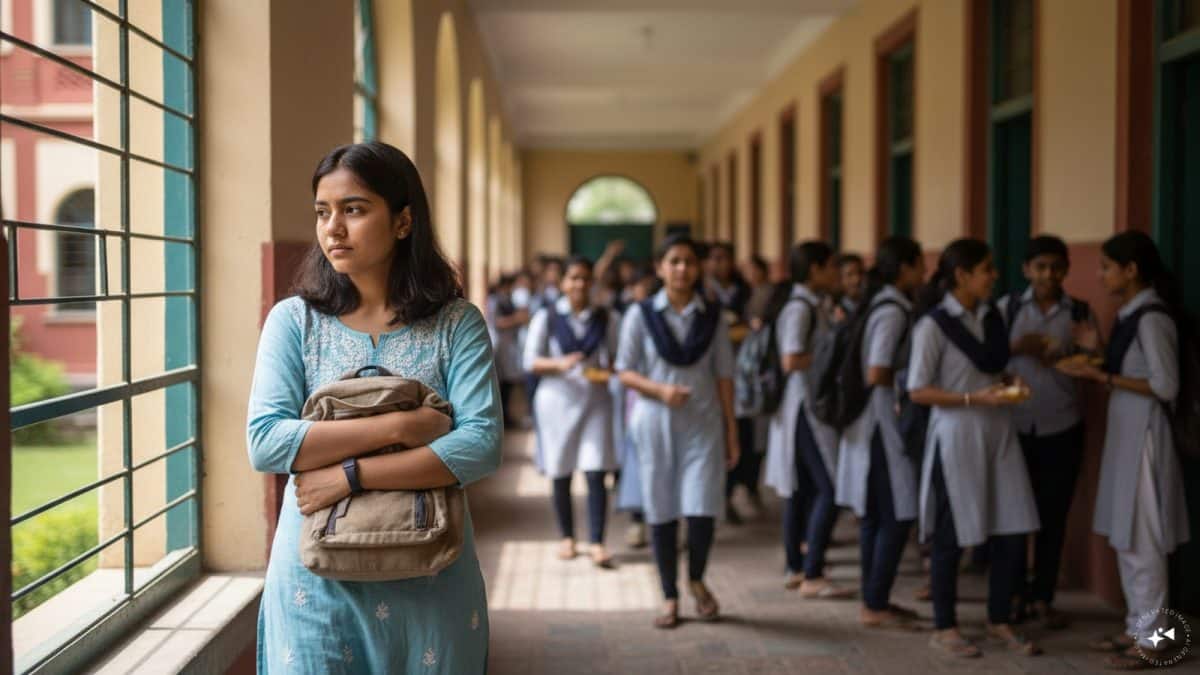
Sometimes teenagers feel lonely, even when they are surrounded by classmates, friends and family.
A big study in South Asia looked at nearly 8,000 teenagers in Afghanistan, Bangladesh and Pakistan.
It found that more girls than boys said they felt lonely: 18.1% versus 12.3%.
The study also showed that teenagers who were bullied, had no close friends, or had trouble sleeping because of worries were more likely to feel lonely.
Some experts think girls may feel more isolated because safety concerns and social expectations limit how freely they can meet people.
Others point out that boys may find it harder to talk about their feelings because of gendered expectations.
Experts say loneliness is not simply about how many friends someone has—it is about feeling safe, accepted and understood.
They believe schools can help by offering peer groups, mentoring, sports, arts and counselling to every student.
Even chatting online with many people does not always make a teenager feel less alone.
The most helpful thing for a lonely adolescent is having even one space where they feel heard.

A 2026 BMC Public Health study of 7,903 adolescents in Afghanistan, Bangladesh and Pakistan found 18.1% of girls reported loneliness versus 12.3% of boys.
The study linked loneliness to bullying, physical attacks, anxiety-related sleep disturbances, suicidal thoughts and having no close friends.
Experts say gendered expectations, safety concerns, mobility restrictions and a lack of emotionally safe spaces can deepen girls' isolation.
India's 2025 IC3 Student Well-being Pulse Report, based on more than 8,500 students, found girls were nearly twice as likely as boys to report persistent sadness.
Experts urge schools to create safe, judgment-free spaces and mental-health support, noting that online connection does not guarantee emotional safety.
- Who
- Adolescent girls and boys in Afghanistan, Bangladesh, Pakistan and India, along with mental-health experts such as Dr Mimansa Singh Tanwar of Fortis Healthcare.
- What
- A study found adolescent girls reported loneliness at higher rates (18.1%) than boys (12.3%) and examined how gendered expectations and social barriers deepen isolation.
- Where
- South Asia — the study covered Afghanistan, Bangladesh and Pakistan, with a separate student survey in India.
- When
- Study findings published in 2026; the supporting Indian survey was released in 2025.
- Why
- Experts attribute the gap to gendered expectations, safety concerns, mobility restrictions, academic pressure and a lack of emotionally safe spaces.
Direct statistical interpretation
Expert contextual interpretation
What the gender gap means
Direct statistical interpretation
The figures show a clear difference: 18.1% of girls versus 12.3% of boys reported loneliness, indicating girls genuinely feel lonelier.
Expert contextual interpretation
Experts caution against concluding girls are simply 'more lonely'; the gap reflects gendered expectations, safety restrictions and a lack of emotionally safe spaces.
How schools should respond
Direct statistical interpretation
Girls who face restrictions in other areas of social life may need dedicated spaces to build friendships and seek help.
Expert contextual interpretation
The aim should not be separate spaces only for girls, but inclusive school environments where every adolescent can connect without judgment.
Key facts
- Study
- BMC Public Health, 2026
- Sample size
- 7,903 adolescents
- Study countries
- Afghanistan, Bangladesh, Pakistan
- Girls reporting loneliness
- 18.1%
- Boys reporting loneliness
- 12.3%
- Indian report
- 2025 IC3 Student Well-being Pulse Report (8,500+ students)
- Persistent sadness in India
- Girls nearly twice as likely as boys
- Factors linked to loneliness
- Bullying, physical attacks, anxiety-related sleep disturbances, suicidal thoughts, no close friends
Quotes
Dr Mimansa Singh Tanwar
Clinical psychologist and head of a mental health program at Fortis Healthcare
“"The gender gap within the loneliness gap is not necessarily about who feels lonelier, but rather about how gendered expectations can create or deepen feelings of isolation," Tanwar said.”
 firstpost.com
“"Loneliness is not gender-specific," said Dr Mimansa Singh Tanwar, Clinical Psychologist and Head of Fortis School Mental Health Program.”
firstpost.com
Reshmithaa Nair
Counselling psychologist at SPARSH Hospital, Bengaluru
“"The 18.1% figure among girls, compared with 12.3% among boys, therefore warrants greater attention from families, schools, psychologists and communities," she said.”
firstpost.com
Sources
Related news

Indian Students Report Falling Wellbeing and Limited Formal Support

Women Students Highlight Harassment and Education Barriers at Pune Programme

Phones, Failure and Fear: Why Young People Reach Extremes

Gender-Sensitive Courts Face India’s Deeper Social Barriers
ChatGPT Teen Safeguards Face Questions Among Indian Users

Bangladesh Recall Shanto, Mahmud for Asian Games T20 Squad

Sharma and Malik share halfway lead at Telangana Golconda Masters

India Replaces Sri Lanka as 2027 Women’s Champions Trophy Host

Centre Assures JDU Bihar’s Interests In Farakka Treaty Decision

India’s Record Wheat Harvest Opens $1.5 Billion Export Window