1 week ago
Book Reimagines the Male Gaze Through Indian Cinema's Voices

Shoma A. Chatterji wrote a book about how Indian films show women.
Many film critics use the idea of the “male gaze,” which says women are often shown mainly for men to look at.
Chatterji agrees that women are frequently suppressed in mainstream cinema.
But she says some films show women with understanding rather than treating them only as objects.
She asks readers to listen to women in films, not just look at them.
Pauses, gestures and silence can reveal what a character feels.
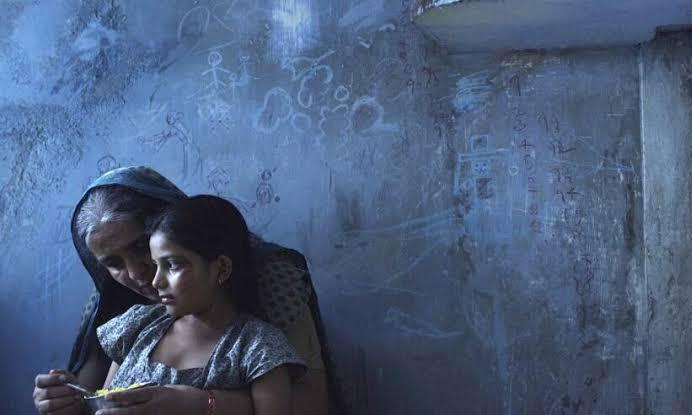
In one film, death expresses grief and rebellion, while in another, dance becomes a way for a woman to speak.
The book studies Indian cinema across 64 years and offers a new way to understand women’s voices on screen.

Shoma A. Chatterji’s 34th book examines women’s representation in Indian cinema from 1935 to 2000.
The book revisits Laura Mulvey’s theory that mainstream cinema often presents women as objects of masculine visual pleasure.
Chatterji argues that some films use an empathetic, rather than objectifying, male gaze to explore women’s emotional and social worlds.
She shifts attention from the female image to the female voice, including pauses, gestures, silence, death and dance.
Her readings of films by Ritwik Ghatak, Vijay Anand and other major Indian filmmakers propose sound and silence as forms of female expression.
- Who
- Film critic and author Shoma A. Chatterji, writing about women’s representation in Indian cinema.
- What
- A critical study that reexamines the male gaze and emphasizes female voice, silence and other forms of expression.
- Where
- Indian cinema.
- When
- The book studies films spanning 1935 to 2000; it is Chatterji’s 34th book.
- Why
- To question whether the male-gaze framework fully explains Indian films and to show how sound, silence and gesture can express women’s inner lives.
Key facts
- Author
- Shoma A. Chatterji
- Book
- The Male Gaze Redefined Through Mother India and Other Classics of Indian Cinema
- Book number
- Chatterji’s 34th book
- Coverage
- Indian films released between 1935 and 2000
- Chapters
- 11
- Central argument
- The male gaze can sometimes be empathetic rather than objectifying.
- Key concepts
- Female voice, silence, death, dance and sound
Quotes

Shoma A. Chatterji
Film critic and author of The Male Gaze Redefined Through Mother India and Other Classics of Indian Cinema
“Within mainstream cinema the Indian woman has been a victim of every imaginable kind of suppression, oppression, subordination and humiliation.”
 thestatesman.com
“no Indian filmmaker before, during and after Ghatak has been able to use sound as an essential language of cinema”
thestatesman.com
Sources
Related news
Five Rituparno Ghosh Films That Challenged Gender and Patriarchy
Indian Cinema Moves From Caste Sympathy Toward Resistance

Monalisa Says Presentation Shapes Debate Over Women’s Objectification
Radhika Apte Criticizes Bollywood’s Romanticized Stalking

Babita Singh Reporting and Gandhari Offer Contrasting Female Justice Stories