1 day ago
Creators and Algorithms Reshape India’s Political Communication Ecosystem
Politics in India is no longer communicated only through speeches, television or party announcements.
Social media platforms now help decide which political messages people see.
Instagram especially promotes short, emotional and visual content.
This allows memes, reels and videos to explain political issues in simple and attractive ways.
Independent creators can sometimes reach young people more effectively than political parties.
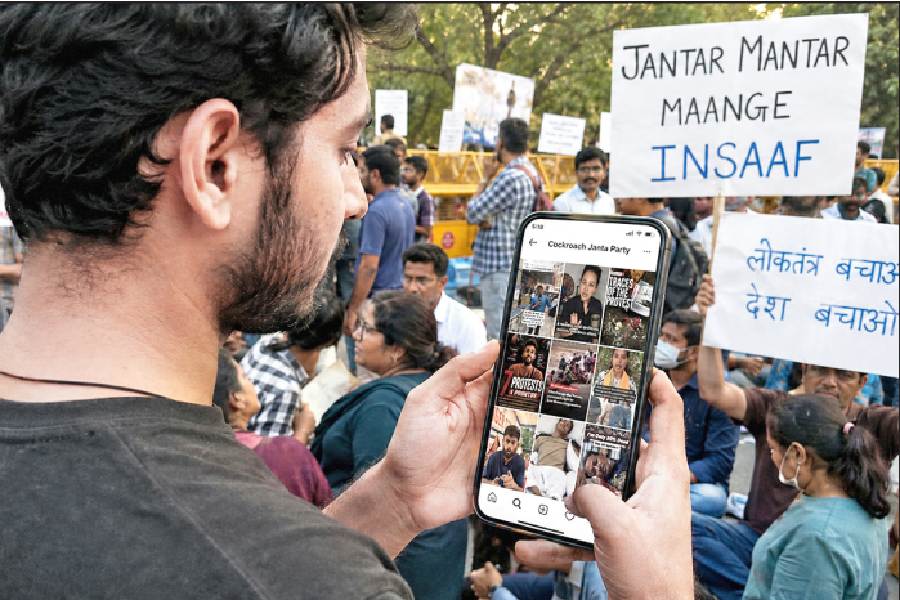
The Cockroach Janta Party is described as an example of online content helping keep a protest visible.
Online activity and street protests can now support each other.
The article says Opposition parties should work with many independent creators instead of relying only on official accounts.
In this new system, algorithms and creators help shape what politics looks like and which issues receive attention.

The departures of Dharmendra Pradhan and Amit Malviya are presented as signs of change in India’s political communication.
Political communication is shifting from party-controlled messaging toward creator-led content and algorithmic discovery.
Instagram rewards emotional, visual and culturally relevant formats such as reels, memes and explainers.
The Cockroach Janta Party showed how digital content could help sustain protest and connect online participation with street politics.
The article argues that Opposition parties need decentralized creator networks rather than traditional IT cells or official messaging.
- Who
- Political parties, content creators, influencers, meme-makers, student groups and younger audiences in India.
- What
- India’s political communication is shifting from party-controlled messaging toward creator-led and algorithmically recommended content.
- Where
- India, particularly across social media platforms such as Instagram, Facebook and WhatsApp.
- When
- The shift is discussed in the context of the departures of Dharmendra Pradhan and Amit Malviya, which occurred little more than three weeks apart.
- Why
- Platforms increasingly shape how political content is discovered, understood and shared, while creators can influence public attention and mobilization.
Key facts
- Political departures
- Former Union education minister Dharmendra Pradhan stepped down after months of student-led anger over examination irregularities; the Bharatiya Janata Party later retired its social media chief, Amit Malviya.
- Earlier digital strategy
- The Bharatiya Janata Party’s 2014 campaign used Facebook, WhatsApp and television as part of a broader communications infrastructure.
- 2019 ecosystem
- By 2019, the party’s digital model included advertising, data analytics, content production and coordinated outreach.
- Instagram’s model
- Instagram is described as relying on algorithmic discovery rather than primarily on broadcasting or personal networks.
- Content formats
- Political speeches, government reports and protest slogans can be converted into reels, infographics and memes.
- Movement example
- The Cockroach Janta Party is presented as a movement sustained by Instagram reels, reposts and memes.
- Proposed Opposition strategy
- The article recommends decentralized networks involving educators, satirists, regional creators, comedians, podcasters, student groups and independent commentators.
Sources
Related news
Instagram Engagement Surges as Indian Politics Targets Gen Z
Telangana Parties Reset Political Reach Through Instagram and Ground Connect
Shashi Tharoor Urges Opposition to Learn From Youth Revolt

Political Parties Turn Social Media Into Gen Z Election Battlefield
From TV Studios to Smartphones: India's Information Revolution

AI-Powered Cockroach Janta Party Satirises Chief Justice's Youth Remarks

Government Defends 7.8% GDP Growth as Congress Raises Doubts
Kerala BJP Chief Attacks IUML Over Sharia Law Allegations
BJP, Karni Sena Criticize Swara Bhasker’s Padmaavat Comments
Akhilesh Yadav Questions Irregularities After Ram Temple CEO Appointment
Jharkhand Authorities Probe Voter Deletion Forms After Express Report