

4 days ago
India’s Fertility Crisis Highlights Delayed Parenthood and Reproductive Awareness
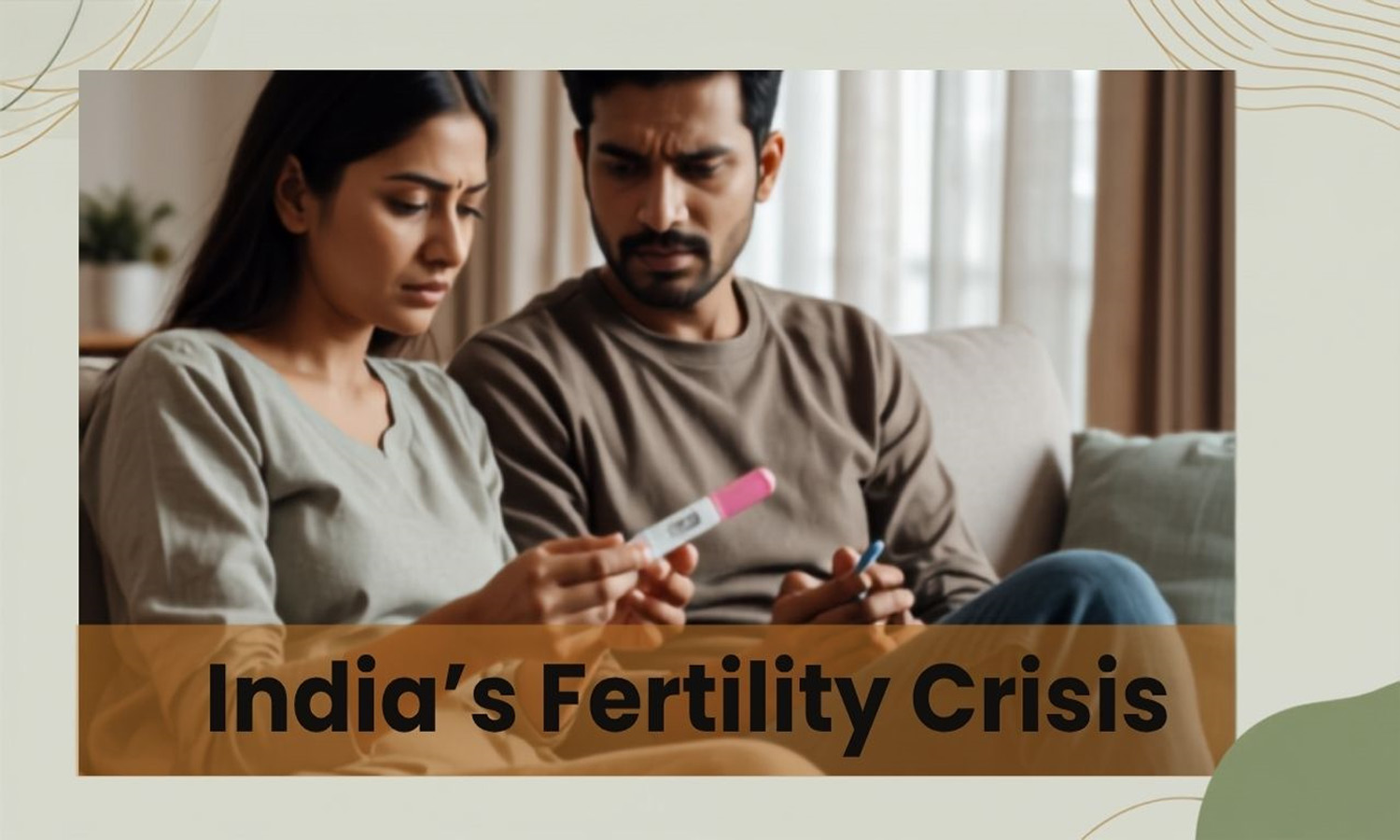
Many couples in India are choosing to have children later in life.
This can make having a baby more difficult because fertility changes with age.
Both women’s and men’s health can affect the chances of pregnancy.
Problems may involve eggs, sperm, ovulation or other medical conditions.
Polycystic ovary syndrome, called PMOS in the article, can make ovulation irregular.
Smoking, heavy alcohol use, obesity, poor sleep, stress and some environmental exposures may also affect reproductive health.
Looking healthy does not always mean that a person is fertile.
Couples can seek a basic medical checkup to learn more without automatically deciding to use IVF.
The article says people need accurate information, not fear or blame, when making decisions about parenthood.

Infertility affects about one in six people of reproductive age worldwide, according to the World Health Organization.
Delayed parenthood can coincide with age-related changes in egg and sperm quality, though experiences vary between individuals.
Male factors, including sperm abnormalities, can contribute significantly to difficulty conceiving and should be assessed alongside female factors.
Polycystic ovary syndrome, referred to as PMOS in the article, is a major cause of irregular ovulation and infertility.
Experts recommend informed fertility awareness and timely evaluation rather than fear, blame or assumptions that assisted reproduction is inevitable.
- Who
- Couples trying to conceive, along with the healthcare professionals assessing their reproductive health.
- What
- The article examines why natural conception can become difficult and calls for earlier, better-informed fertility awareness and evaluation.
- Where
- India, with global fertility data cited from the World Health Organization.
- When
- The issue is becoming more important as couples increasingly delay parenthood; infertility is generally defined as not conceiving after 12 months of regular, unprotected intercourse.
- Why
- Difficulty conceiving can result from interacting factors including age, egg and sperm health, ovulation problems, medical conditions, lifestyle and environmental exposures.
Key facts
- Global infertility estimate
- The World Health Organization estimates that around one in six people of reproductive age experience infertility at some point.
- General infertility definition
- Infertility is generally defined as not achieving pregnancy after 12 months of regular, unprotected intercourse.
- Age and fertility
- Egg number and quality decline over time, while male fertility can also be affected by age and health factors.
- Male factors
- Potential issues include sperm production, count, movement, shape and problems involving the reproductive tract.
- Ovulation disorder
- The article identifies PMOS, its term for polycystic ovary syndrome, as a leading cause of anovulation and infertility.
- PMOS prevalence
- The World Health Organization estimates that PMOS affects 10–13% of reproductive-aged women globally.
- Fertility assessment
- A basic evaluation may examine ovulation, tubal or uterine issues, ovarian reserve and sperm parameters.
Sources
Related news
India’s Falling Fertility Signals A Gradual Demographic Shift
New study links gut bacteria, not just hormones, to fertility
Gujarat Couples Challenge IVF Age Cutoff Amid Advanced-Pregnancy Risks

Why Indians Are Ageing Faster Than They Realise

Doctors Explain Overlapping Symptoms Of PCOS, Endometriosis And Ovarian Cancer
Doctor With PCOS Took Inositol for 60 Days, Shares Results

Childhood obesity a major concern, health issues rise in India

Yoga's Role in Managing PCOS Symptoms
