1 week ago
India's BRICS Presidency Must Turn Advocacy Into Delivery
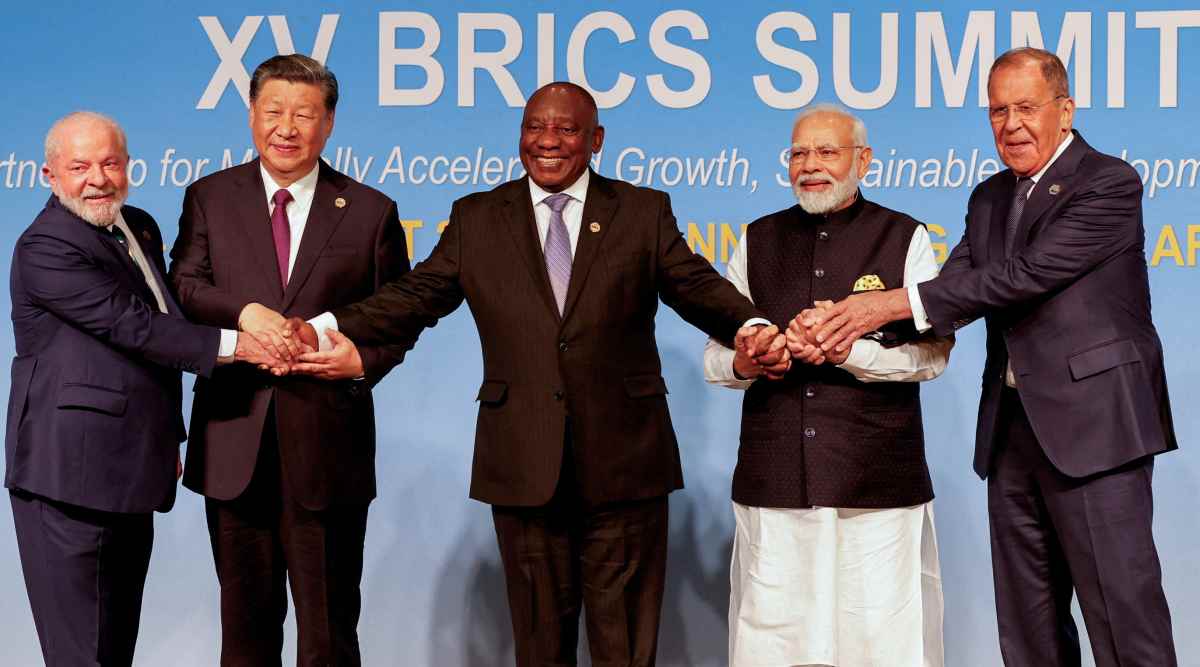
BRICS is a group of large non-Western countries that want developing nations to have more influence in world affairs.
India is leading the group before hosting its summit in New Delhi.
The group has grown larger, which gives it more power but also makes agreement harder.
Its ministers recently disagreed about how to describe some international issues.
The article says BRICS should not be judged only by whether members sign the same statement.
Instead, it should build useful projects that help countries solve real problems.
These projects could include infrastructure, digital technology, energy, food, and climate adaptation.
The New Development Bank could help pay for many of these projects.
India’s presidency will be most successful if its plans continue after China takes over in 2027.

India’s BRICS presidency has prioritised global-governance reform, stronger development financing, local currencies, digital innovation, and energy, health and food security.
The expanded group represents 45% of the world’s population and 37% of global GDP measured by purchasing-power parity.
Disagreements prevented BRICS foreign ministers from issuing joint communiqués in 2025 and 2026, highlighting the difficulty of consensus.
The proposed agenda includes stronger New Development Bank financing, technology sharing, resilient supply chains, and cooperation on energy and food security.
India’s presidency should ultimately be judged by whether its initiatives continue producing measurable results after China assumes the chair in 2027.
- Who
- India, the BRICS members, and participating leaders including Vladimir Putin, Xi Jinping, Luiz Inácio Lula da Silva, and Masoud Pezeshkian.
- What
- India is seeking to make BRICS more capable of delivering practical cooperation while advancing reform of global governance.
- Where
- The summit is to be held in New Delhi, India; India’s presidency has included meetings in more than 60 cities.
- When
- India’s presidency culminates in the 18th BRICS Summit on September 12-13; China is scheduled to take the chair in 2027. BRICS foreign-minister disagreements cited in the article occurred in 2025 and May 2026.
- Why
- The article argues that geopolitical rivalry, technological competition, sanctions, supply disruptions, and climate shocks require greater resilience and practical cooperation.
Key facts
- Summit
- The 18th BRICS Summit is scheduled for September 12-13 in New Delhi.
- BRICS population share
- BRICS countries account for 45% of the world’s population.
- BRICS economic share
- BRICS accounts for 37% of global GDP measured by purchasing-power parity.
- India’s presidency
- India has taken the BRICS conversation to more than 60 cities through over 100 meetings.
- Institutional priority
- The New Development Bank is identified as BRICS’s key institutional achievement.
- Proposed technology initiative
- A Digital BRICS Technology Cooperation Exchange would match validated technologies with development needs across the Global South.
- Currency approach
- The article supports wider use of national currencies and interoperable payment systems, while describing a common BRICS currency as distant.
Sources
Related news
India Balances Strategic Autonomy and Multilateralism at BRICS Summit
BRICS Expansion Puts Membership and Reform at New Delhi Summit
Delhi BRICS Summit to Advance Climate Cooperation and Resilience
India’s BRICS Summit Tests Leadership in a Divided World
India Seeks Consensus Before Expanded BRICS New Delhi Summit
India’s 7.8% Growth Broad-Based, but Jobs Remain Challenge
India Pursues Global Mineral Pacts to Secure Supply Chains
Nepal Plans New Landslide Warning System Along China Border

RBI Governor Meets US Fed Chief Kevin Warsh at G20

Tencent-Backed Enflame IPO Draws Massive Investor Demand