17 hrs ago
Historian Links Gandhi’s Satyagraha to Smartphone-Era Youth Protest
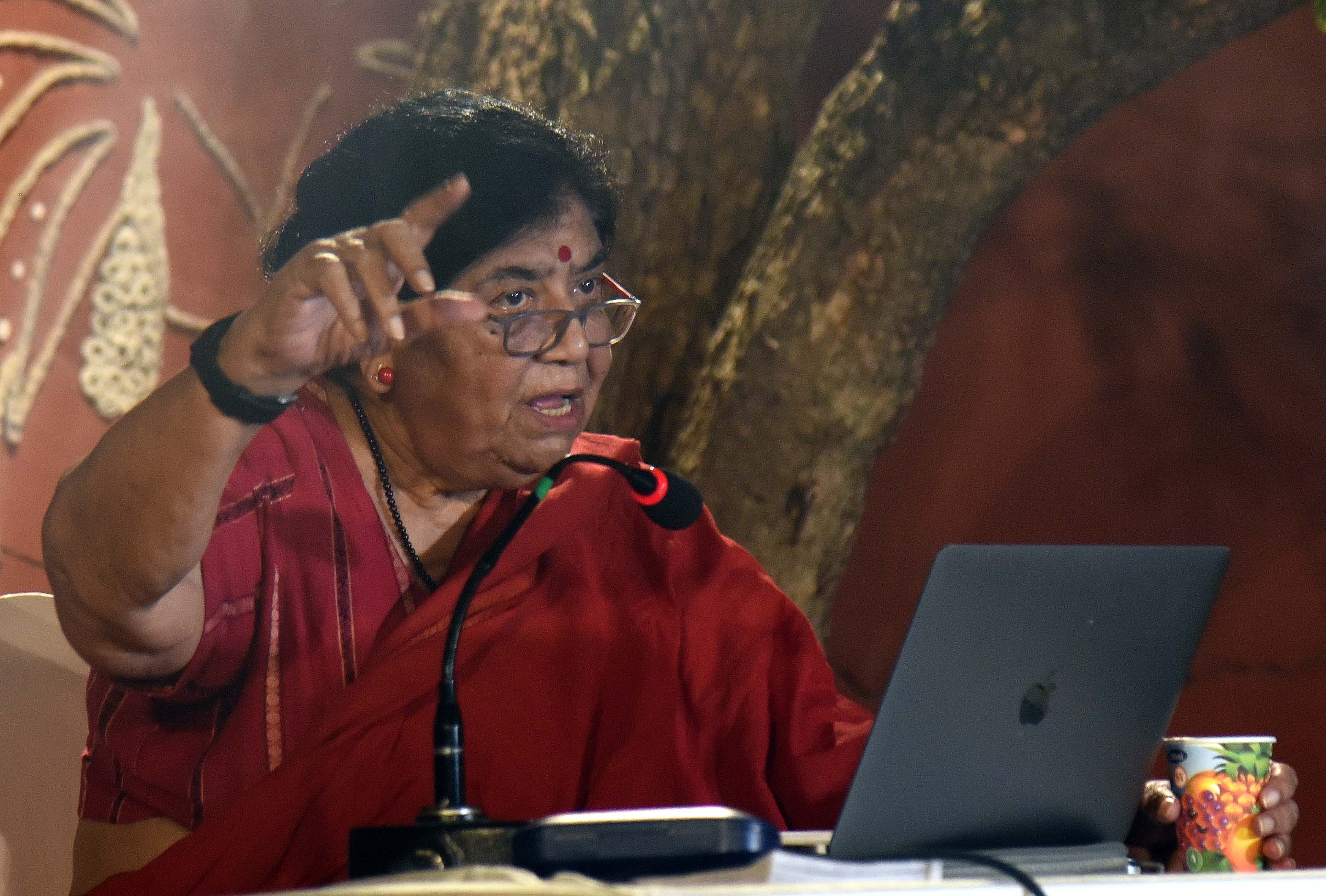
Mridula Mukherjee gave a talk about peaceful protests.
She compared Gandhi’s protests with a recent youth protest at Jantar Mantar.
Gandhi believed many ordinary people could make change without using violence.
Peaceful crowds could make the government look weak if it ignored them or harsh if it attacked them.
The young protesters used sit-ins, songs, jokes, slogans and fasting.
They also refused to leave when police ordered them to go home.
Smartphones let protesters record events and share what happened.
Police action brought more young people, parents, food and donations to the protest.
Mukherjee said she was studying what this kind of protest might mean for the future.

Historian Mridula Mukherjee connected Gandhi’s non-violent resistance with a recent youth protest at Jantar Mantar.
She said smartphones allow every protester to document events and act as a reporter.
Mukherjee argued that peaceful mass participation can weaken state authority or make repression appear brutal.
She identified sit-ins, fasting, slogans, songs, satire and refusal to leave as features shared with Gandhian protest.
The lecture examined how contemporary mobilisation could influence society and future forms of resistance.
- Who
- Historian Mridula Mukherjee, young protesters and the Cockroach Janata Party.
- What
- A lecture linked Gandhi’s satyagraha and non-violent resistance with a recent youth mobilisation.
- Where
- The lecture took place at Vidyaranya High School in Hyderabad, and the youth protest took place at Jantar Mantar.
- When
- The lecture was delivered on a Friday in 2026; the protest was described as recent.
- Why
- Mukherjee sought to understand how peaceful mass protest works, its social impact and its meaning for future resistance.
Key facts
- Speaker
- Mridula Mukherjee
- Lecture
- Ajay Gandhi Memorial Lecture 2026, titled “Non-violent Resistance: From the Mahatma to the Cockroaches”
- Lecture venue
- Vidyaranya High School, Hyderabad
- Protest location
- Jantar Mantar
- Protest methods
- Sit-ins, fasting, slogans, songs, satire and refusal to leave
- Technology’s role
- Smartphones enabled protesters to document events and act as reporters
- Historical examples
- Bhoodan, Chipko, Narmada Bachao Andolan, anti-liquor and rights movements
Quotes
Mridula Mukherjee
Historian and former Centre for Historical Studies, Jawaharlal Nehru University, professor
“It removes the fear of authority by showing it is possible to fight and often win in very adverse circumstances”
 deccanchronicle.com
“A close look at the contours of this youth protest demonstrates all the typical features of a Gandhian protest”
deccanchronicle.com
Sources
Related news

Rahul Gandhi lauds youth courage against 'Modi's violent regime'

Gen Z Protests Knock on India’s Democratic Door
After 36 Days, Cockroach Movement Leaves Government Facing Youth Discontent
Youth Protests Force Exam Cancellations and Political Concessions