1 day ago
India’s Lending Rules Struggle to Fund Cash-Flow Businesses
Many Indian businesses need money to grow, but banks often want land or buildings as security.
Newer businesses may not own those things.
Instead, they may have leases, contracts, customers and regular payments.
This can make them profitable but still difficult to finance.
The article says banks should study what businesses actually earn, not only what they own.
Bank records and GST records can help verify those earnings.
The Account Aggregator system could allow businesses to share this information with lenders.
Highway businesses with predictable income could be used to test this approach first.

Indian businesses often pay more for capital because lending relies heavily on owned assets rather than demonstrated earning capacity.
The article says MSMEs face a credit shortfall of Rs 20-25 lakh crore, according to a Parliamentary Standing Committee estimate cited for June 2026.
Highway amenities businesses may have long-term leases, steady collections and recurring profits but lack the property typically required for bank loans.
Account Aggregator data, banking records and GST records could help lenders assess verified revenues and repayment capacity.
The article advocates testing cash-flow-based lending with government-backed or highly contracted highway businesses before expanding it to other enterprises.
- Who
- Indian businesses, especially micro, small and medium enterprises, lenders and highway-amenity operators.
- What
- The article argues that India should expand cash-flow-based lending alongside traditional collateral-based lending.
- Where
- India, including businesses operating around the country’s highways.
- When
- The article cites a Parliamentary Standing Committee estimate from June 2026 and discusses India’s next phase of growth.
- Why
- Traditional lending may exclude viable businesses that have reliable contracts and revenues but lack conventional collateral.
Cash-Flow-Based Lending
Collateral-Based Lending
How lenders should assess businesses
Cash-Flow-Based Lending
Lenders should use verified collections, GST sales, contracts and recurring cash flows to evaluate repayment capacity.
Collateral-Based Lending
Traditional lending emphasizes assets that can be pledged, such as property, as a conventional safeguard for repayment.
Who can receive financing
Cash-Flow-Based Lending
Businesses with long-term leases and predictable revenues should be financeable even without owned real estate.
Collateral-Based Lending
Businesses lacking conventional collateral may remain difficult to finance under existing risk-assessment practices.
Key facts
- Estimated MSME credit shortfall
- Rs 20-25 lakh crore, described in the article as more than $200 billion.
- Current lending emphasis
- Conventional collateral such as property and other owned assets.
- Proposed approach
- Assess verified business revenues, contracts and future cash generation.
- Potential data sources
- Account Aggregator records, banking transactions and GST records.
- Suggested testing ground
- Government-backed or highly contracted highway infrastructure businesses.
- Example of institutional investment
- Canada Pension Plan Investments has invested substantially in India’s National Highways Infra Trust, whose value is linked to highway toll cash flows.
Quotes
The article’s author
The author argues that lenders should shift from collateral-based assessment toward verified future earnings.
“What can a business pledge? What can a business prove it will earn?”
 firstpost.com
Sources
Related news

Three NBFCs Position for India’s Next Unsecured Credit Cycle

RBI Governor Says FinTechs Are Closing India’s MSME Credit Gap

VSURE CEO Sees Long-Term Potential Beyond AI in India

India’s Gold Loans Surge Fourfold Despite Low Household Gold Penetration

India Could Use GST to Accelerate Circular Economy

India’s 7% Growth Faces Capital, Investment and Judicial Hurdles
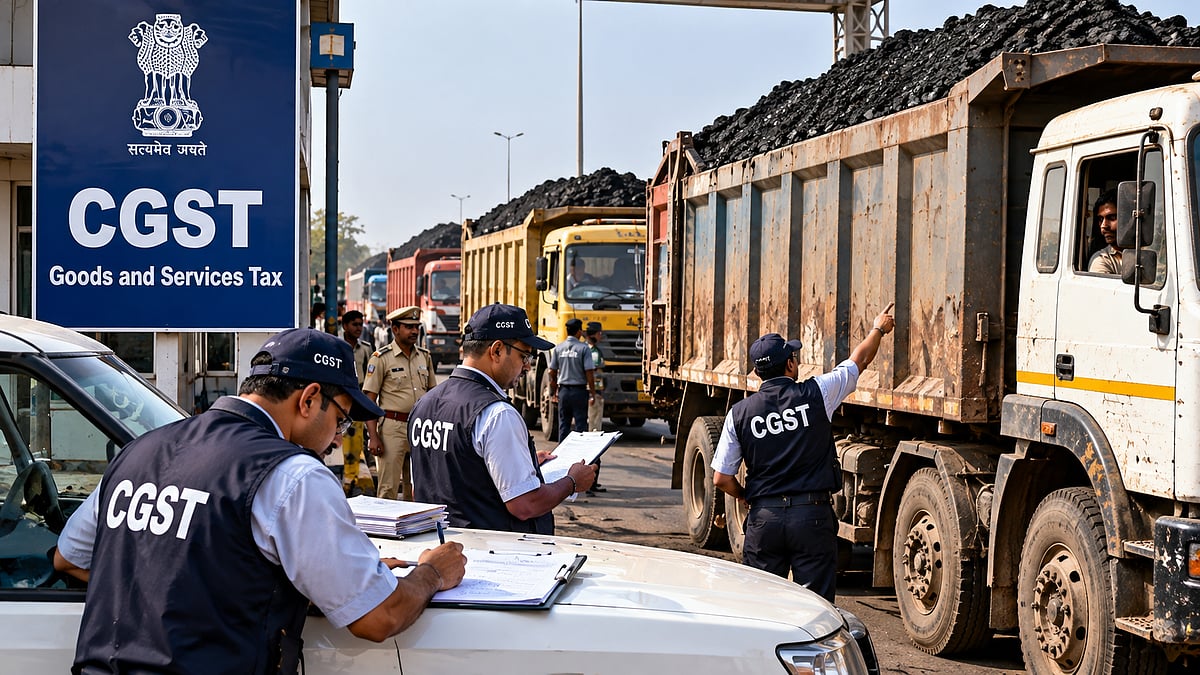
CGST Checks Halt Coal Trucks in Assam, Recover ₹40.42 Lakh
Sectors Seek GST Relief as Duty Inversions Lock Credits

Andhra Pradesh Commercial Tax Collections Rise 18% in First Half

Telangana Leads States in September GST Collection Growth
ICICI Bank Faces ₹229 Crore GST Show Cause Notice