2 hrs ago
India To Promote Digital Currencies for BRICS Cross-Border Payments
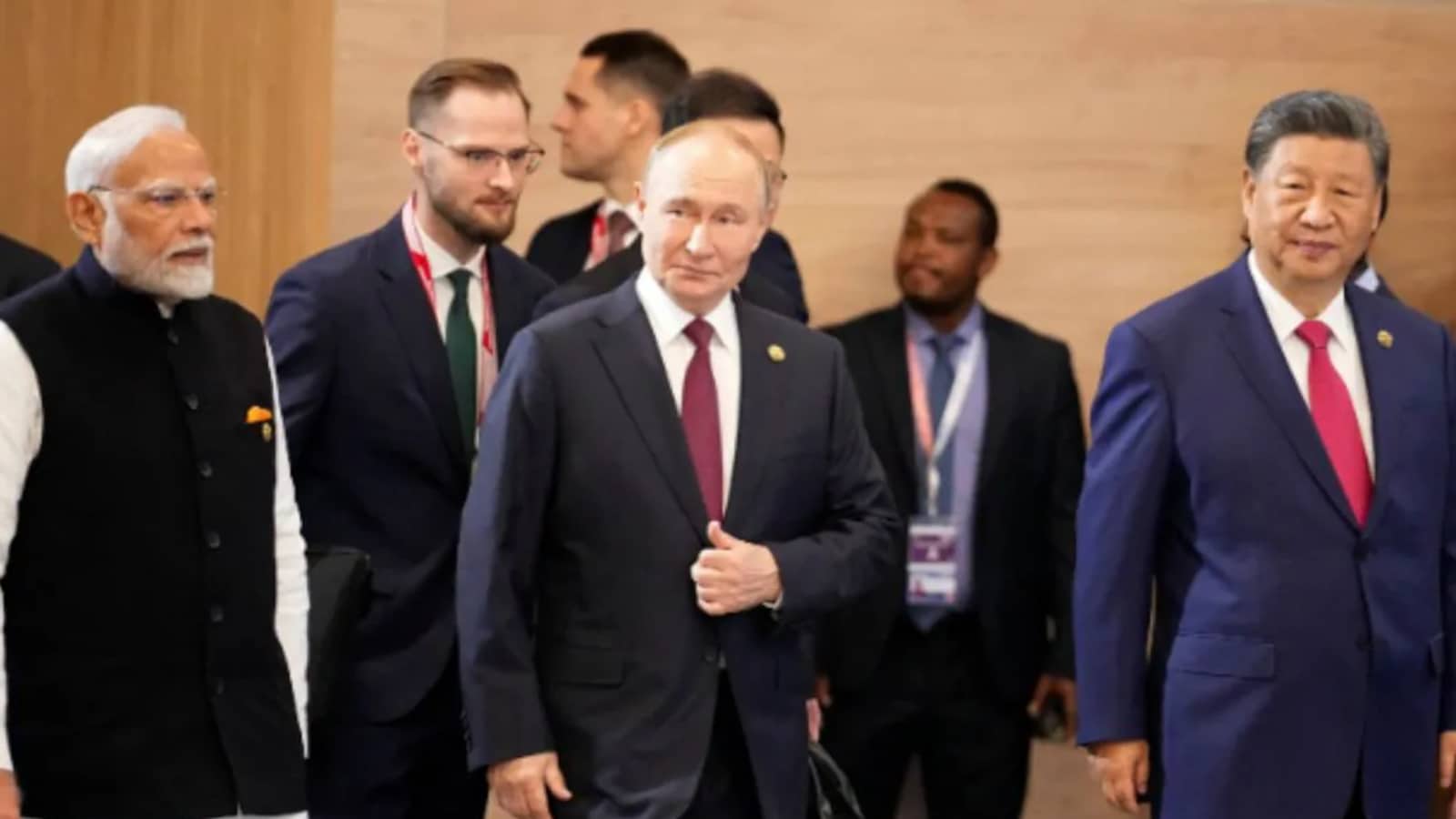
India wants BRICS countries to use digital money created by their central banks when trading with one another.
This could make payments faster and cheaper.
India prefers countries to connect their separate digital currencies rather than create one large BRICS payment system.
A single system might be seen as competing with the dollar and Western payment networks.
BRICS countries have been looking for other ways to make payments after some Russian banks lost access to SWIFT.
India also wants more trade to be paid for in countries’ own currencies.
India, China and Russia are testing central bank digital currencies.
India has already connected its UPI payment system with Singapore’s PayNow.

India plans to propose linking BRICS central bank digital currencies for bilateral trade payments.
New Delhi is unlikely to support a unified BRICS-wide payments network viewed as a challenge to the dollar.
The proposal aims to reduce reliance on banks, lower transaction costs and increase local-currency trade settlement.
BRICS members have pursued alternatives to SWIFT, especially after Russian banks were disconnected following the 2022 invasion of Ukraine.
India, China and Russia are testing digital currencies, while India has linked its UPI system with Singapore’s PayNow.
- Who
- India, Prime Minister Narendra Modi and other BRICS members, including China, Russia and South Africa.
- What
- India is expected to propose linking central bank digital currencies for cross-border trade payments.
- Where
- Among BRICS countries, with discussions taking place in connection with the summit in New Delhi.
- When
- The proposal is expected to be discussed at the BRICS leaders’ summit in New Delhi this weekend; India is chairing BRICS this year.
- Why
- To reduce reliance on banks and the dollar-linked global payments system, lower costs and promote local-currency trade settlement.
Linked National Digital Currencies
Unified BRICS Payments Network
Payment architecture
Linked National Digital Currencies
India favors connecting countries’ central bank digital currencies for bilateral transactions while keeping national systems separate.
Unified BRICS Payments Network
A bloc-wide settlement system would more directly link BRICS payment systems, but the article says an agreement at the upcoming summit is unlikely.
Geopolitical signal
Linked National Digital Currencies
India’s approach is described as development focused and intended to support trade and economic ties without presenting BRICS as anti-dollar or anti-Western.
Unified BRICS Payments Network
A unified system could be viewed as a rival to SWIFT and as evidence that BRICS is explicitly challenging the dollar or Western financial systems.
Key facts
- India’s position
- Support linking central bank digital currencies, but remain cautious about a unified BRICS payments network.
- BRICS members mentioned
- Brazil, Russia, India, China and South Africa are the bloc’s members; the article specifically discusses China, Russia, India and South Africa.
- Local-currency trade
- About 96% of India’s trade with Russia reportedly uses established rupee-ruble mechanisms.
- Digital currency testing
- India, China and Russia are experimenting with central bank digital currencies; India’s digital rupee is in pilot testing.
- Existing payment link
- India’s Unified Payments Interface is connected with Singapore’s PayNow for remittances.
- Other local-currency agreements
- India has agreements involving the United Arab Emirates, Mauritius, Maldives and Indonesia.
- Policy rationale
- Economist Sonal Varma said local-currency settlement can conserve dollar reserves for strategic imports while supporting routine trade financing.
Quotes

Randhir Jaiswal
Spokesman for India's Ministry of External Affairs
“Local-currency settlement can help conserve scarce dollar reserves for strategic imports while enabling routine trade financing in local currency”
 NDTV
NDTV
“We will continue our efforts to internationalize the rupee and promote the use of local currencies for cross-border payments and for trade”
NDTV
Sources
Related news
BRICS Focuses on Local-Currency Payments, Not a Common Currency
BRICS explores local-currency payments to reduce dollar dependence
BRICS Leaders Eye Local-Currency Trade, Not Common Currency

Russia Says National Currencies Handle Most BRICS Trade

India to Showcase UPI at 2026 BRICS Summit
BRICS Summit to Prioritise National Currencies, NDB Capital Role

US Homeland Security Post Criticized as Anti-Indian and Racist
BRICS Pushes Global South Representation Beyond Western Institutions
Xi Jinping’s BRICS Visit to India Remains Uncertain Without Confirmation

Jefferies Identifies Six Sectors Powering India’s Industrial Revolution