1 week ago
India Weighs Random Dope Tests for All Commercial Pilots
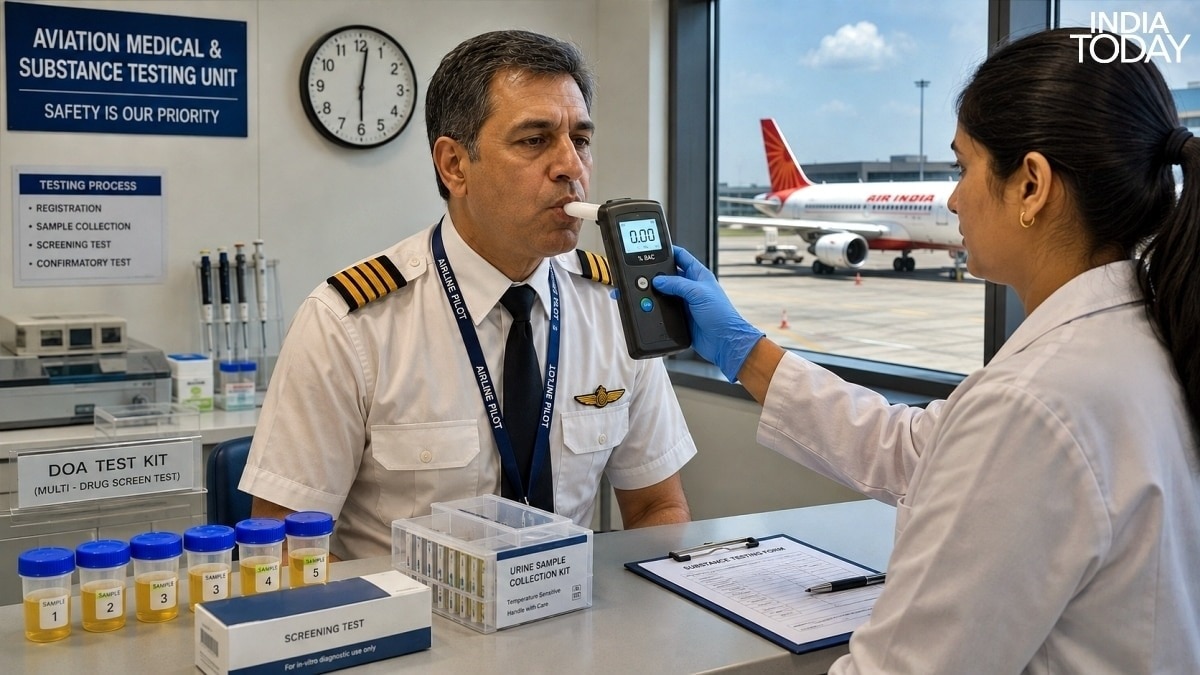
India is thinking about testing every commercial pilot for drugs at random times.
Right now, the rule tests about 10% of pilots.
The aviation regulator is studying whether the bigger testing program would improve safety.
It is also checking whether the plan could disrupt airline operations.
Current rules already require random testing of pilots and air traffic controllers.
The tests look for several substances, including cannabis, cocaine and some medicines.
Air India started testing its pilots after an incident on August 4.
A preliminary test of that flight’s pilot was positive, but the final result has not been officially confirmed.

India is considering expanding random drug testing from 10% of pilots to all airline pilots.
The Directorate General of Civil Aviation is assessing the proposal’s effect on aviation safety and airline operations.
Existing rules require random testing of flight crew and air traffic controllers by operators and air navigation service providers.
Tests cover substances including amphetamines, opiates, cannabis, cocaine, barbiturates and benzodiazepines.
Air India began testing pilots after the August 4 incident, whose pilot had a preliminary positive screening result that remains unconfirmed.
- Who
- The Indian aviation regulator, airlines, commercial pilots and air traffic controllers.
- What
- India is considering random drug tests for all commercial airline pilots instead of the current 10% requirement.
- Where
- India.
- When
- The proposal is under assessment; Air India began pilot testing after the August 4 incident.
- Why
- To address aviation safety concerns while assessing the operational impact on airlines.
Expanded Safety Testing
Operational Impact Concerns
Testing all pilots
Expanded Safety Testing
Testing every pilot randomly could strengthen safeguards by identifying possible substance use among people performing safety-sensitive duties.
Operational Impact Concerns
The Directorate General of Civil Aviation must assess whether universal testing would create operational difficulties for airlines.
August 4 incident
Expanded Safety Testing
The preliminary positive screening result involving the flight’s pilot has prompted Air India to conduct drug tests on its pilots.
Operational Impact Concerns
The result has not been officially confirmed, so conclusions should not be drawn from the preliminary screening alone.
Key facts
- Current testing rule
- Random testing currently applies to 10% of pilots.
- Proposed coverage
- Every airline pilot could be tested at a random time.
- Pilot workforce
- India employs more than 11,000 commercial pilots, while the overall number of pilots is estimated at about 25,000.
- Existing requirements
- Scheduled commercial aircraft operators and air navigation service providers must randomly test flight crew and air traffic controllers.
- Substances covered
- Amphetamines, opiates and metabolites, cannabis THC, cocaine, barbiturates and benzodiazepines.
- Action after non-negative screening
- The employee is immediately removed from safety-sensitive duties until a confirmatory report is received.
- Air India testing
- Air India began testing pilots after the August 4 incident; the pilot’s preliminary screening was positive for psychoactive substances, but confirmation was not officially available.
Quotes

Naidu
Official identified in the article as Naidu, discussing proposed aviation drug-testing rules
“At present, the dope test rule is 10%, and we want every pilot to go through it at a random time. The Directorate General of Civil Aviation (DGCA) is assessing the impact of expanding the requirement to cover all airline pilots. The move would have to balance aviation safety with its operational impact on airlines”
 businesstoday.in
Sources
Related news

India Weighs Year-Round Random Drug Tests for Pilots
India Weighs Annual Dope Tests After Air India Incident

India Weighs Annual Random Drug Tests for Every Pilot
India Weighs Annual Drug Testing for All Pilots After Incident
DGCA Seeks Annual Drug Tests for More Than 25% Crew

India Considers Year-Round Drug Tests for Commercial Pilots
DGCA Reports Serious Findings in Four Indian Airlines’ Audits

Ahmedabad Airport Launches Hub-and-Spoke Model for Smoother International Travel

Keralam Unveils GCC Boilerplate to Draw Firms to Kochi

Pilots Warn Senior Attrition Could Challenge Air India Safety

Aviation Ministry Orders Airline Audits Ahead Of FAA Assessment