

1 week ago
India Weighs Annual Random Drug Tests for Every Pilot

India is thinking about testing every pilot for drugs at least once a year.
The tests would happen at unpredictable times.
Right now, only 10% of the pilot network must be tested randomly.
The idea follows an Air India flight incident on August 4.
The plane suddenly dropped about 300 feet while flying from Phuket to New Delhi.
Twenty-four people were injured, including passengers and crew members.
A test later found marijuana in the pilot-in-command’s sample.
The aviation regulator removed both pilots from flying duties.
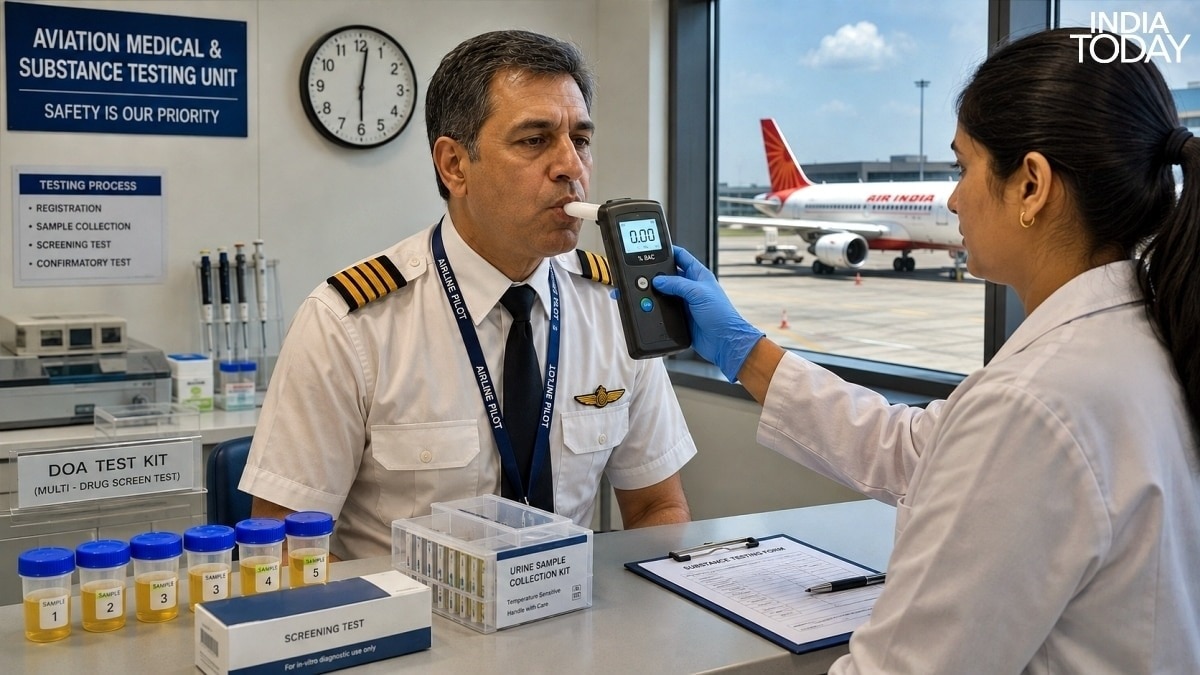
A pilots’ group wants more testing and says saliva tests could be used along with urine tests.
Officials are still studying how the plan would affect safety and airline operations.

Civil Aviation Minister Ram Mohan Naidu Kinjarapu said the government is considering at least one unpredictable random drug test annually for every pilot.
Current regulations require random testing of 10% of India’s overall pilot network.
The proposal follows Air India flight AI2379’s August 4 incident, when the aircraft dropped roughly 300 feet and 24 people were injured.
A post-flight toxicology test found the pilot-in-command positive for marijuana; the Directorate General of Civil Aviation derostered both pilots.
The Federation of Indian Pilots has proposed testing 20-25% of pilots annually, repeat selections, unpredictable timing and oral-fluid tests.
- Who
- Civil Aviation Minister Ram Mohan Naidu Kinjarapu, the Directorate General of Civil Aviation, the Federation of Indian Pilots and commercial pilots.
- What
- The government is considering requiring every pilot to undergo at least one random drug test during each year.
- Where
- The incident occurred on Air India flight AI2379 from Phuket to New Delhi; the proposed testing system would apply across India’s pilot network.
- When
- The proposal was discussed on Tuesday after the August 4 Air India incident; the articles do not specify the year.
- Why
- The proposal follows aviation-safety scrutiny after the incident and a positive marijuana test involving the flight’s pilot-in-command, while officials assess operational effects.
Expanded Safety Testing
Operational Caution
Coverage of random testing
Expanded Safety Testing
The government is considering testing every pilot at least once a year, and the Federation of Indian Pilots has proposed increasing annual testing to 20-25%, including possible repeat selections.
Operational Caution
The current rule covers 10% of the pilot network, and officials say stakeholder views and the effect on airline operations must be assessed before the system changes.
Testing methods
Expanded Safety Testing
The Federation of Indian Pilots supports adding oral-fluid tests to urine testing, saying saliva screening could be quicker at airports and other operational locations.
Operational Caution
The government has not finalized a testing method and is reviewing the safety benefits and operational implications of different approaches.
Key facts
- Current testing rule
- Random drug testing covers 10% of the overall pilot network.
- Government proposal
- Every pilot would undergo at least one random test during the year at an unpredictable time.
- Flight incident
- Air India flight AI2379 dropped roughly 300 feet during cruise on August 4.
- Injuries
- Twenty-four people were injured, including 20 passengers and four cabin crew members.
- Toxicology result
- The pilot-in-command tested positive for marijuana after the flight.
- Regulatory action
- The Directorate General of Civil Aviation derostered both pilots.
- Investigation
- The Aircraft Accident Investigation Bureau is examining the incident; the aircraft and flight data recorder remain with investigators.
- Pilots’ proposal
- The Federation of Indian Pilots recommended 20-25% annual random testing, repeat selection and oral-fluid testing.
Quotes
The minister
Government minister discussing proposed dope-testing requirements for pilots
“There are multiple ways of approaching this dope test. Right now the rule says 10% across the overall pilot network. As I said, DGCA is engaging and one of the opinions from our side is that everyone has to go through it in the year at a random time. We have to see how all the stakeholders are going to respond to this. Because one the safety aspect of it and the operational impact that has to be taken into consideration”
 timesnownews.com

Ram Mohan Naidu Kinjarapu
India’s Civil Aviation Minister
“Right now, the rule says 10 per cent across the overall pilot network. But, as I said, the Directorate General of Civil Aviation (DGCA) is engaging with stakeholders, and one of the proposals from our side is that everyone has to go through it during the year, at random times.”
 firstpost.com
Sources

Related news
India Weighs Annual Drug Testing for All Pilots After Incident

India Weighs Annual Dope Tests After Air India Incident

India Weighs Year-Round Random Drug Tests for Pilots

India Considers Year-Round Drug Tests for Commercial Pilots
India Weighs Random Dope Tests for All Commercial Pilots
DGCA Seeks Annual Drug Tests for More Than 25% Crew

Pilots Warn Senior Attrition Could Challenge Air India Safety

Air India Express Passenger Arrested After Allegedly Hiding Drugs

New Phuket Resort Offers Luxury Escape From Crowds
