3 weeks ago
Why 40- and 50-Storey Towers Are Rising in Tier-2 Cities
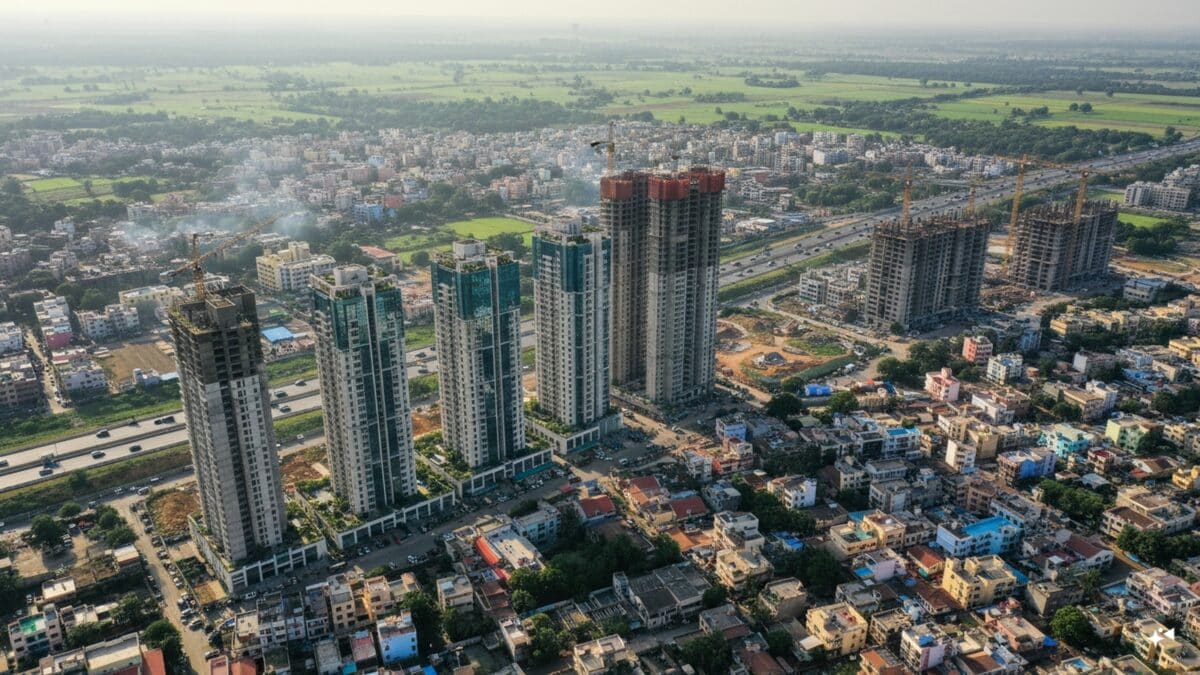
In India, the biggest cities like Mumbai have lots of very tall buildings.
Now smaller cities, called Tier-2 cities, are starting to build tall towers too — some with 40 or even 50 floors.
One of these cities is Nashik, which is famous for its vineyards, temples and small family homes.
Nashik is getting ready for a huge festival called the Kumbh Mela in 2027, and builders are racing to put up tower blocks.
Builders say they build upwards because land in the middle of the city has become expensive, and tall buildings can fit many more families.
Homebuyers also want gated communities with swimming pools, gyms and playgrounds, like the ones found in huge cities.
But tall buildings need a lot of water, electricity, roads and parking, and firefighters need special equipment to reach high floors.
Many people worry that the city's pipes, roads and power lines are not ready for so many tall towers.
Planners call these fancy towers 'vertical islands' because the services around them cannot fully support them.
The article says India's future depends not just on how tall buildings get, but on whether cities are ready for them.

Nashik, preparing for the 2027 Kumbh Mela, is seeing developers plan residential towers of 40 to 50 storeys, with the Nashik Municipal Corporation now able to approve buildings up to 124 metres.
High-rise living is spreading beyond Mumbai, Delhi-NCR and Bengaluru to Tier-2 cities such as Ludhiana, Nagpur, Mangaluru, Indore, Coimbatore, Jaipur and Jalandhar.
Nashik property registrations hit a record Rs 17,543 crore in 2025-26, while the city's property base rose from roughly 3.8 lakh in 2014-15 to nearly 6 lakh today.
India's high-rise building construction market, valued at about $241.5 billion in 2025, is projected to nearly double to $491.1 billion by 2034.
Urban planners warn that underprepared civic systems could turn gated high-rises into 'vertical islands,' with risks of congestion, water shortages, sewage overload and emergency-response problems.
- Who
- Developers and municipal corporations in Indian Tier-2 cities such as Nashik, along with homebuyers and investors driving demand for high-rise housing.
- What
- Residential towers rising 40 to 50 storeys are being planned and built in Tier-2 cities as high-rise growth moves beyond metros like Mumbai, Delhi-NCR and Bengaluru.
- Where
- India — Tier-2 cities including Nashik, Ludhiana, Nagpur, Mangaluru, Indore, Coimbatore, Jaipur and Jalandhar.
- When
- Reported August 10, 2026; towers are being planned ahead of the 2027 Kumbh Mela, with record property registrations recorded in 2025-26.
- Why
- Centrally located land has become expensive, buyers want gated-community lifestyles, and expressways, industrial corridors and logistics hubs have brought jobs and investment closer to Tier-2 cities.
Developers and market proponents
Urban planners and infrastructure critics
Going vertical
Developers and market proponents
Building tall is an economic necessity: as central land in Tier-2 cities becomes expensive, high-rises let developers house far more families and spread land costs across hundreds of apartments.
Urban planners and infrastructure critics
A 50-storey tower concentrates the needs of hundreds of families into one footprint, and many Tier-2 civic systems were never designed for skyscrapers, risking 'vertical cities resting on horizontal infrastructure.'
Gated-community lifestyle
Developers and market proponents
Buyers increasingly want gated communities with clubhouses, pools, gyms and round-the-clock security — the lifestyle once associated with Gurugram, Noida or Bengaluru.
Urban planners and infrastructure critics
Inside the gates residents enjoy private water, power and amenities, but outside, municipal roads may remain narrow, drainage inadequate and public transport underdeveloped, creating disconnected 'vertical islands.'
Planning ahead
Developers and market proponents
Growth signals are strong and support is rising, with the Union Budget 2026-27 earmarking Rs 12.2 lakh crore for Tier-2 and Tier-3 infrastructure.
Urban planners and infrastructure critics
Without coordinated planning, congestion, water shortages, sewage overload and emergency-response challenges could become common, so Tier-2 cities should upgrade infrastructure before high-rise development becomes the norm.
Key facts
- Nashik tower heights
- 40-50 storeys; buildings up to 124 metres can be approved under Maharashtra's UDCPR
- Nashik property registrations (2025-26)
- Record Rs 17,543 crore
- Nashik property base
- Roughly 3.8 lakh (2014-15) to nearly 6 lakh today, up about 57%
- Tier-2 residential demand growth (2026)
- Projected 28-32%
- Tier-2 rental yields
- Climbed from 2.8% to as high as 4.2%
- India high-rise construction market
- ~$241.5 billion (2025), projected to reach $491.1 billion by 2034 (7.96% CAGR)
- Union Budget 2026-27 Tier-2/3 infrastructure
- Rs 12.2 lakh crore earmarked
- Projected urban population by 2030
- Over 600 million (UN-Habitat projection)
Sources
Related news

Unlimited FSI fuels Hyderabad high-rises as infrastructure pressure mounts

Ananda Crown Receives RERA Approval for Mohali Towers

India’s Housing Supply Shifts Sharply Toward Premium Homes

India's 10 Non-Metro Cities Outpacing Bengaluru, Mumbai as Job Hubs
Hyderabad's Unlimited FSI Boosts Development, Strains Civic Infrastructure

Mumbai Went Vertical as DLF Urged Smarter Cities Before 2047

Iraq Uses Clay to Curb Sandstorms

Bengaluru's Textile Waste Recycling Revolution