

1 hr ago
Edamame Is Immature Soybean, With Some Nutritional Differences
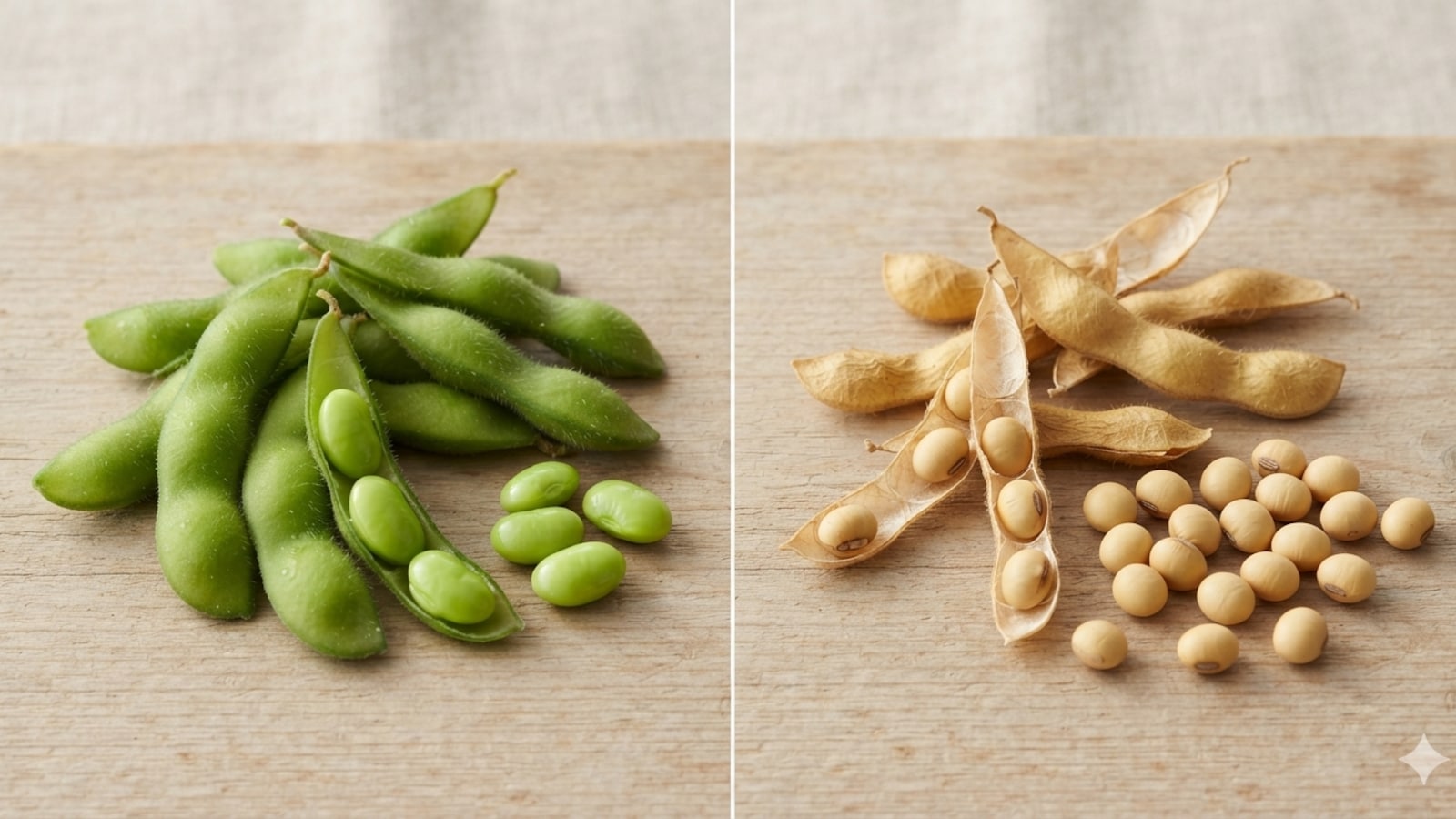
Edamame is a soybean picked while it is still young, green, and tender.
Mature soybeans are left to grow longer and are often used to make foods such as tofu and soy milk.
Both kinds provide protein and fibre.
A serving of mature soybeans has more protein than the same amount of cooked edamame.
Edamame has more water and some vitamins, including vitamins C and A. Mature beans are more concentrated in fat and certain minerals.
Both are described as having a low glycemic index.
Which one to choose depends on how you want to eat it and your needs.

Edamame is soybean harvested green and tender before it fully ripens.
A 100-gram serving has about 11–12 grams of protein, compared with about 19 grams in cooked mature soybeans.
The article reports similar fibre amounts: about 5.2 grams in edamame and 6 grams in mature soybeans per 100 grams.
Edamame contains more water and is described as higher in vitamins C and A, folate, and antioxidants.
Mature soybeans are denser in calories, protein, fat, iron, and calcium by weight; both forms are described as low-glycemic.
- Who
- People choosing between edamame and mature soybeans.
- What
- An article explains how edamame and mature soybeans differ nutritionally.
- Where
- The article discusses food and nutrition without specifying a location.
- When
- The article gives no publication date.
- Why
- To explain that edamame is immature soybean and compare its nutrients with mature soybeans.
Key facts
- Edamame
- Soybeans harvested green and tender before fully ripening.
- Edamame protein
- About 11–12 grams per 100 grams cooked.
- Mature soybean protein
- About 19 grams per 100 grams cooked.
- Edamame fibre
- About 5.2 grams per 100 grams.
- Mature soybean fibre
- About 6 grams per 100 grams cooked.
- Vitamin comparison
- The article says edamame is higher in vitamins C and A and folate.
- Glycemic index
- The article describes both edamame and mature soybeans as low-glycemic.
Sources
Related news
Hina Khan Revisits Kashmiri Childhood Memory of Fresh Walnuts
Researchers Warn Polishing May Reduce Millets’ Nutritional Benefits

Plant Protein Moves From Gym Supplements to Indian Homes

Indians Show Selective Willingness to Pay More for Healthier Foods

How to read food labels beyond front-of-pack health claims
