

3 weeks ago
Korea Volatility Spike Ebbs as Leveraged Trades Flushed Out

South Korea has a big stock market where people buy and sell small pieces of companies.
Lately, this market was like a roller coaster, swinging up and down very fast.
One reason was that many people had borrowed money to buy stocks.
When prices dropped, they had to sell quickly to pay back their loans.
The government also made new rules to slow down trading in some risky stock products.
Now the market has calmed down, and the fear meter that investors watch is lower than before.
But the market can still move a lot, so many big investors are being careful.
Some experts say Korean stocks are now very cheap and could rise about ninety percent in the next year.
Others want to wait and see if the market stays calm before they invest.

South Korea's stock volatility index fell to a two-month low last week after spiking to a record 96.9 in June.
The Kospi Index fell almost 40% from its June high, and the exchange triggered a record four 20-minute trading halts in July.
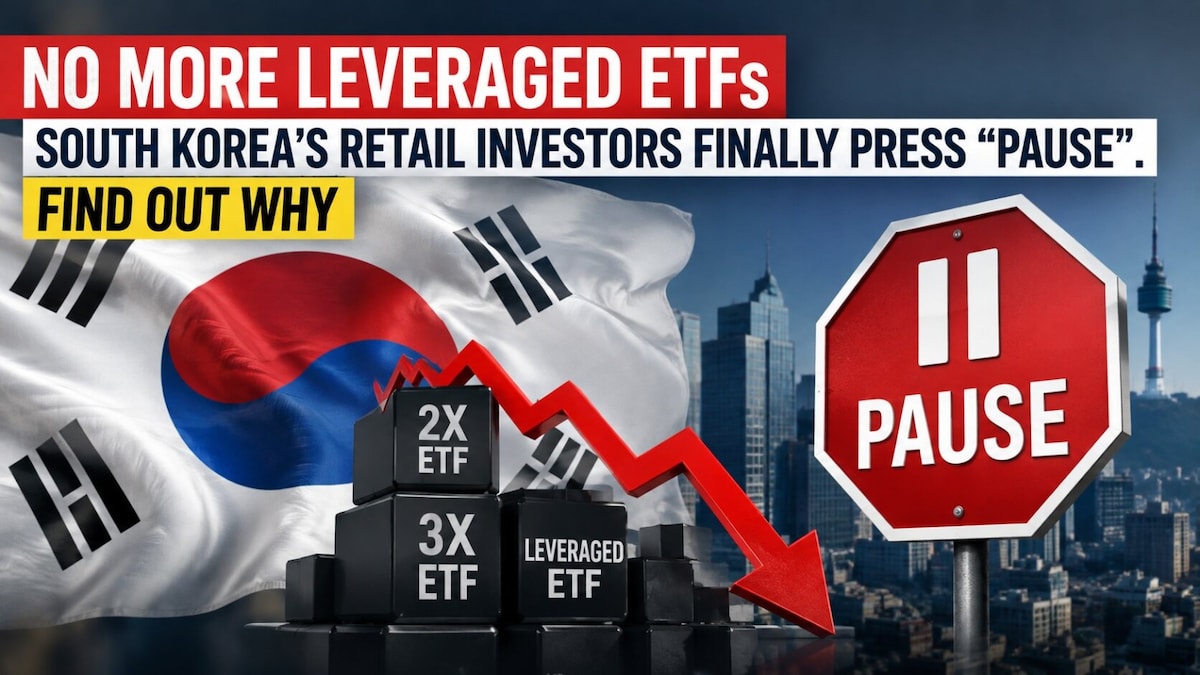
New rules on single-stock leveraged ETFs cut trading and assets in products tied to chip makers Samsung Electronics and SK Hynix.
Forced liquidations hit about 1 trillion won in June and 993 billion won in July, and margin loan balances fell to 27.4 trillion won on Aug. 4, per the Korea Financial Investment Association.
Goldman Sachs reiterated a 12-month Kospi target of 12,000, about 90% above the recent close, while many money managers remain cautious.
- Who
- South Korean authorities, retail and foreign investors, and market participants such as Samsung Electronics, SK Hynix, Goldman Sachs and Morgan Stanley.
- What
- The most extreme phase of South Korea's stock-market turmoil ebbed as leveraged trades were flushed out and regulations curbed trading in risky products.
- Where
- South Korea, centered on the Kospi Index.
- When
- From June to early August 2026, with volatility peaking in June and falling to a two-month low last week.
- Why
- Forced liquidations reduced outstanding margin debt and tighter rules on leveraged ETFs cut demand, calming the market after a historic selloff.
Market Optimists
Cautious Investors
Outlook for the Kospi
Market Optimists
Goldman Sachs chief Asia Pacific equity strategist Timothy Moe reiterated the bank's 12-month Kospi target of 12,000, implying about 90% upside, saying underlying fundamentals are very attractive once volatility declines.
Cautious Investors
Matthews International and others say fundamentals are sound but leverage and positioning got too hot, so they are taking a pause that may last another month.
Valuations vs. volatility
Market Optimists
Korean stocks are historically cheap, with the Kospi at a record-low 5.1 times forward earnings and inexpensive, strong-earnings names like Samsung and SK Hynix.
Cautious Investors
Templeton's Yiping Liao says extreme volatility is making people cautious, so buying is 'drip-drip' rather than aggressive even at cheap prices.
Foreign investor flows
Market Optimists
The deleveraging process is more than half over, and the retreat may mark the start of a hand-off from domestic retail investors to foreign institutions.
Cautious Investors
Global funds sold a record $30 billion in June and are still selling — $6.2 billion in July and $4.3 billion in August — and need evidence the market's price-discovery mechanism works again.
Key facts
- Volatility index peak
- Record 96.9 in June, up from 28.9 at end of 2025
- Kospi drawdown
- Almost 40% from its June high
- Trading halts in July
- Record four 20-minute halts; largest one-day move was an 18% jump on July 31
- Foreign fund outflows this year
- More than $100 billion
- Kospi forward price-to-earnings ratio
- Record-low 5.1 times 12-month forward earnings
- Margin loan balance (Aug. 4)
- 27.4 trillion won, lowest this year
- Goldman Sachs Kospi target
- 12,000 over 12 months (~90% upside)
- Leveraged ETF cash deposit rule
- Higher requirement began July 31
Quotes
Isaac Thong
Senior investment director and manager of the Aberdeen Asian Income Fund in Singapore
“We are getting constructive, but we’re still not fully comfortable because volatility still remains high. If that potential expected return is high enough to justify the volatility, then things get more constructive. So we are getting toward that level.”
 livemint.com
Sources
Related news
Mock-Trading Rules Cool South Korea’s Leveraged Chip ETF Frenzy

Leveraged ETF Rotation Fuels 30% Jump in Korea Small Caps
Korean Stocks Rise 22% as Chip Rally Regains Steam

Seoul shares trim gains on profit-taking amid Iran deal doubts

Korean Investors Shift From Home Stocks to Costlier US Names

AI Week: Chip Breakthroughs, Brain Surgery and Quantum Campus
South Korean Investors Shift $7 Billion Into U.S. Stocks

Sensex, Nifty Face Cautious Monday Outlook Amid Global Cues

Netlist Stock Surges 650% as AI Demand Boosts Memory Business
