1 hr ago
Forus Health, Eyebetes Pilot AI Diabetes Screening at Ganpati Celebrations

Forus Health and Eyebetes Foundation tried a new way to help people learn about diabetes risk.
They offered free eye scans at two Ganpati celebration sites in Mumbai.
A computer program studied pictures of the retina, the light-sensitive part at the back of the eye.
The program explored signs linked to diabetes risk and estimated HbA1c levels.
The effort was planned to reach more than 15,000 people.
The scans were meant for early awareness, not to say for certain that someone has diabetes.
People with possible risk still need proper tests and advice from a healthcare professional.
The pilot also highlighted the need to test AI tools with datasets that represent people in India.

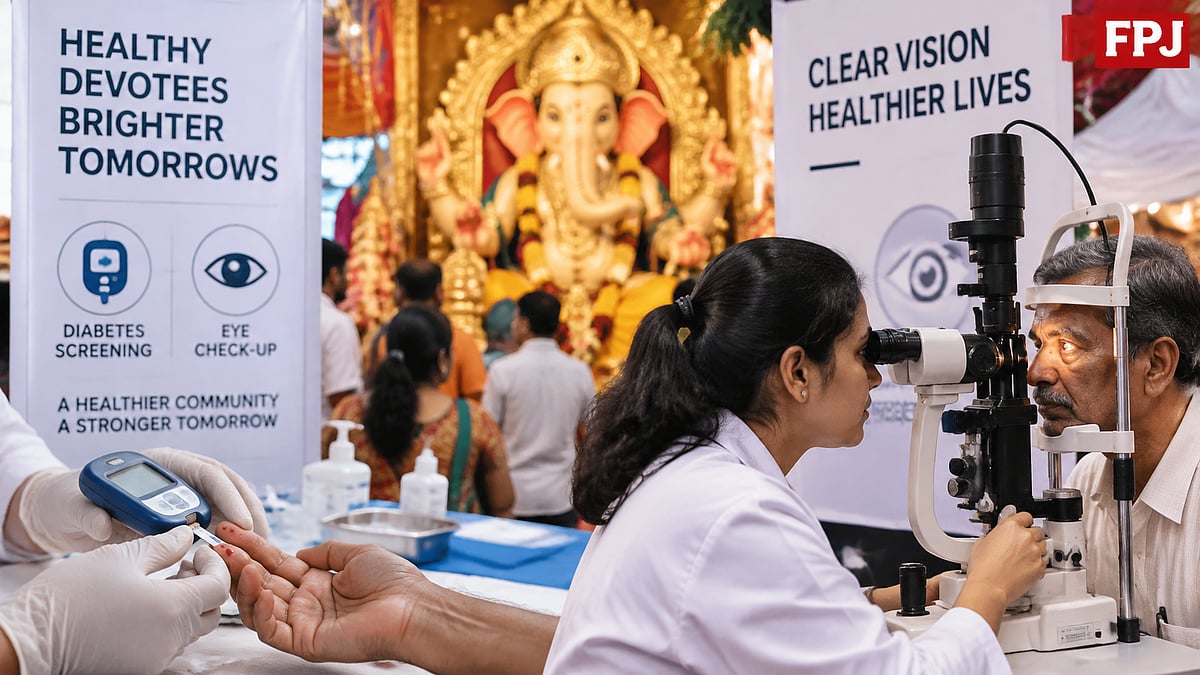
Forus Health and Eyebetes Foundation ran a pilot retinal screening initiative at Siddhivinayak Temple and GSB Ganpati Mandal in Mumbai.
The free screening activities were designed to reach more than 15,000 people during Ganpati celebrations.
Forus Health explored using its FH-POISE AI solutions to assess diabetes risk and estimate HbA1c levels from retinal images.
The initiative presented community gatherings as a way to bring preliminary screening and health awareness closer to people.
The article stresses that AI estimates are not a diagnosis and do not replace conventional HbA1c testing or medical consultation.
- Who
- Forus Health and Eyebetes Foundation, with screening activities for devotees.
- What
- A pilot using AI-enabled retinal imaging to explore diabetes risk screening and estimate HbA1c levels.
- Where
- Siddhivinayak Temple and GSB Ganpati Mandal in Mumbai.
- When
- During this year's Mumbai Ganpati celebrations; the article does not specify dates.
- Why
- To explore whether non-invasive retinal screening could bring preliminary diabetes risk awareness closer to communities.
Potential benefits
Limitations and safeguards
Role of AI retinal screening
Potential benefits
The pilot explored whether retinal images and AI could offer a quick, non-invasive way to flag diabetes risk and estimate HbA1c levels, including in community settings.
Limitations and safeguards
The article says AI-generated insights are preliminary and cannot replace conventional HbA1c testing, clinical diagnosis, or consultation with a qualified healthcare professional.
Use in Indian populations
Potential benefits
The collaboration highlighted the potential for community-based screening to increase awareness and provide an additional route to preliminary assessment.
Limitations and safeguards
The article emphasizes the need for representative Indian datasets, clinical validation, suitable referral pathways, and clear communication about the technology's limitations.
Key facts
- Organizations
- Forus Health and Eyebetes Foundation
- Screening locations
- Siddhivinayak Temple and GSB Ganpati Mandal, Mumbai
- Planned reach
- More than 15,000 people
- Technology
- FH-POISE AI solutions analyzing retinal images
- Screening focus
- Explore diabetes risk indicators and estimate HbA1c levels
- Cost
- Screening activities were offered free
- Medical limitation
- AI-generated estimates are not a substitute for conventional testing, diagnosis, or professional consultation
Quotes
Srinivasan Venkatakrishnan
Chief Technology Officer and Head of Research & Development at Forus Health
“With FH-POISE AI solutions, we were exploring how a simple retinal image could provide insights that traditionally required a blood test. Our AI models could estimate HbA1c levels and flag diabetes risk from a single retinal image, without the need for a blood draw or laboratory processing. The retina gave us a unique, non-invasive view of the body’s microvascular health, and AI could help translate these insights into meaningful screening support.”
 livemint.com
“Diabetes was no longer only a metabolic concern; it was a major public health challenge with consequences that could affect the eyes, kidneys, heart, nerves and overall quality of life. What made AI-powered retinal screening particularly promising was its potential to make diabetes risk assessment quicker, non-invasive and more accessible, especially in communities where regular laboratory testing might not always be easy to access.”
livemint.com
Sources
Related news
Ganpati Health Camps Find High Diabetes Risk Among Devotees
Mumbai Reports Show Highest Elevated Blood-Sugar Levels Among Five Metros
Eye Scans Offer Heart Risk Clues, Not Definite Diagnoses

Pune Health-Tech Firm Showcases Cervical Cancer AI at BRICS Exposition
Tamil Nadu Plans Annual Retina Screening For Adults Over 30
AIIMS Doctor Says Metabolic Surgery May Help Selected Diabetes Patients

Anant Singh Vows to Defeat JD(U) Candidate Neeraj Kumar
Lalan Singh Offers Neutral Mediation in JD(U) Factional Feud