

2 hrs ago
Subsea Cables Face Rising Sabotage and Supply Chain Risks
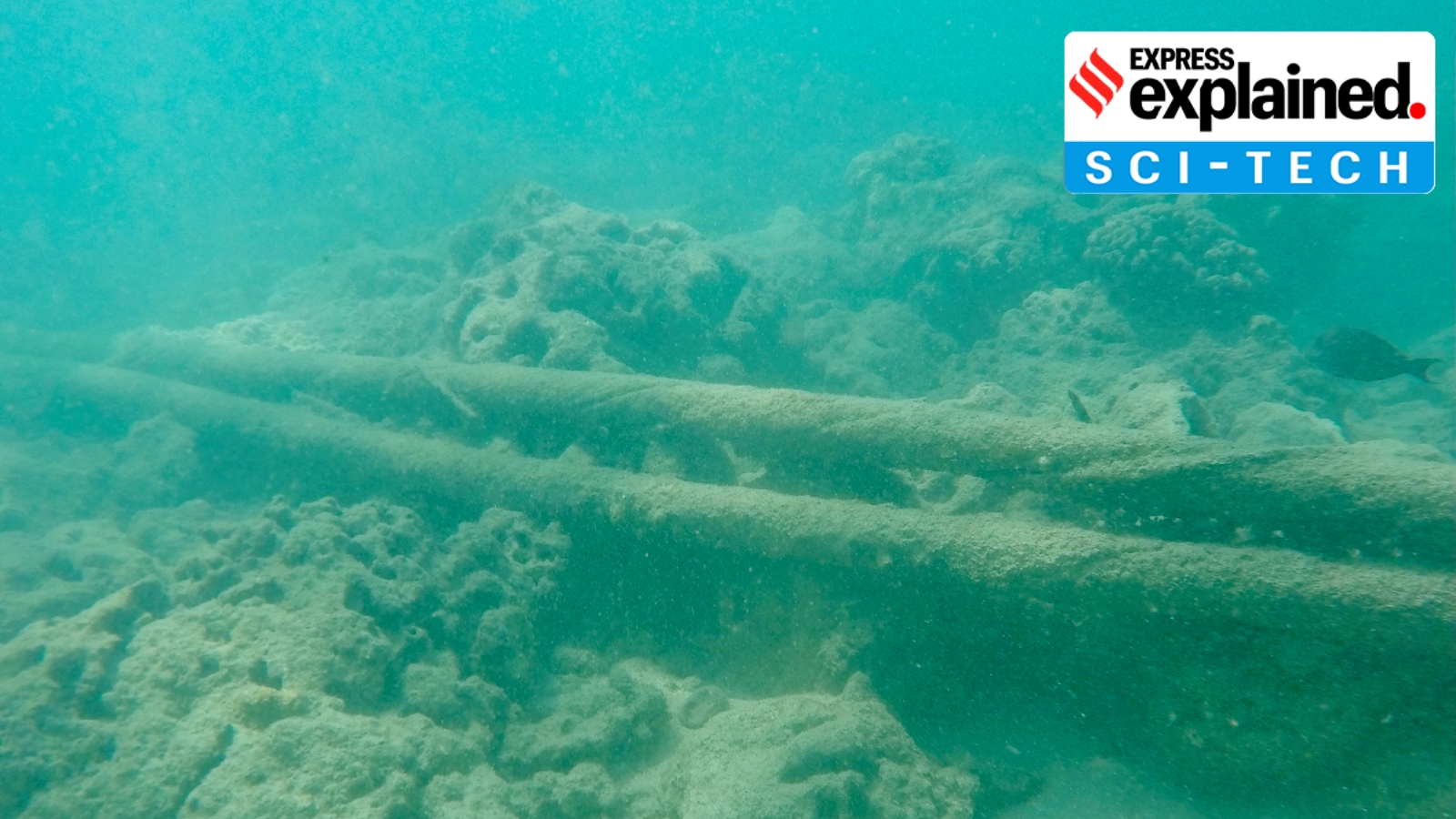
Undersea cables are long wires on the ocean floor that carry most internet traffic.
They help people communicate, use online services, and move money around the world.
If a cable is damaged, an entire region may lose or reduce its internet connection.
Some countries are worried that ships or other actors could deliberately damage these cables.
The cables can also be vulnerable to cyberattacks and accidental breaks.
A small number of companies build and repair many of the world’s cables.
This makes the global internet dependent on a limited supply chain.
India is considering ways to make cable repair faster and easier inside the country.

Subsea cables carry more than 99% of the internet’s traffic and underpin global digital connectivity.
Recent incidents and military preparations have highlighted the risk of deliberate damage to undersea cables.
Cable ownership, manufacturing, and repair capabilities are concentrated among a relatively small number of private-sector players.
Disruptions can cut regional connectivity, expose sensitive information, and cause economic and governmental losses.
India hosts 18 subsea cables and is considering measures to strengthen domestic repair and maintenance capacity.
- Who
- NATO allies Britain, Norway, and the United States, along with Finnish authorities, have prepared for or responded to subsea-cable threats; private telecommunications, technology, manufacturing, and repair companies manage much of the network.
- What
- The article examines the growing vulnerability of subsea internet cables to sabotage, cyber risks, supply-chain concentration, and limited repair capacity.
- Where
- The risks discussed include Arctic waters, the waters between Estonia and Finland, Africa, global cable routes, and the Indian Ocean region.
- When
- Earlier this year, NATO allies reportedly stopped a Russian submarine training to damage Arctic cables; Finnish authorities conducted a preparation drill in September, and a cable incident between Estonia and Finland occurred in 2025.
- Why
- Subsea cables carry more than 99% of internet traffic, making disruption capable of affecting communications, government operations, sensitive information, and economic activity.
Key facts
- Internet traffic carried
- More than 99% travels through subsea cables.
- Global manufacturing leaders
- Alcatel Submarine Networks, SubCom, and NEC together built approximately 90% of the total cable length currently deployed.
- Ownership model
- Cable systems are primarily financed and managed by private-sector consortiums, increasingly with major involvement from hyperscalers.
- Key vulnerability
- Repair requires specialized vessels and crews, while global repair capacity is limited and concentrated.
- India’s network
- India hosts 18 subsea cables landing across five major sites.
- India’s proposed measure
- The Department of Telecommunications is reportedly developing a single-window clearance portal for cable-repair investments.
Sources
Related news
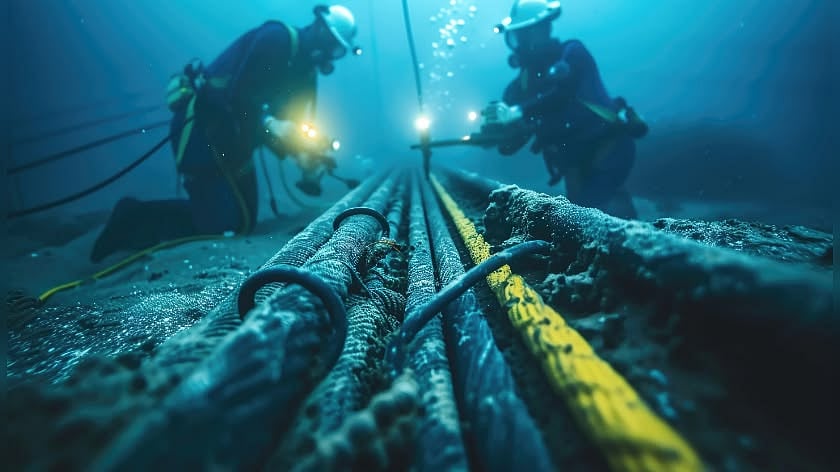
India’s Mumbai Cable Concentration Exposes Its Digital Vulnerability
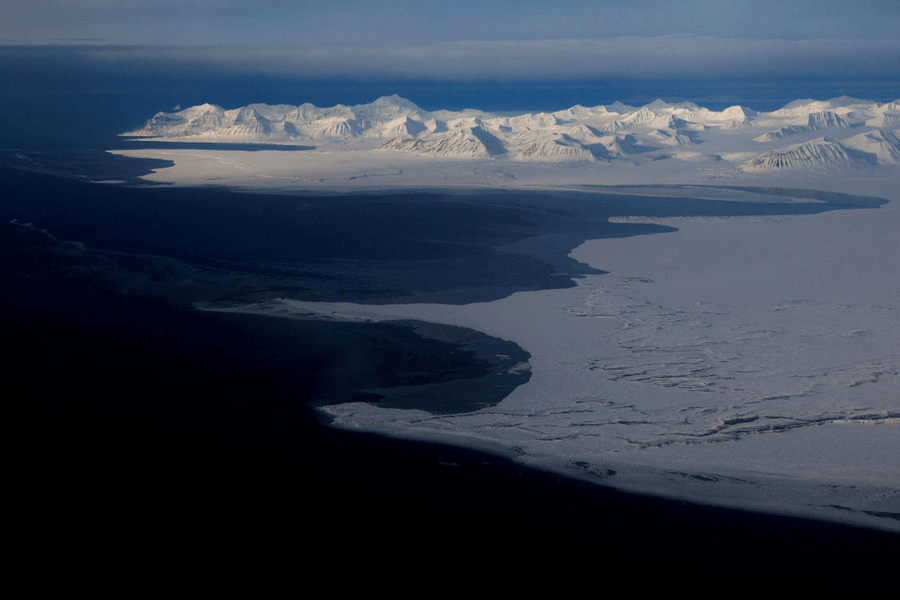
UK, Norway and US Foil Russian Arctic Cable Sabotage Exercise
United States, India Partner to Secure Global Undersea Cables
Vaishnaw Warns India’s Chip Rise Could Invite Cyberattacks

Three Nippon India Funds Show Strong Long-Term SIP Returns
ICE Uses AI for Tracking Protesters and Suspects

Punjab Secures Strong Investor Response in Japan, South Korea

Punjab CM to Visit Japan
