

1 hr ago
Beyond metros, Tier-2 and Tier-3 cities fuel India’s AI wave

AI is becoming popular in India outside its biggest cities.
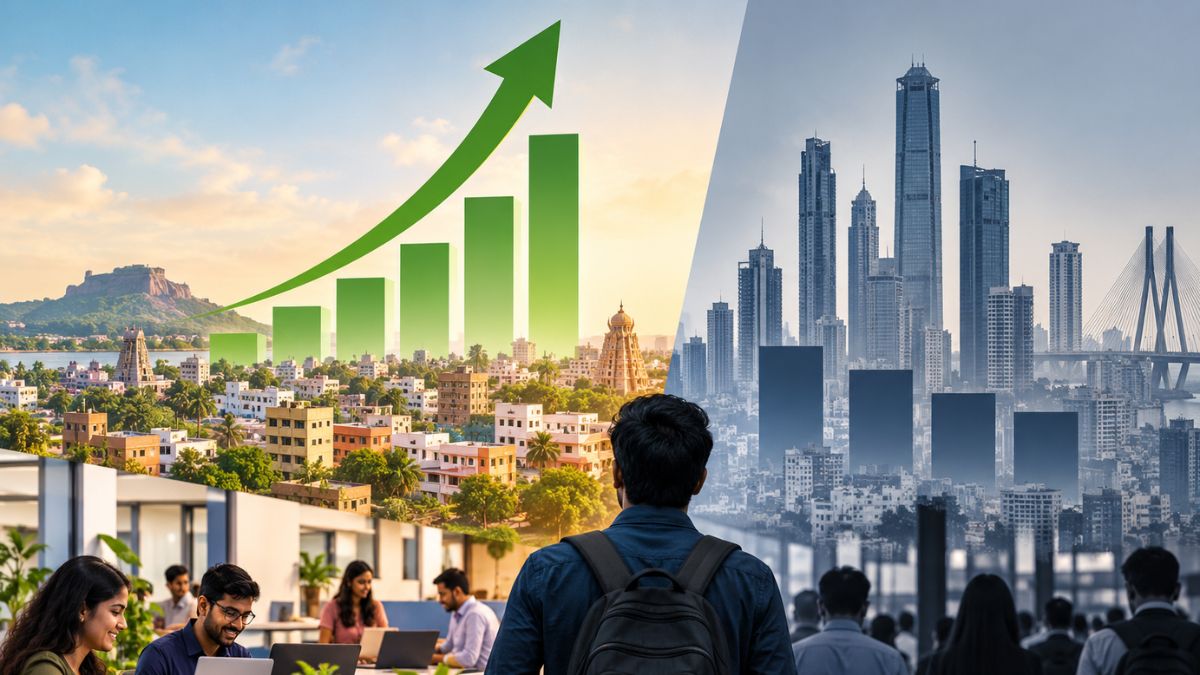
Tier-2 and Tier-3 cities are gaining AI skills faster than Tier-1 cities.
Many young people in rural areas already use AI regularly.
AI could help people in smaller cities get better healthcare, education, farming support and financial services.
In healthcare, AI can help find routine cases while doctors focus on more difficult ones.
Internet access, smartphones and 5G make these services easier to provide.
Small businesses can use AI to manage stock, talk with customers and overcome language barriers.
Experts say AI should support people, protect their data and work in local languages.
They believe India can build affordable AI services for its own population and other countries with similar needs.

AI skills are growing 20% year-on-year in Tier-2 and Tier-3 cities, compared with 14% in Tier-1 cities.
Rural India is helping drive adoption, with 55% of young people using AI almost daily and 28% using it occasionally.
Healthcare is a major opportunity because AI-enabled diagnostics can connect smaller-city patients with specialist expertise.
More than 900 million internet users and expanding 5G networks are helping deliver affordable, cloud-based AI services beyond metros.
Businesses, farmers and dairy operators are using AI for inventory, customer engagement, crop and cattle monitoring, and milk collection.
- Who
- People, businesses and institutions in India’s Tier-2, Tier-3 and rural areas, with views from Debjit Patra of MediElaj and Dr. Sujay Prasad of Neuberg Diagnostics.
- What
- AI adoption is expanding beyond major metros, creating opportunities in healthcare, agriculture, education, finance, logistics, retail and public services.
- Where
- Across India, particularly in Tier-2 and Tier-3 cities and rural areas including Varanasi, Indore and Patna.
- When
- The article discusses the current expansion of AI and references the BW TopLine Leaders Summit 2026.
- Why
- Growing internet access, 5G connectivity, smartphone use and demand for affordable services are enabling AI to address gaps in expertise, infrastructure and access.
Expansion and accessibility
Human oversight and safeguards
AI’s role in healthcare
Expansion and accessibility
AI-assisted diagnostics and reporting can bring faster results and specialist capabilities to smaller cities, reducing the need for patients to travel.
Human oversight and safeguards
AI should improve processes rather than replace professionals; human experts must interpret results and sign reports, especially for abnormal or uncertain cases.
How India should build AI
Expansion and accessibility
India can use its large domestic market as a testing ground and develop affordable solutions that address local healthcare and service gaps.
Human oversight and safeguards
Solutions must also meet global standards for validation, safety, cybersecurity, data protection, reliability and regulatory compliance.
What determines adoption
Expansion and accessibility
Expanding internet access, 5G, cloud platforms and digital payments can make AI services available to hundreds of millions of people.
Human oversight and safeguards
Adoption will depend on affordability, trust, explainability, data protection, digital simplicity, local languages and adequate trained personnel.
Key facts
- Tier-2 and Tier-3 AI skills growth
- 20% year-on-year, compared with 14% in Tier-1 cities
- Rural youth using AI almost daily
- 55%
- Rural youth using AI occasionally
- 28%
- Internet users in India
- More than 900 million
- Healthcare application
- AI can screen routine cases, flag abnormal or uncertain cases and support remote specialist review
- Business applications
- Inventory tracking, local customer engagement and multilingual voice search
- Agriculture and dairy application
- Stellapps uses AI and Internet of Things tools to monitor cattle health and optimize milk collection
Quotes
Dr. Sujay Prasad
Chief Medical Director and NDPL Director at Neuberg Diagnostics
“The next phase of India's AI-led growth will not be led by the cities with the most infrastructure, but by those solving the most real problems.”
 wionews.com
“The larger vision is simple: good healthcare should not depend on where you live.”
wionews.com
Sources
Related news

Why India’s Next Startup Revolution Will Rise in Rural India

Dell Says Businesses Are Moving AI From Pilots Toward Profits
Tech Hiring Surges in Smaller Cities as Metros Cool
India's AI Advantage May Come From Execution, Not Models
Small Indian Cities Power India’s New Hiring Wave
Satya Nadella Calls for Broad, Sovereign AI Access in India
India’s First Victim Rights Centre Opens In Patna Today

Congress, RJD Protest Bihar, Demand Election Chief’s Resignation

Bihar Weather Alert Covers 19 Districts Amid Rain Concerns
Paswan urges poll chief to clarify amid Election Commission rift
