2 weeks ago
BRICS Pursues Layered Cross-Border Payments Without Common Currency

BRICS countries want to make it easier to pay one another.
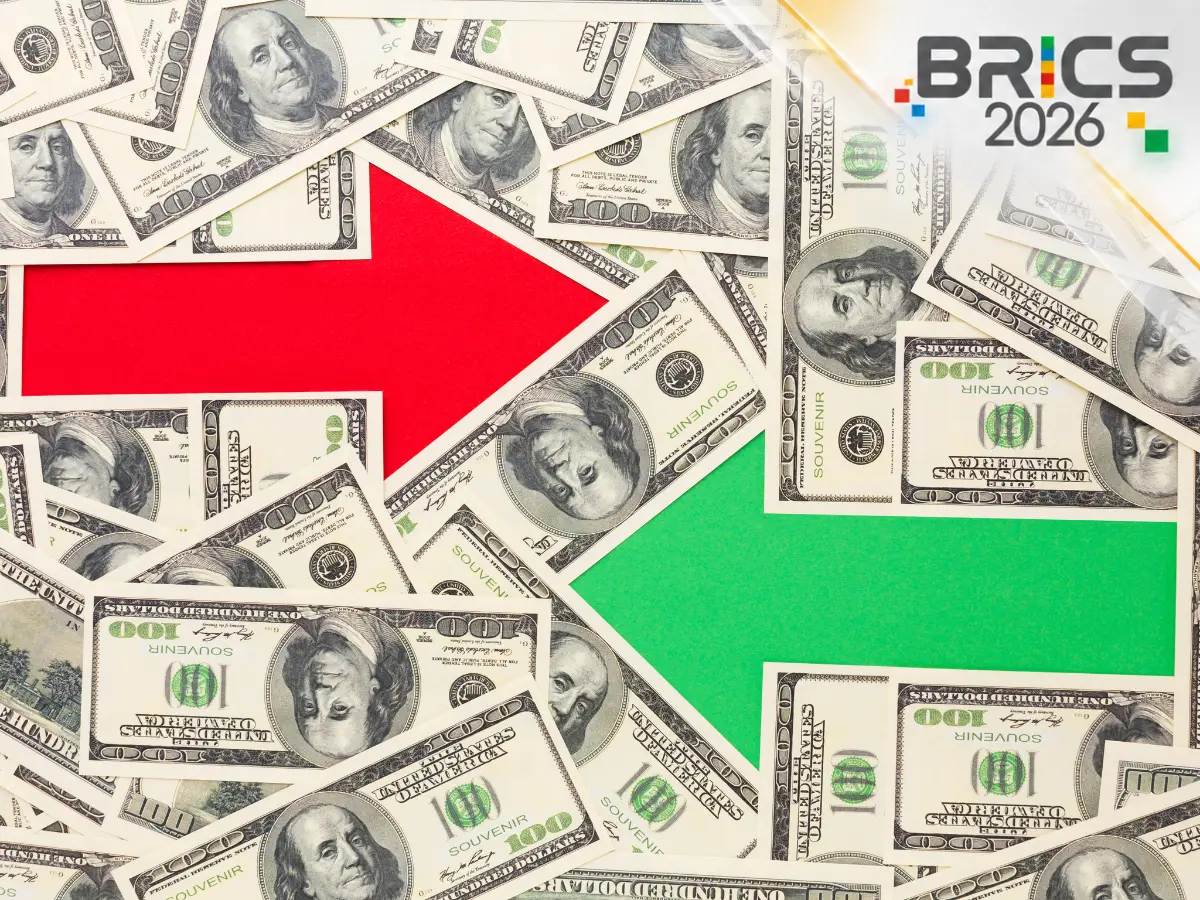
They have discussed using their own currencies instead of always using the US dollar.
Trade between BRICS members has grown greatly, but international payments can still be slow and expensive.
Each BRICS member now has a large domestic fast-payment system.
The countries are discussing ways to connect these systems.
They have not agreed to create a shared BRICS currency or one common payment network.
Different payments have different needs, such as shopping, business invoices, or central-bank transactions.
The article says countries should first connect systems through smaller agreements and shared technical standards.
This approach could let businesses receive money faster while allowing each country to keep its own rules.

BRICS members have discussed reducing reliance on the US dollar since the 2015 Ufa declaration, but India says there is no proposal for a common BRICS currency.
Intra-BRICS exports reached $1.17 trillion in 2024, while global payment delays and manual compliance processes continue to create friction.
The New Delhi Declaration supports interoperable payment and messaging channels, greater local-currency settlement, and solutions that are fast, affordable, transparent, and safe.
BRICS has not agreed on a shared payment system, settlement currency, or implementation timeline; Russia’s proposed settlement infrastructure remains under technical review.
The article argues that bilateral fast-payment links, common technical standards, and regulated private-sector services are more practical than a single bloc-wide system.
- Who
- BRICS member governments, central banks, banks, fintech companies, and businesses, with India playing a prominent role in the discussion.
- What
- BRICS is pursuing interoperability among payment and messaging systems, expanded local-currency settlement, and related financial initiatives without adopting a common currency or bloc-wide payment system.
- Where
- The latest discussion centers on the New Delhi summit, with related finance-track meetings in Jaipur and Mumbai and proposed payment links involving India, the UAE, Indonesia, and Russia.
- When
- The effort dates to the 2015 Ufa declaration and has advanced through 2020, 2023, 2024, and 2025 initiatives; the article was published on September 16, 2026.
- Why
- Growing intra-BRICS trade, slow cross-border payments, reliance on correspondent banking, and the availability of large domestic fast-payment systems have increased pressure for better payment connections.
Bloc-Wide Payment System
Bilateral and Layered Integration
How payments should be organized
Bloc-Wide Payment System
Supporters of a unified BRICS approach could favor common settlement infrastructure or a shared protocol to reduce dependence on existing international systems.
Bilateral and Layered Integration
The article argues that payment needs differ by use case and country, so bilateral links and regulated private-sector products are more practical.
Common currency and settlement
Bloc-Wide Payment System
A common currency or centralized settlement system could, in theory, simplify payments between members.
Bilateral and Layered Integration
India says there is no proposal for a BRICS currency, and the article notes that unequal trade balances and surplus local-currency holdings make a single arrangement difficult.
Role of governments and markets
Bloc-Wide Payment System
A bloc-wide system would place governments and central banks at the center of payment infrastructure.
Bilateral and Layered Integration
The recommended approach is for governments to set standards for messaging, QR codes, data, and dispute resolution while banks and fintech companies build competing services.
Key facts
- Intra-BRICS exports
- $1.17 trillion in 2024, according to UNCTAD
- India’s BRICS trade
- More than $417 billion in FY26, with a deficit of about $226 billion, according to GTRI
- Payment delays
- Fewer than 45% of global business-to-business payments were credited within one business day, according to the Financial Stability Board’s 2025 report
- Regional payment performance
- The report found no South Asian B2B service crediting funds within an hour
- New Delhi position
- The declaration supports interoperability and local-currency settlement but rejects a one-size-fits-all approach
- Common currency status
- India’s Ministry of External Affairs said there is no proposal for a BRICS currency
- Next proposed links
- UPI-Aani with the UAE is under construction, while QRIS-UPI with Indonesia is targeted for late 2026
Quotes

New Delhi Declaration
BRICS summit declaration addressing cross-border payment interoperability and local-currency settlement
“there is no one-size-fits-all approach”
 thehindubusinessline.com
Sources
Related news

BRICS Explores Faster Local-Currency Payments Ahead of 2026 Summit

BRICS Pushes Local-Currency Trade and Faster Cross-Border Payments

Brics Local-Currency Trade Could Take Decade to Integrate
BRICS Chooses Local-Currency Diversification Over Replacing the Dollar
BRICS explores local-currency payments to reduce dollar dependence

BRICS Pushes Deeper Cross-Border Payments and Local-Currency Settlements

India Reaches 60 Medals at Asian Games Day 13
US Revokes 250,000 Visas as India EB-2 Stalls

US Conducts Experiment to Improve Nuclear Blast Detection
Strait of Hormuz Disruptions Highlight India’s Energy Security Vulnerabilities
Pentagon Creates Autonomous Warfare Command to Expand AI, Drones