

2 hrs ago
Supreme Court Says Experience Can Justify Unequal Teacher Pay
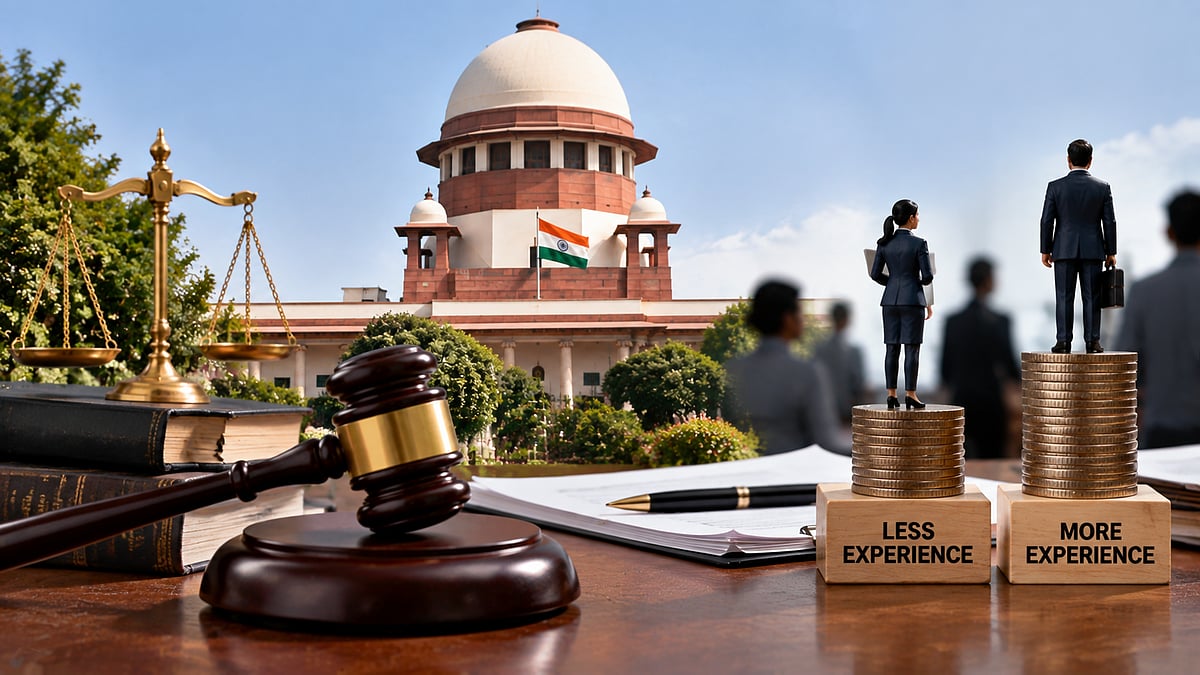
Some teachers in Kerala asked to be paid the same as teachers who were promoted into similar jobs.
They said both groups did the same work and had the same responsibilities.
The Supreme Court said doing similar work is not always enough to receive identical pay.
Judges can also consider experience, education, how someone was hired and their responsibilities.
The promoted teachers had more prior experience in the Court’s view.
That experience was considered a valid reason for their higher pay.
The Court said the equal-pay rule must not be used automatically in every case.
It upheld the decision that rejected the directly recruited teachers’ claim.

The Supreme Court upheld different pay scales for directly recruited and promoted Kerala teachers.
It ruled that similar duties alone do not establish entitlement to equal pay.
Differences in experience, qualifications, recruitment method and responsibility may justify different salaries.
The Court said equal pay requires complete parity and cannot be applied mechanically.
The ruling upheld a Kerala High Court Division Bench decision rejecting the teachers’ pay-parity claim.
- Who
- The Supreme Court of India and directly recruited Higher Secondary School Teachers, Junior, in government-aided schools in Kerala.
- What
- The Court upheld different pay scales for directly recruited and transferred or promoted teachers.
- Where
- The dispute concerned government-aided schools in Kerala, India.
- When
- The article does not specify the date of the ruling.
- Why
- The Court found that differences in teaching experience provided a valid basis for different pay.
Directly Recruited Teachers
Supreme Court and Promoted-Teacher Position
Whether identical duties require identical pay
Directly Recruited Teachers
The directly recruited teachers argued that they performed the same duties and responsibilities in the same cadre as transferred or promoted teachers and therefore deserved the same pay scale.
Supreme Court and Promoted-Teacher Position
The Court held that functional similarity alone is insufficient; employees must show complete parity across relevant factors.
Importance of prior experience
Directly Recruited Teachers
The appellants challenged the distinction between the two groups and relied on earlier equal-pay precedents.
Supreme Court and Promoted-Teacher Position
The Court found that the greater prior experience of promoted teachers was a valid and rational basis for higher pay.
Use of earlier rulings
Directly Recruited Teachers
The teachers argued that older precedents and a Calcutta High Court decision supported their claim for pay parity.
Supreme Court and Promoted-Teacher Position
The Supreme Court said later binding precedents had recast the doctrine and found the cited Calcutta decision inconsistent with those authorities.
Key facts
- Court
- Supreme Court of India
- Bench
- Justice Dipankar Datta and Justice Sheel Nagu
- Employees involved
- Directly recruited Higher Secondary School Teachers, Junior, and teachers appointed through transfer or promotion
- Recruitment basis
- The appellants were directly recruited under a 1998 government order.
- Core legal principle
- Equal pay for equal work cannot be applied mechanically based only on similar duties.
- Relevant factors
- Experience, educational qualifications, recruitment source, appointment process, responsibilities and accountability
- Outcome
- The appeals were dismissed and the Kerala High Court Division Bench judgment was upheld.
Quotes

Supreme Court bench
The Supreme Court bench comprising Justices Dipankar Datta and Sheel Nagu hearing the Kerala teachers’ pay dispute.
“It is, therefore, clear on reading the relevant precedents that a mechanical application of the doctrine of equal pay for equal work has to be eschewed.”
 freepressjournal.in
“Mere functional similarity of work has been held to be no longer enough.”
freepressjournal.in
Sources
Related news
HC Questions Chandigarh Administration Appeal in Teacher Pay-Parity Case
High Court Orders Haryana Board to Regularise Daily-Wage Worker

'Best Doctor in World': MP High Court Upholds Equal Pay
Supreme Court Grants Final 2027 Extension to West Bengal Teachers
Supreme Court Bars Fresh Assam Teacher Appointments, Absorption
Bengal Teachers Face Recruitment Uncertainty Despite Final May 2027 Deadline
Supreme Court Questions Shiv Sena Symbol Allocation to Shinde Faction
CBI Challenges Partha Chatterjee’s Bail Compliance in SSC Case

Supreme Court Gives Tamil Nadu Three Months for School Land

Swara Bhasker Recounts Messages After 2019 Ayodhya Verdict

Delhi High Court Questions Blanket Ban on Jantar Mantar Protest
