

6 days ago
Why Free Public Examinations Are Essential to Democracy
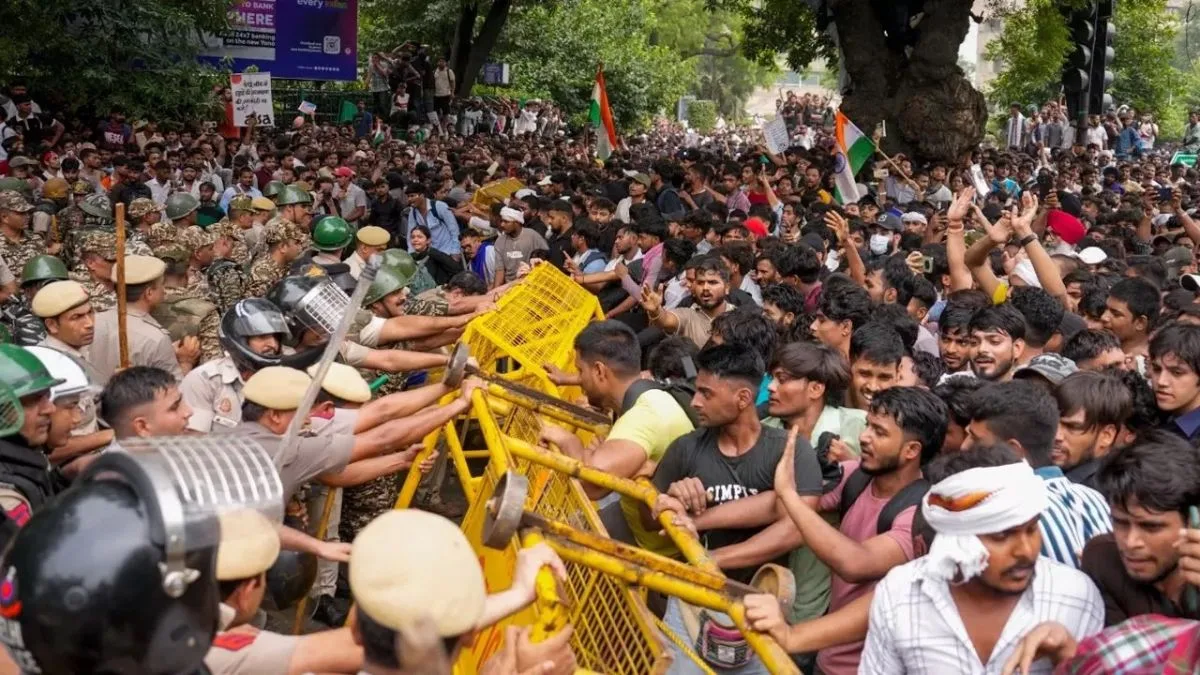
The article says democracy is not only about choosing leaders in elections.
It is also about making sure people get fair chances to study and work.
Public examinations are meant to give everyone an open path based on stated rules.
However, people do not always begin with the same education, money, or support.
This means the idea of merit is not completely neutral.
Even so, fair exams can help reduce the importance of family privilege and social status.
Leaked papers and other cheating make students feel that hard work will not be rewarded.
When people lose trust in exams, they may also lose trust in public institutions.
The article says fair elections and fair examinations are both necessary for a healthy democracy.

Student protests over alleged NEET question-paper leaks reportedly prompted the government to reconsider its position and were followed by the Union Education Minister’s resignation.
The article argues that open, competitive public examinations translate democratic ideals of equality and fairness into everyday practice.
It acknowledges that merit can reflect unequal access to education, resources, and cultural capital, but says transparent competition can still replace inherited privilege.
Repeated examination malpractice can erode public trust, disadvantage deserving candidates, and place inadequately prepared people in positions of responsibility.
The article concludes that free and fair examinations are as important as free and fair elections because they help determine who serves the public.
- Who
- Students, the government, candidates for public opportunities, and citizens are central to the discussion; the article also cites Robert K. Merton and John Rawls.
- What
- The article examines why free, fair, and transparent public examinations are essential to democratic equality and public trust, especially after protests over alleged NEET question-paper leaks.
- Where
- India; the writer is associated with Bankura University in West Bengal.
- When
- The discussion concerns recent protests and recurring examination irregularities; no specific date is given.
- Why
- Because malpractice can undermine equal opportunity, public trust, institutional competence, and the legitimacy of democratic governance.
Merit’s limitations
Merit’s democratic role
Whether merit is neutral
Merit’s limitations
Merit is not entirely objective because it can reflect unequal education, resources, and cultural capital.
Merit’s democratic role
Despite its limitations, merit is a functional yardstick that can replace inherited privilege and arbitrary social hierarchies.
What fairness requires
Merit’s limitations
Formal access alone is insufficient when social and economic disadvantages prevent people from competing on genuinely equal terms.
Merit’s democratic role
Transparent, rule-bound examinations can make positions open to anyone with the required qualifications, while institutions work to mitigate unequal circumstances.
Effect of examination malpractice
Merit’s limitations
Manipulated outcomes make access meaningless and destroy confidence that hard work will be rewarded.
Merit’s democratic role
Strong examination integrity can help ensure that qualified people assume public responsibilities and strengthen public welfare.
Key facts
- Central argument
- Free and fair public examinations are as important to democracy as free and fair elections.
- Triggering issue
- Student protests over the alleged leak of NEET question papers.
- Democratic function
- Competitive examinations allocate educational and professional opportunities according to publicly declared rules.
- Concern about merit
- Merit can conceal unequal access to education, resources, and cultural capital.
- Institutional risk
- Compromised examinations may place inadequately prepared individuals in positions of public responsibility.
- Effect on candidates
- Malpractice can deprive deserving candidates of fair opportunities.
- Theoretical references
- The article draws on Robert K. Merton’s account of legitimate means and John Rawls’s ideas about equality of opportunity.
Sources
Related news
India's Exam Trust Crisis Brings Nilekani-Led Reform Task Force

Exam Leaks Expose India’s Deeper Education and Jobs Crisis
NEET-UG 2026 Paper Leak Crisis Exposes India's Exam Flaws

Jharkhand Youth Exam Protests Test India's Political Parties
