1 hr ago
India Expands Manufacturing While China Retains Major Scale Advantage
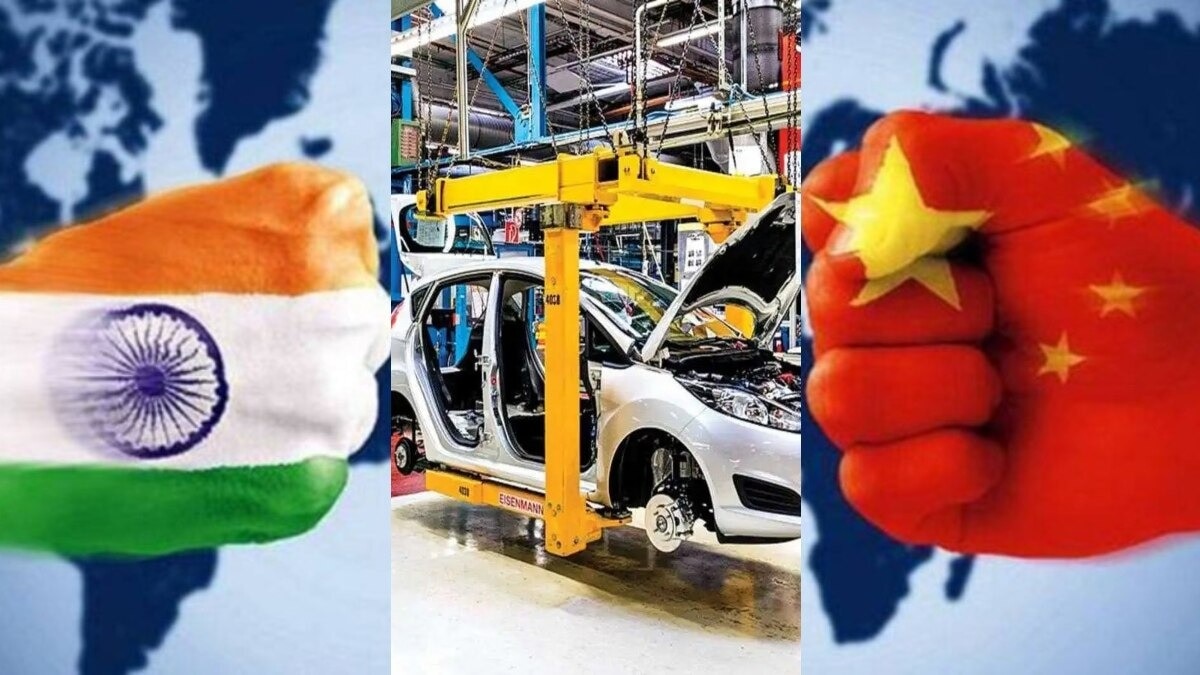
India wants to make more goods and build a stronger manufacturing industry.
China already makes much more steel and cement than India.
This means China currently has a much larger manufacturing system.
Jefferies says India could grow in areas such as electronics, semiconductors, space and aerospace.
Solar power and other renewable energy could help India get the electricity needed for factories.
India’s electricity demand may double by 2035.
Businesses are showing signs of investing more in factories and machinery.
The Indian government is also offering incentives and requiring more local production.
India still needs to close gaps in scale, technology, infrastructure and energy.

China produced 960.8 million tonnes of crude steel last year, compared with India’s 164.9 million tonnes.
China’s cement production was about 1,700 million tonnes, versus approximately 470 million tonnes in India.
Jefferies identified space, semiconductors, solar manufacturing, data centres, electronics and aerospace as key Indian growth areas.
India’s electricity demand could double to 3,365 TWh by 2035, increasing the need for affordable and reliable power.
India’s investment indicators improved, with gross fixed capital formation rising to 32.4% of nominal GDP and machinery imports reaching US$66 billion in the 12 months to August 2026.
- Who
- India, China and Jefferies are the main subjects of the analysis; Hitachi Energy India provided an energy-demand estimate.
- What
- The report compares India’s manufacturing capacity with China’s and assesses India’s potential growth areas, investment trends and energy needs.
- Where
- The analysis concerns manufacturing and energy development in India and China.
- When
- The comparison uses production figures from last year, investment data through the four quarters to June, and machinery-import data for the 12 months to August 2026; the energy outlook extends to 2035.
- Why
- India is seeking to expand manufacturing, while the report highlights the need to address gaps in scale, technology, infrastructure, investment and energy.
India’s Manufacturing Expansion
China’s Existing Scale Advantage
Manufacturing capacity
India’s Manufacturing Expansion
India is expanding capacity and attracting private investment from a smaller base.
China’s Existing Scale Advantage
China has a much larger production ecosystem, including substantially higher steel and cement output.
Growth outlook
India’s Manufacturing Expansion
Government incentives, tax holidays, localisation requirements and rising investment could support growth in six emerging sectors.
China’s Existing Scale Advantage
China’s established manufacturing scale remains a major advantage that India must work to match.
Energy requirements
India’s Manufacturing Expansion
Cheaper, more reliable electricity and expanded solar manufacturing could help India grow its industrial base.
China’s Existing Scale Advantage
China has experience with large-scale grid development and battery storage that has helped reduce solar-power costs.
Key facts
- India crude steel production
- 164.9 million tonnes last year
- China crude steel production
- 960.8 million tonnes last year
- India cement production
- Approximately 470 million tonnes
- China cement production
- Approximately 1,700 million tonnes
- Indian electricity demand outlook
- Expected to double to 3,365 TWh by 2035
- Indian machinery imports
- US$29 billion in FY21, rising to US$62 billion in FY26 and US$66 billion in the 12 months to August 2026
- Growth sectors identified by Jefferies
- Space, semiconductors, solar manufacturing, data centres, electronics and aerospace
Sources
Related news

Jefferies names six sectors driving India’s new industrial revolution

Infosys Derating Reflects Reverse AI Trade, Note Says

Jefferies Names Six Sectors Driving India’s Next Industrial Revolution
India’s manufacturing opportunity grows as global supply chains shift

India’s Power Emissions Stay Flat as Clean Energy Surges

Jefferies Identifies Six India Growth Themes Through 2030

Arjun M.R. Celebrates India’s Asian Games Badminton Bronze

Taiwan Rebukes Xi After Push for Tougher US Stance
Trump Hosts White House State Dinner for Xi Jinping
Vietnam Garment Makers Keep Exporting to US After Esquel Sanctions