

1 hr ago
Drought and Ethanol Demand Push Up Poultry Feed Costs

Chicken farmers need maize to make feed for their birds.
Maize has become more expensive, partly because drought and weak rain have reduced crops.
Some people in the ethanol industry also want maize, adding competition for the crop.
Higher feed, energy and transport costs make it more expensive to raise and sell chicken.
Zappfresh has raised some prices but says it is absorbing part of the increase.
TenderCuts is trying to keep prices steady because shoppers may be sensitive to higher costs.
Nandu’s is storing more grain to prepare for possible shortages.
These pressures could make meat more expensive or less available in the coming months.

Maize makes up about 55–65% of broiler feed by weight, and poultry farmers’ feed prices rose to ₹27–28 per kg in late September.
Drought-damaged crops and below-normal monsoon rainfall have tightened maize supplies; Nandu’s founder estimated Karnataka production was down 25%.
Poultry and meat businesses also face higher energy and transport costs, while lower breeder production has reduced chick availability.
Zappfresh raised chicken prices about 5% after procurement costs rose about 10%; TenderCuts is limiting price increases to retain price-sensitive customers.
A home-cooked non-vegetarian thali cost ₹59.50 in September, up 6% from a year earlier, according to Crisil Intelligence.
- Who
- India’s poultry producers, meat retailers and consumers; companies quoted include Zappfresh, Nandu’s and TenderCuts.
- What
- Higher feed and operating costs are squeezing poultry and meat businesses, prompting selective price increases and stockpiling.
- Where
- India, including drought-affected Karnataka and other regions with flagged drought concerns.
- When
- The article describes conditions in the current season, with prices reported in late September and on 8 October.
- Why
- Drought and below-normal monsoon rainfall have hurt maize supply, while ethanol demand competes for crops; energy and transport costs have also risen.
Limit Price Increases
Pass Costs to Consumers
How businesses respond to higher costs
Limit Price Increases
TenderCuts is trying to keep retail prices stable because consumers are sensitive to increases, while absorbing some pressure.
Pass Costs to Consumers
Zappfresh has raised chicken prices by about 5% and says it believes it can pass on a further increase without reducing demand.
Supply pressures and ethanol demand
Limit Price Increases
Zappfresh said its suppliers had not indicated that ethanol demand was affecting their costs, and TenderCuts could not directly attribute higher feed costs to ethanol.
Pass Costs to Consumers
Nandu’s founder said ethanol had taken some of the maize crop, alongside drought-related crop failure, contributing to a shortage.
Key facts
- Maize share of broiler feed
- About 55–65% by weight
- Farmer feed prices
- ₹27–28 per kg in late September, compared with ₹12–14 in 2019
- Wholesale maize price
- National median of about ₹23 per kg on 8 October, according to Agmarknet
- Southwest monsoon
- Ended with rainfall 13% below normal
- Karnataka maize production estimate
- Nandu’s founder estimated production was down 25% this season
- Zappfresh price and cost changes
- Chicken prices rose about 5% after procurement costs increased about 10%
- Home-cooked non-vegetarian thali
- ₹59.50 in September, up 6% year-on-year and 3% from August
Quotes
Deepanshu Manchanda
Founder and managing director of Zappfresh.
“For the livestock and poultry sector, any sustained increase in energy, transportation and input costs can have a direct bearing on feed costs.”
 livemint.com
“Multiple reasons, of course, ethanol has taken some of the crop, and there is a drought, crop failure in Karnataka.”
livemint.com
Sources
Related news
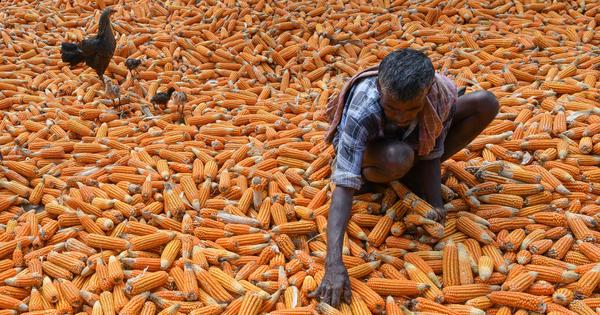
Maize Shortage Threatens Egg and Chicken Prices Amid Ethanol Push

Livestock Feed Makers Face Maize Competition From Ethanol Producers

Monsoon Damage Raises Fears of Food and Fuel Pressures

Home-Cooked Thali Costs Rise as Onion and Staples Become Costlier

Karnataka Milk Unions Seek ₹8-10 Hike in Nandini Prices

Karnataka Cabinet Approves ₹8 Nandini Milk Price Increase

Keshav Seeks NH-42 Bypasses, Gadkari Grants In-Principle Approval

NPPA Seeks Cancer Drug Pricing Details for Proposed 30% Margin Cap

Kumaraswamy Demands Probe Into Karnataka Sting Operation Controversy
Gadkari Gives Initial Approval for Four-Laning 71-Kilometre Highway
