6 days ago
Mumbai BMC Adds GPS Tracking to ₹136 Crore Slum Sanitation Scheme
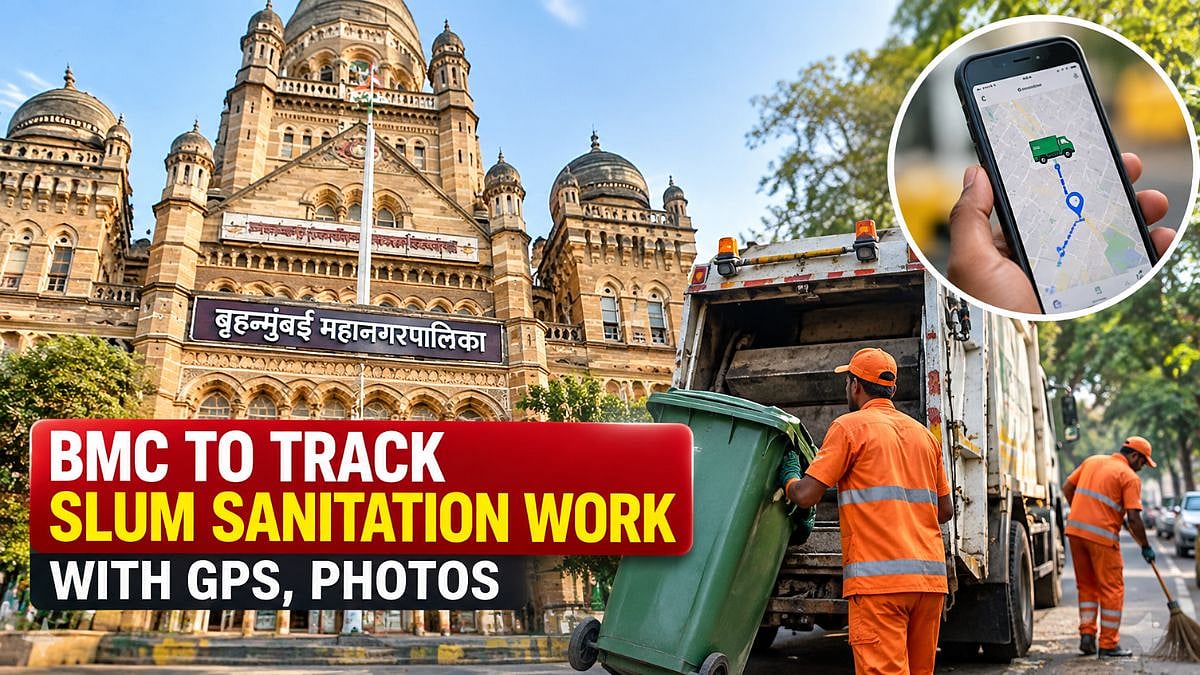
Mumbai’s civic body has proposed a new way to check whether sanitation work is being done in some slum areas.
Workers’ activities would be monitored using GPS, and organisations would send photographs from before and after the work.
The plan would cover 10,309 units that do not get enough service through regular sanitation work.
It would also include some housing and project-affected areas.
The city has proposed spending about ₹136 crore each year on the scheme.
Organisations would be paid ₹99,000 per unit each month, and better-performing groups could receive an extra award.
Some elected representatives asked for more garbage collection and better involvement of local corporators.
Others warned that dividing tasks among agencies could lead to disagreements.
The BMC’s Standing Committee approved the proposal.

The BMC’s revised sanitation scheme will use GPS tracking and before-and-after photographs to monitor work.
The proposed annual expenditure is about ₹136 crore for 10,309 units in underserved slum areas.
The scheme also extends sanitation services to SRA, MHADA, project-affected tenements and other buildings.
Each unit will serve 150 families or 750 residents, with organisations receiving ₹99,000 monthly per unit.
Corporators raised concerns about door-to-door collection, local consultation and possible disputes between service agencies.
- Who
- The Brihanmumbai Municipal Corporation (BMC), sanitation organisations and corporators discussing the proposal.
- What
- A revised sanitation scheme using GPS tracking and photographic records, proposed to cover 10,309 units.
- Where
- Slum areas and other settlements in Mumbai, including SRA, MHADA and project-affected tenements.
- When
- The report is dated October 3, 2026; the Standing Committee recently approved the proposal.
- Why
- To monitor and expand sanitation services in areas not adequately served by regular civic services.
Support for expanded oversight and services
Concerns raised by corporators
GPS and photographic monitoring
Support for expanded oversight and services
The scheme proposes GPS tracking and before-and-after photographs so the BMC can monitor sanitation work on the ground.
Concerns raised by corporators
Corporators raised implementation concerns, including whether local representatives would be involved in the rollout.
Division of sanitation work
Support for expanded oversight and services
The revised scheme assigns organisations defined units and provides grants for sanitation work and related costs.
Concerns raised by corporators
Yashodhar Phanse warned that dividing garbage collection and drain cleaning between agencies could lead to disputes.
Service coverage and local consultation
Support for expanded oversight and services
The scheme aims to extend sanitation services to underserved slum units and specified housing and project-affected areas.
Concerns raised by corporators
Tejinder Tiwana sought door-to-door garbage collection in SRA, MHADA LIG/MIG and project-affected colonies; Anjali Naik questioned the rollout across 227 wards without involving local corporators.
Key facts
- Proposed annual expenditure
- About ₹136 crore, to be met from the Solid Waste Management department’s budget.
- Planned coverage
- 10,309 units in slum areas not adequately served by regular sanitation services.
- Unit size
- 150 families or 750 residents per unit.
- Monthly grant per unit
- ₹90,000 for sanitation work plus ₹9,000 for equipment, materials, record-keeping and mobile use; total ₹99,000.
- Performance incentive
- A proposed ₹21,000 monthly award for a better-performing organisation, selected through a draw based on performance score.
- Monitoring
- GPS-based real-time tracking and required before-and-after photographs.
- Committee status
- The BMC’s Standing Committee approved the proposal, according to the report.
Sources
Related news
Indian Cities Modernise Sanitation With AI, EVs and Digital Tools
Pune Toilet Tender Draws Scrutiny Over Fixed Rs 85 Rate
Mumbai BMC Plans ₹15.30 Crore Upgrade With 15 Public Toilets
Bhopal civic body cuts daily spot-fine target to ₹3,000
Bombay High Court Seeks Ward-Wise Action on Mumbai Garbage
Telangana Ward Officers Complete Three-Day Sanitation Training Programme
Mumbai Clears Encroachment, Restores Access to Historic Plague-Era Cemetery
Maharashtra Governor Presents Medals to 103 Police Personnel

Tourism Malaysia Launches Four-Month Campaign to Attract Indian Travellers
Maharashtra Approves ₹12.68 Crore Fleet Purchase Amid Drought Concerns

Mumbai BEST Says It Recovered 84% of Power Theft Dues