2 days ago
How Edward Carpenter Linked Hindu Philosophy and Socialism
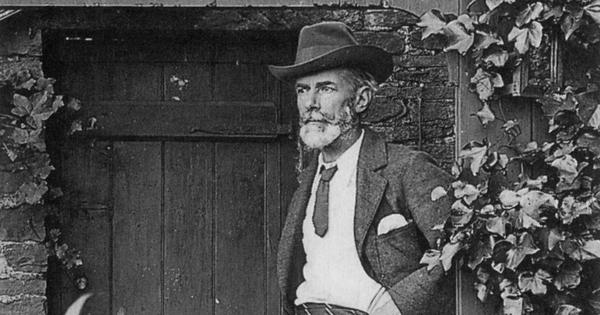
Edward Carpenter was an English poet and thinker who believed society should be more equal.
He traveled to Ceylon and India in the 1890s.
There, he noticed that many English people lived as privileged rulers and relied on servants.
He thought this lifestyle helped support an unfair colonial system.
Carpenter had already become interested in socialism and spiritual ideas.
The Bhagavad Gita had deeply influenced his thinking.
In Ceylon, he met Sri Arulparananda Swamigal, a Hindu spiritual teacher.
The teacher said that rulers should serve the people and that wealthy people should help the poor.
Carpenter thought these ideas connected ancient Hindu philosophy with modern socialism.

Edward Carpenter traveled through Ceylon and India in 1890-91, meeting Hindu teachers and observing colonial society.
He criticized English residents who maintained privileged lifestyles through servants, hotels and other symbols of status.
Carpenter’s socialist views developed after leaving the church and Cambridge and working among working-class adult learners.
The Bhagavad Gita strongly influenced his spiritual thinking and his long poem Towards Democracy.
After meeting Sri Arulparananda Swamigal, Carpenter argued that Hindu ideas about equality and service could resemble socialism.
- Who
- Edward Carpenter, the English poet and socialist thinker, and Sri Arulparananda Swamigal, a Hindu spiritual teacher.
- What
- Carpenter explored Hindu philosophy and concluded that its emphasis on equality, justice and service could share common ground with socialism.
- Where
- Ceylon and India, including Colombo, Madras and Tanjore.
- When
- Carpenter traveled through Ceylon and India in 1890-91; he later reflected on the journey in his autobiography.
- Why
- Carpenter wanted to encounter Indian religious traditions and better understand the social and political systems he believed were shaped by commercialism and colonial rule.
Egalitarian and Spiritual Tradition
Colonial Commercial Order
Role of rulers and wealth
Egalitarian and Spiritual Tradition
Sri Arulparananda Swamigal told Carpenter that a king was only a representative of Lord Shiva, elected by and accountable to the people, while wealthy people should serve the poor.
Colonial Commercial Order
Carpenter criticized the colonial social order in which English residents maintained status through expensive lifestyles, servants and commercial privilege.
View of British rule
Egalitarian and Spiritual Tradition
The guru argued that justice and equality were divine responsibilities and criticized British Crown rule as focused on the money bag.
Colonial Commercial Order
The existing British system, as described by Carpenter, required English people to preserve the lifestyle and prestige expected of colonial rulers.
Key facts
- Traveler
- Edward Carpenter
- Journey
- Carpenter traveled through Ceylon and India in 1890-91.
- Spiritual influence
- The Bhagavad Gita gave Carpenter what he called a keynote for his thinking.
- Major work
- His prose poem Towards Democracy was published in parts from 1883 onward.
- Key meeting
- Carpenter met Sri Arulparananda Swamigal through Ponnambalam Arunachalam.
- Political connection
- Carpenter interpreted the guru’s teachings about rulers, wealth and justice as close to socialism.
- Colonial criticism
- The guru described British Crown rule as worse than East India Company rule and criticized it as focused on money.
Quotes
Sri Arulparananda Swamigal
Hindu spiritual teacher and former adviser to the last king of Tanjore
“Justice or Equality is the special attribute of God; and he who represents God, i.e. the king, must consider this before all things. The same with rich people – they are bound to serve and work for the poor from whom their riches come.”
 scroll.in

Edward Carpenter
Victorian English poet, philosopher and socialist
“After seeing Whitman, the amazing representative of the same spirit in all its voluminous modern unfoldment – seven years before – this visit to the Eastern sage was like going back to the pure lucid intensely transparent source of some mighty and turbulent stream.”
scroll.in
Sources
Related news

Rabindranath Tagore's Boyhood Himalayan Journey with His Father
Sumit Sarkar: A Historian Who Questioned History Through Humanity

Savarkar grandnephew tells court he criticised cow worship
Aussie Bhai Calls India Move Best Decision, Living Wildest Dreams
New Biography of 'Myriad-Minded Man' Reveals Fragile Human Tagore