

2 hrs ago
Indian Navy May Operate Indigenous Underwater Drones Within a Year
Ankur Shah says India may soon use large underwater robots with its Navy.
These machines are called autonomous underwater vehicles, or AUVs.
They can go into places that might be too dangerous for sailors in a submarine.
India’s Jalkapi project is developing a very large kind of AUV.
Shah says vehicles in this class could travel about 1,000 nautical miles and stay underwater for around 21 days.
They could help gather information and investigate mines.
Underwater robots cannot use GPS in the same way as aircraft, and communicating with them is difficult.
People still set their missions and rules, though the machines may become more independent.
A UK-US trial also showed an uncrewed underwater vessel launching a torpedo.

Ankur Shah said large Indian-built autonomous underwater vehicles could begin operating with the Indian Navy within six to twelve months.
Shah said autonomous underwater vehicles could undertake risky missions, including scouting hostile waters and investigating mines.
India’s Jalkapi project is described as an extra-large autonomous underwater vehicle.
Shah said vehicles in this class could potentially travel about 1,000 nautical miles and remain underwater for approximately 21 days.
A UK-US trial under the AUKUS partnership demonstrated an uncrewed underwater vessel launching and controlling a heavyweight torpedo.
- Who
- Ankur Shah, managing director of Krishna Defence and Allied Industries Limited, discussed potential Indian Navy AUV operations.
- What
- Indigenous large autonomous underwater vehicles could begin operating with the Indian Navy, with Jalkapi representing an extra-large vehicle project.
- Where
- The potential operations are with the Indian Navy; the referenced torpedo trial took place off Scotland.
- When
- Shah said operations could begin within six to twelve months.
- Why
- AUVs could undertake surveillance, reconnaissance, mine investigation and other dangerous missions without exposing submarine crews to the same risks.
Key facts
- Potential start
- Within six to twelve months, according to Ankur Shah
- Indian project
- Jalkapi, described as an extra-large autonomous underwater vehicle
- Potential range
- Around 1,000 nautical miles for vehicles in this class, according to Shah
- Potential endurance
- Approximately 21 days underwater, according to Shah
- Possible missions
- Intelligence, surveillance, reconnaissance and mine investigation
- Underwater navigation challenge
- GPS is not available underwater in the same manner as it is in the air, and continuous communication is difficult
- Referenced weapons trial
- XV Excalibur demonstrated launching and controlling a US Navy Mk 48 Mod 4 heavyweight torpedo
- Trial location and partnership
- Off Scotland, under the AUKUS partnership involving the United Kingdom, United States and Australia
Sources
Related news
India Weighs More Scorpenes as Six-Submarine Deal Nears Approval
India’s Drone Revolution Moves From FPV Strikes to Long Missions

U.S. Navy Uses SEALs and Drones to Hunt Iranian Mines
Three Indian Submarine Experiences Offer Underwater Adventures Without Passports
Rajnath Singh Highlights Indian Navy’s Expanding Blue-Water Maritime Role
Iranian Guards Claim Second US Drone Seized In Hormuz
Navy Sailor Arrested Over Alleged Data Leak to Pakistani Operative
Indian Warships Conclude Participation in ASEAN-India Maritime Exercise

GRSE Versus Data Patterns: Growth, Margins and Valuations Compared
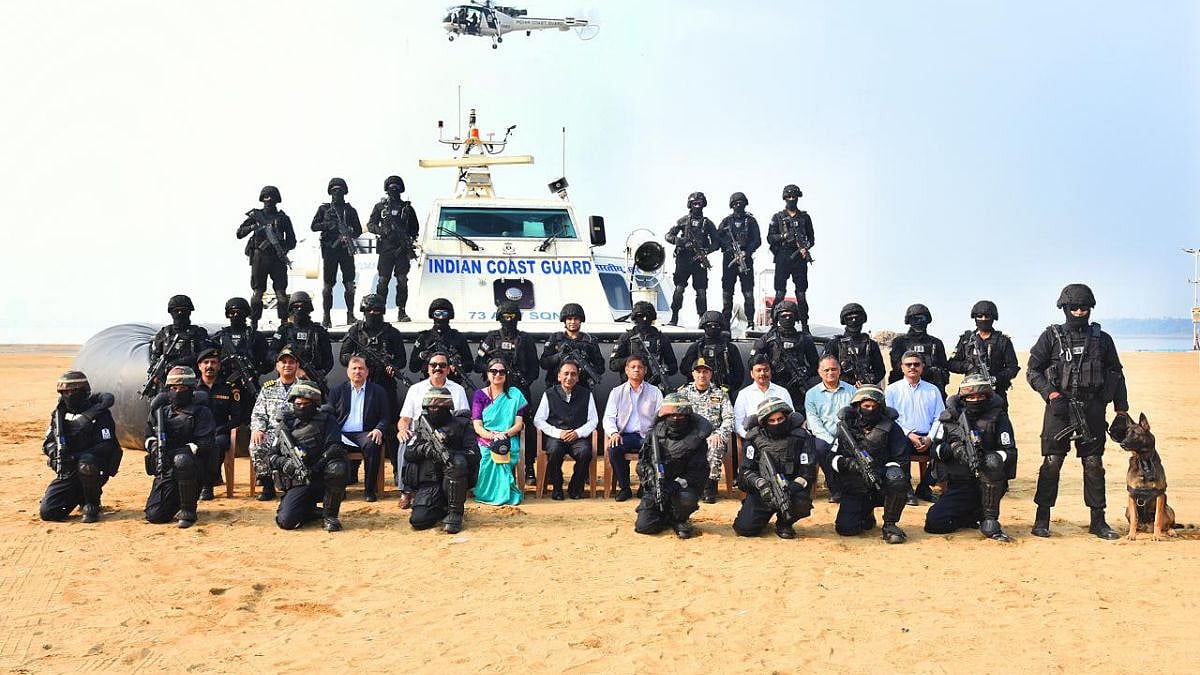
Coastal Security Exercise Tests Readiness Across Maharashtra, Goa
