

1 hr ago
MSRTC Conductorless Bus Plan Targets Costs, Raises Long-Route Safety Concerns
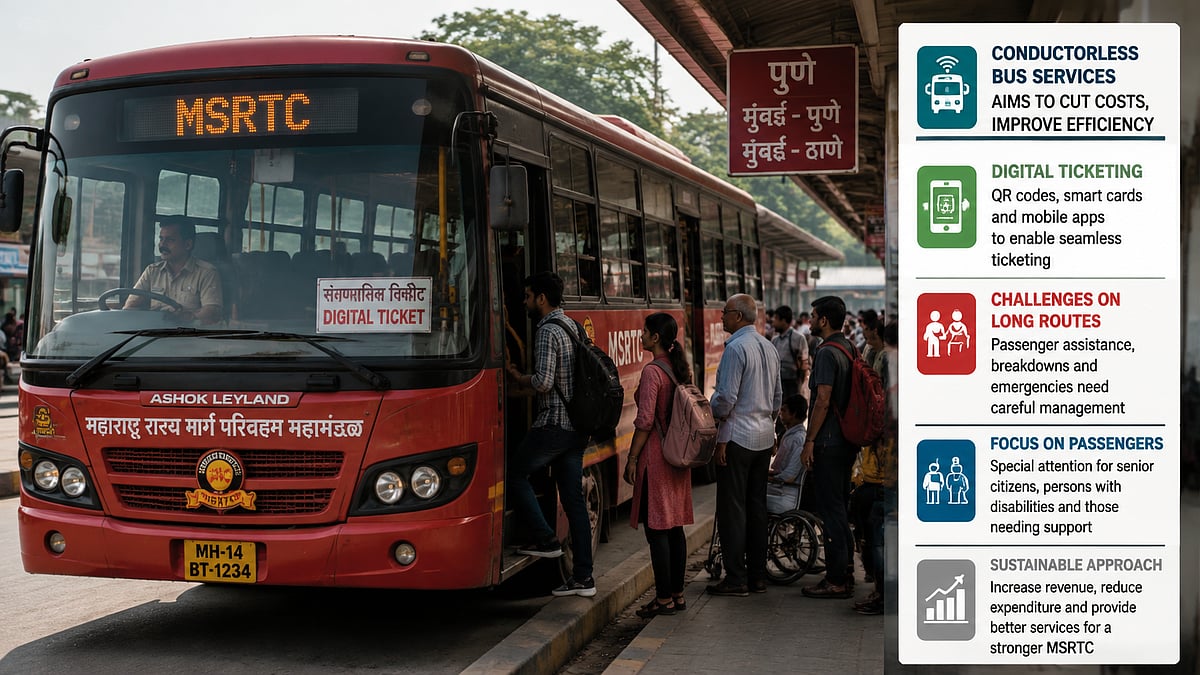
MSRTC wants to run some buses without conductors to save money.
The buses would use digital tickets, QR codes or smart cards.
This system is already being tried on some shorter routes.
It may be harder to use on long journeys.
A conductor can help passengers if a bus breaks down.
Conductors also assist older people and passengers with disabilities.
Without a conductor, the driver might have to manage both the bus and passenger emergencies.
Officials must decide whether the money saved is worth the possible service and safety problems.

Transport Minister Pratap Sarnaik has asked MSRTC to prioritize conductorless buses on suitable routes.
The plan aims to reduce manpower costs, increase revenue and curb avoidable expenditure.
Conductorless services are already being tried on shorter Mumbai-Pune and Mumbai-Thane routes.
Digital tickets, QR codes and smart cards are intended to reduce the need for conductors.
Officials warn that long routes could create difficulties during breakdowns, emergencies and passenger transfers.
- Who
- The Maharashtra State Road Transport Corporation and Transport Minister Pratap Sarnaik.
- What
- MSRTC is being asked to prioritize conductorless bus services on suitable routes to reduce costs.
- Where
- The trials include Mumbai-Pune and Mumbai-Thane routes in Maharashtra.
- When
- The short-route model is already under trial; no broader implementation date is specified.
- Why
- The plan is intended to improve MSRTC’s finances by increasing revenue and reducing manpower and other avoidable expenditure.
Cost Reduction Case
Safety and Assistance Concerns
Financial sustainability
Cost Reduction Case
Conductorless services could lower manpower costs and help MSRTC improve its financial position without relying only on fare increases.
Safety and Assistance Concerns
Financial savings should not compromise service quality, passenger assistance or safety, especially on longer routes.
Route suitability
Cost Reduction Case
Short routes with digital ticketing, QR codes and smart cards may be suitable for conductorless operations.
Safety and Assistance Concerns
Long-distance routes may require conductors to coordinate passenger movement, luggage and bus changes after breakdowns.
Emergency support
Cost Reduction Case
The model could make better use of existing resources on selected services.
Safety and Assistance Concerns
If a bus develops a fault in an isolated area, the driver may have to manage driving responsibilities and assist passengers, including senior citizens and people with disabilities.
Key facts
- Organization
- Maharashtra State Road Transport Corporation (MSRTC)
- Minister
- Pratap Sarnaik, Maharashtra transport minister
- Existing trials
- Mumbai-Pune and Mumbai-Thane routes
- Cost objective
- Reduce manpower expenditure on selected services
- Technology
- Digital ticketing, QR codes and smart cards
- Main concern
- Passenger assistance during breakdowns, emergencies and transfers on long routes
Quotes

Pratap Sarnaik
Maharashtra Transport Minister who directed MSRTC to prioritize conductorless services on suitable routes
“Merely increasing ticket fares cannot improve MSRTC's financial condition. Increasing revenue while reducing expenditure and providing better services is the sustainable way forward.”
 freepressjournal.in
Sources
Related news
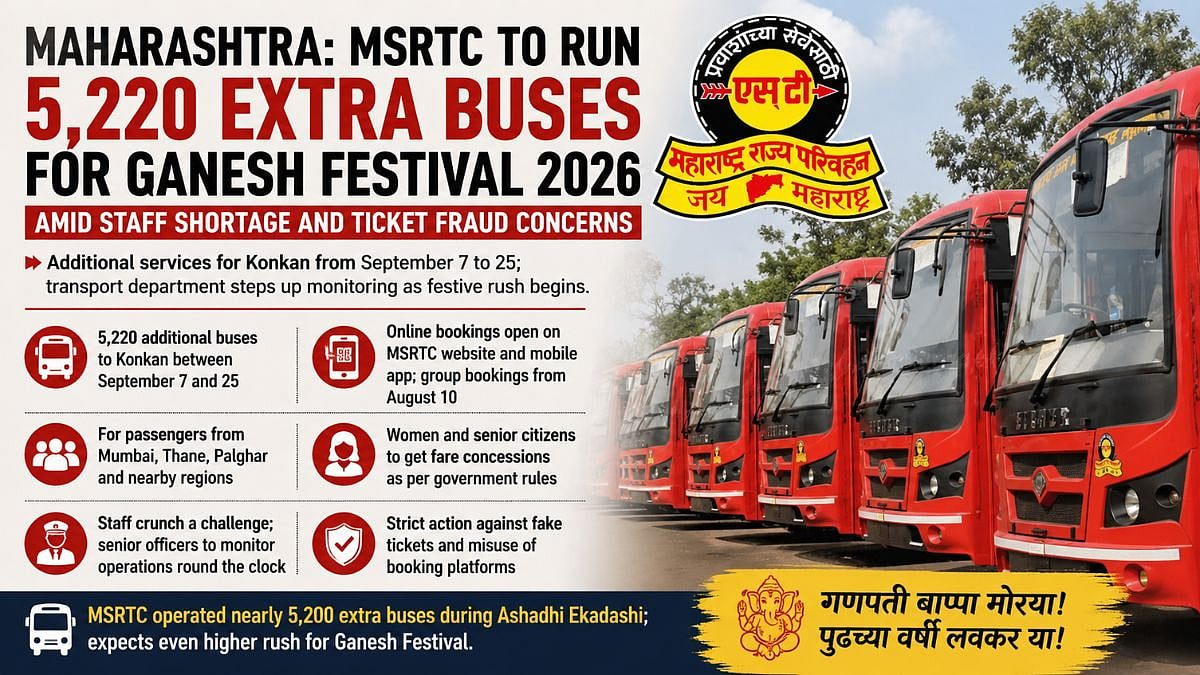
MSRTC to run 5,220 extra buses for Ganesh Festival 2026
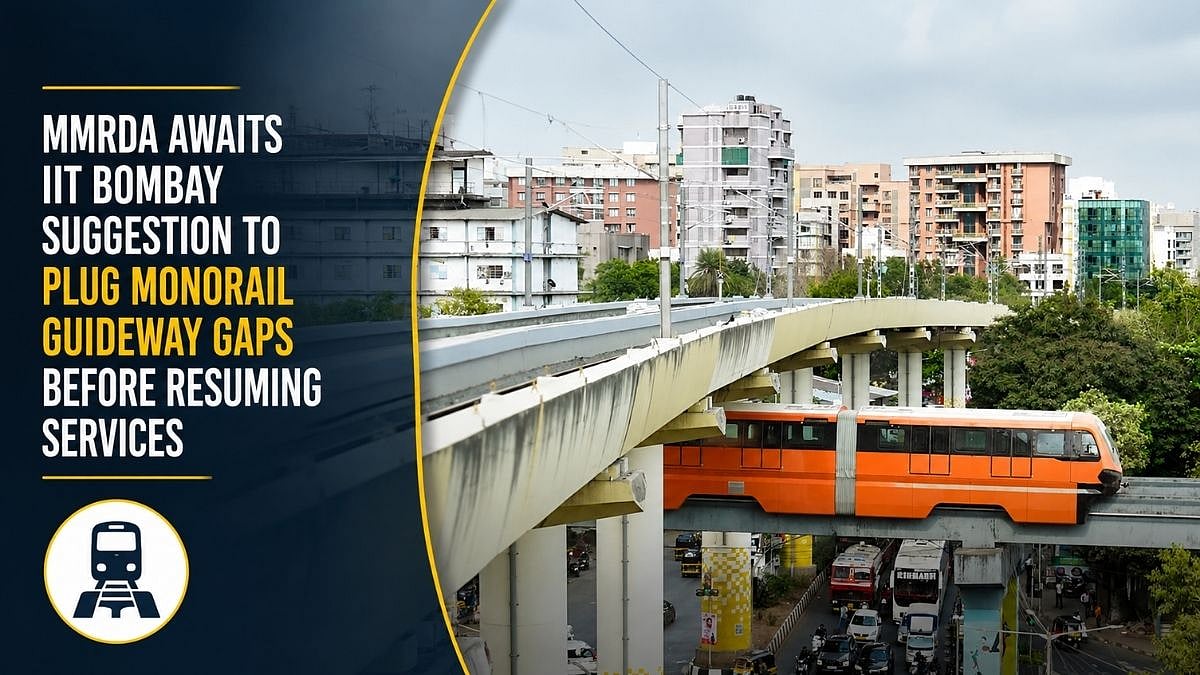
Mumbai Monorail Restart Awaits IIT Bombay Safety Recommendation

Maharashtra to Develop 147 MSRTC Properties in PPP Mode

Sarnaik Inspects Pune Bus Stand, Directs Officials to Fix Lapses
Telangana RTC Won't Operate Electric Autos, Minister Assures Unions
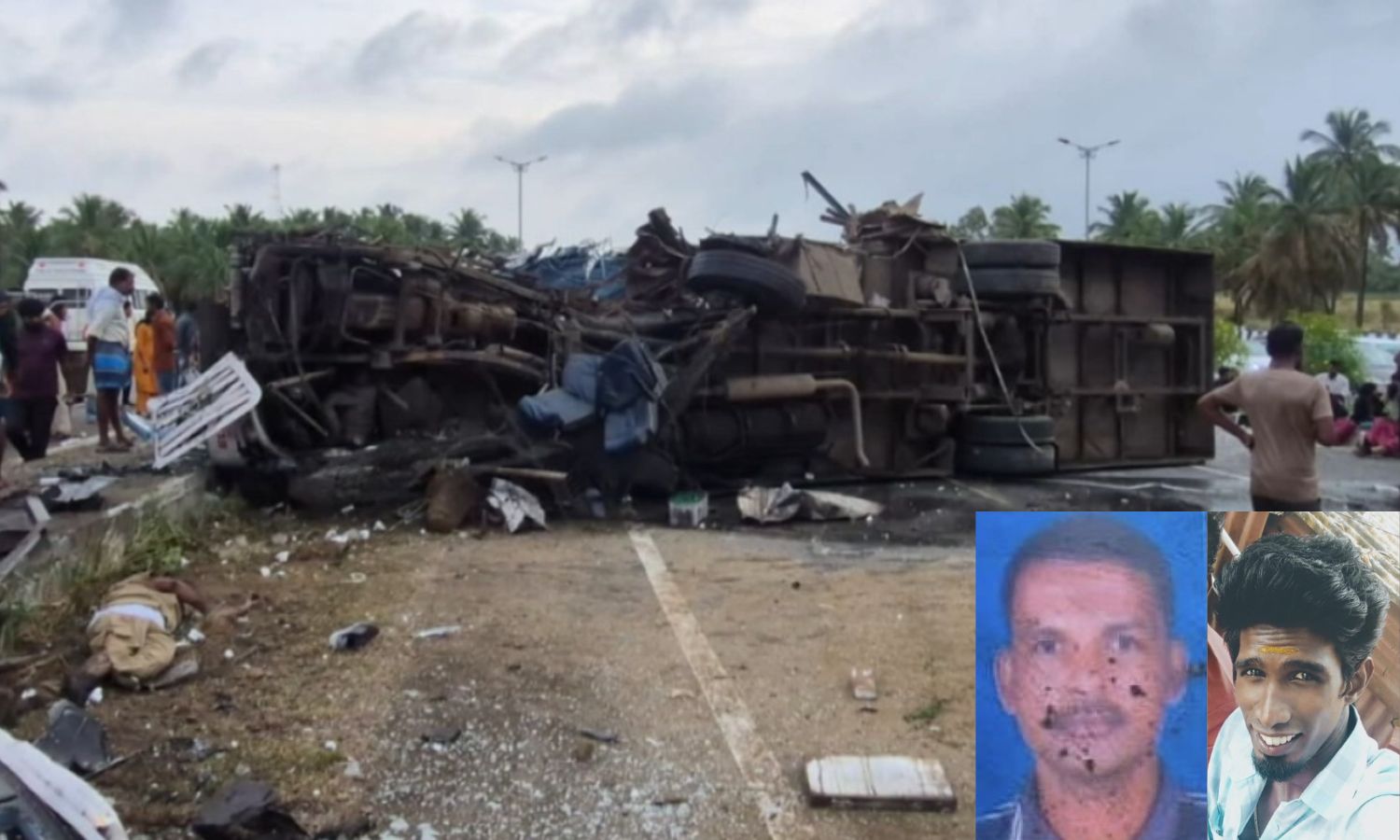
KSRTC bus crash kills driver, conductor; minister reviews staff hours

Gold Loans Quadruple as India’s Untapped Gold Wealth Fuels Growth
Maharashtra Penalises 33,993 Vehicles in HSRP Enforcement Drive

Maharashtra Congress Seeks More Time for SIR Voter Claims

Mirzapur: The Movie Sells Over One Lakh Advance Tickets
