1 hr ago
Z Press Builds Shoulder Strength Through Controlled Seated Pressing
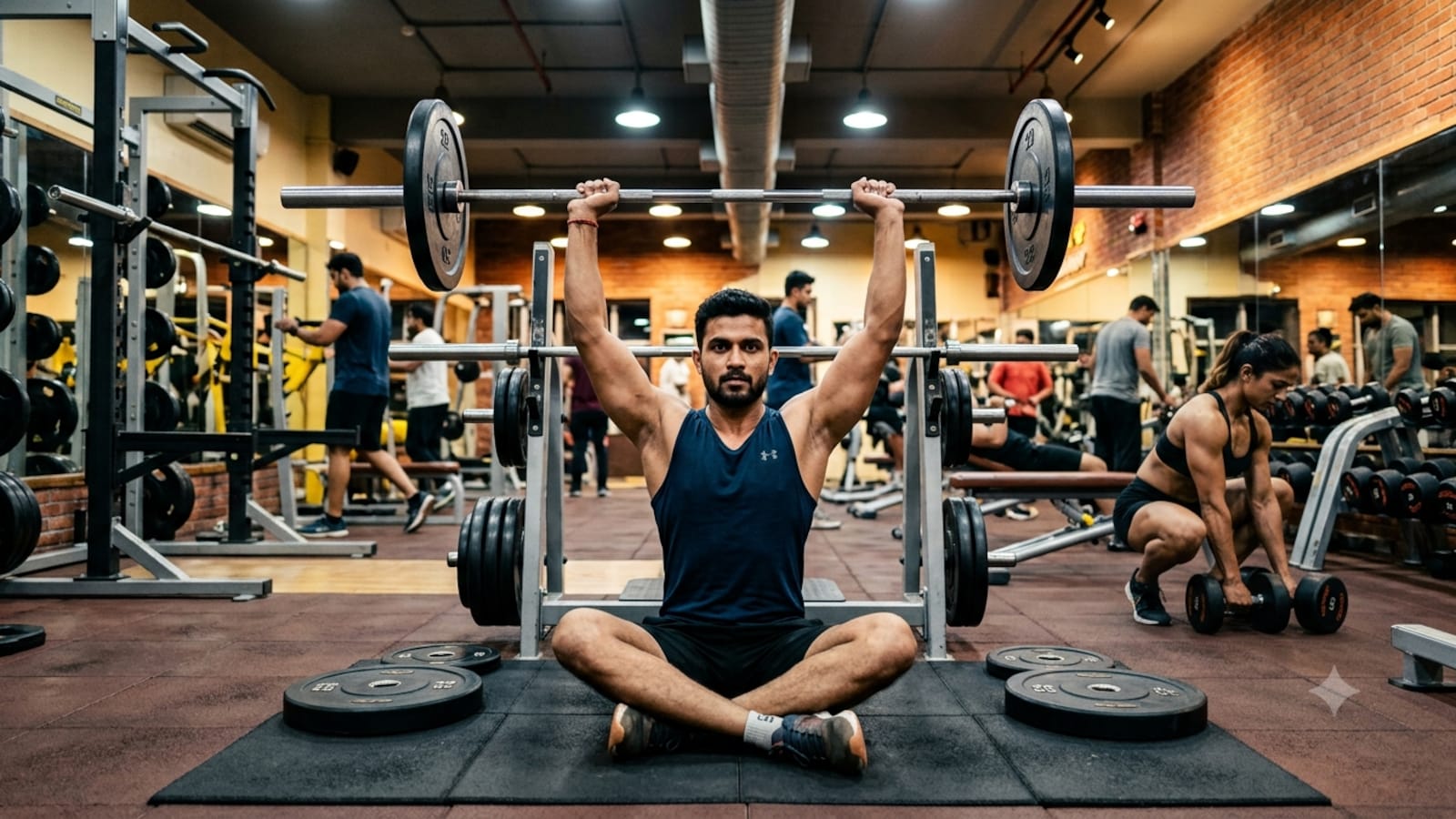
The Z press is an exercise where you sit on the floor and push weights above your head.
Your legs stay straight, so they cannot help you push.
This makes your shoulders work harder.
Your stomach and back muscles also help keep you upright.
The exercise can improve strength and control when pressing weights.
You should sit tall and avoid leaning backward.
Start with a light weight and move slowly.
Tight hips or hamstrings can make the position difficult.
Stop if the movement causes sharp or unusual pain.

The Z press is a seated overhead exercise performed on the floor with legs extended.
It primarily trains the front and side deltoids while also engaging the triceps, core, lower back and upper back.
Removing lower-body assistance makes the movement demanding for shoulder strength, stability and pressing control.
Tight hips or hamstrings may make it difficult to maintain an upright posture during the exercise.
Beginners should use light weights, prioritize technique and stop if they experience sharp or persistent pain.
- Who
- People seeking stronger shoulders and improved pressing control can perform the Z press, provided they can do so safely.
- What
- The Z press is a seated overhead press performed with the legs extended, using a barbell, dumbbells or kettlebells.
- Where
- On the floor, while seated with the legs extended straight in front.
- When
- The article suggests using it as an accessory exercise after a primary strength movement, for around 2 to 4 sets of 6 to 12 repetitions.
- Why
- It removes much of the assistance from the lower body, challenging the shoulders, core, posture and pressing control.
Key facts
- Primary muscles
- Front and side deltoids
- Supporting muscles
- Triceps, abdominals, lower back and upper back
- Equipment
- Barbell, dumbbells or kettlebells
- Suggested programming
- Around 2 to 4 sets of 6 to 12 controlled repetitions
- Recommended starting approach
- Use a manageable or light load and prioritize posture and control
- Caution
- People with injuries, overhead pain or significant mobility restrictions should consult a qualified fitness professional or physiotherapist
Sources
Related news

Arnold Schwarzenegger Demonstrates T-Bar Rows at 79
Deadlift Mistakes That Can Ruin Form and Increase Injury Risk
PV Sindhu’s Single-Leg Workout Builds Athletic Strength and Control