

3 days ago
How Tim Cook Expanded Apple’s iPhone Screen Strategy
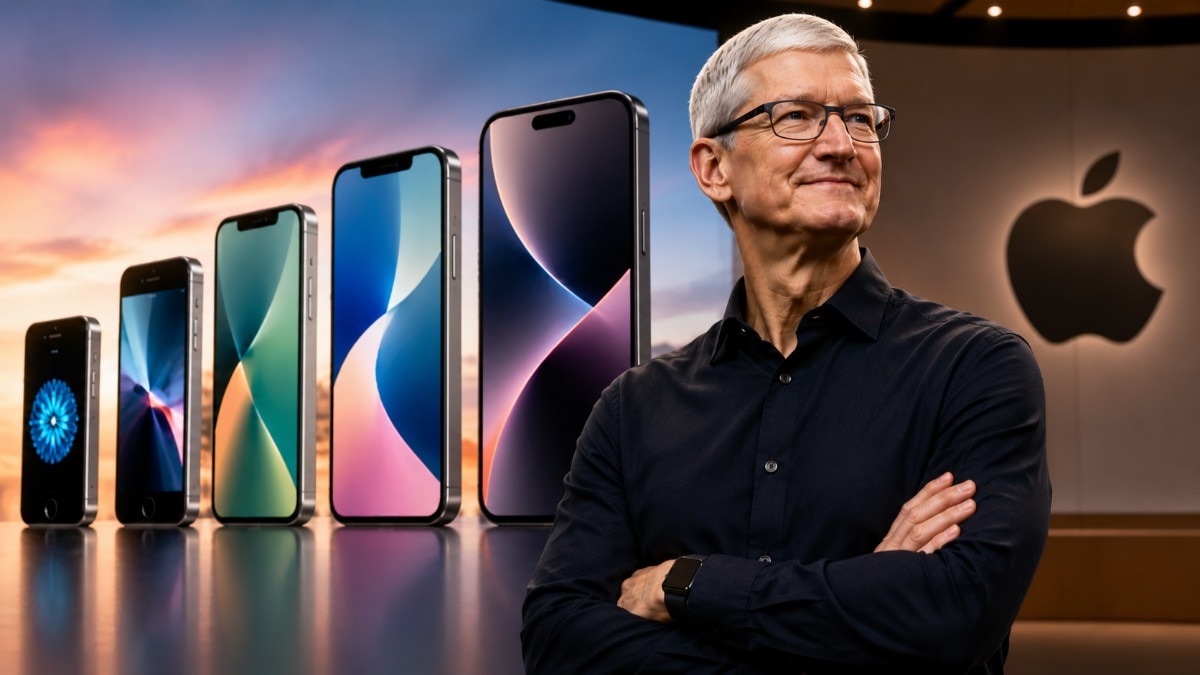
Apple used to make iPhones with one small screen size.
The iPhone 5 made the screen a little bigger, increasing it to 4 inches.
In 2014, Apple made a much larger change with the iPhone 6 and iPhone 6 Plus.
Customers could choose a regular-sized phone or a phone with a much bigger screen.
This helped Apple compete with Android phones, which already offered many large-screen models.
Apple later used OLED screens and Face ID in premium iPhones.
In 2015, it also introduced the larger iPad Pro.
These changes showed that Apple was offering more sizes and choices than before.

The iPhone 5 introduced Apple’s first larger display, growing from 3.5 to 4 inches.
In 2014, the iPhone 6 and iPhone 6 Plus brought 4.7-inch and 5.5-inch screens.
Apple began offering standard and larger iPhone models instead of one main screen size.
The strategy helped Apple respond to Android phones and rising demand for larger displays.
During Tim Cook’s tenure, Apple also adopted OLED screens, Face ID, and larger iPad options.
- Who
- Apple, under CEO Tim Cook, changed its iPhone and broader hardware strategy.
- What
- Apple expanded its iPhone screen sizes and began offering multiple display options.
- Where
- When
- The iPhone 5 introduced a 4-inch display; the iPhone 6 lineup followed in 2014, and the first iPad Pro was introduced in 2015.
- Why
- Apple responded to changing customer preferences and competition from Android smartphones with larger screens.
Apple’s Earlier Limited-Size Strategy
Apple’s Expanded-Choice Strategy
Screen-size options
Apple’s Earlier Limited-Size Strategy
Apple previously kept the iPhone display size consistent at 3.5 inches across several generations.
Apple’s Expanded-Choice Strategy
Apple later offered several screen sizes, including standard and larger iPhone models.
Market response
Apple’s Earlier Limited-Size Strategy
Apple’s earlier approach limited its direct response to the growing popularity of large-screen Android phones.
Apple’s Expanded-Choice Strategy
Larger displays helped Apple compete more directly with Android devices and address changing customer preferences.
Key facts
- First larger iPhone display
- The iPhone 5 introduced a 4-inch screen, up from 3.5 inches.
- iPhone 6 display
- The iPhone 6 featured a 4.7-inch display.
- iPhone 6 Plus display
- The iPhone 6 Plus introduced a 5.5-inch screen.
- Strategy change
- Apple began offering standard and larger iPhone models.
- Display technology
- Apple eventually moved premium iPhones from LCD to OLED screens.
- Biometric technology
- The iPhone X introduced Face ID, replacing the earlier Touch ID system.
- Tablet expansion
- Apple introduced its first iPad Pro in 2015 as a larger-screen tablet option.
Sources
Related news
Tim Cook’s Apple Legacy: From $350 Billion To $4 Trillion
Tim Cook’s 15-Year Apple Legacy Beyond Steve Jobs

Tim Cook’s Apple Era Ends With Massive Growth and Challenges

Apple Reportedly Moving Forward With Glass iPhone 20th Anniversary Redesign

Apple May Bring Touchscreens and OLED to MacBook Pro

Tablet Replaces Laptop for a Month: Real Freedom, Real Limits
iPad Buying Guide: Air M4, Pro M5, or Base iPad?
Apple Raises Trade-In Values for iPhones, Macs, iPads, and More
