3 weeks ago
FSSAI proposes nutrition disclosures, not warning labels, on packaged foods
FSSAI is the group in India that makes rules about food labels.
Some people want packages to show big warnings like 'High in Sugar' or 'High in Salt' when a food is unhealthy.
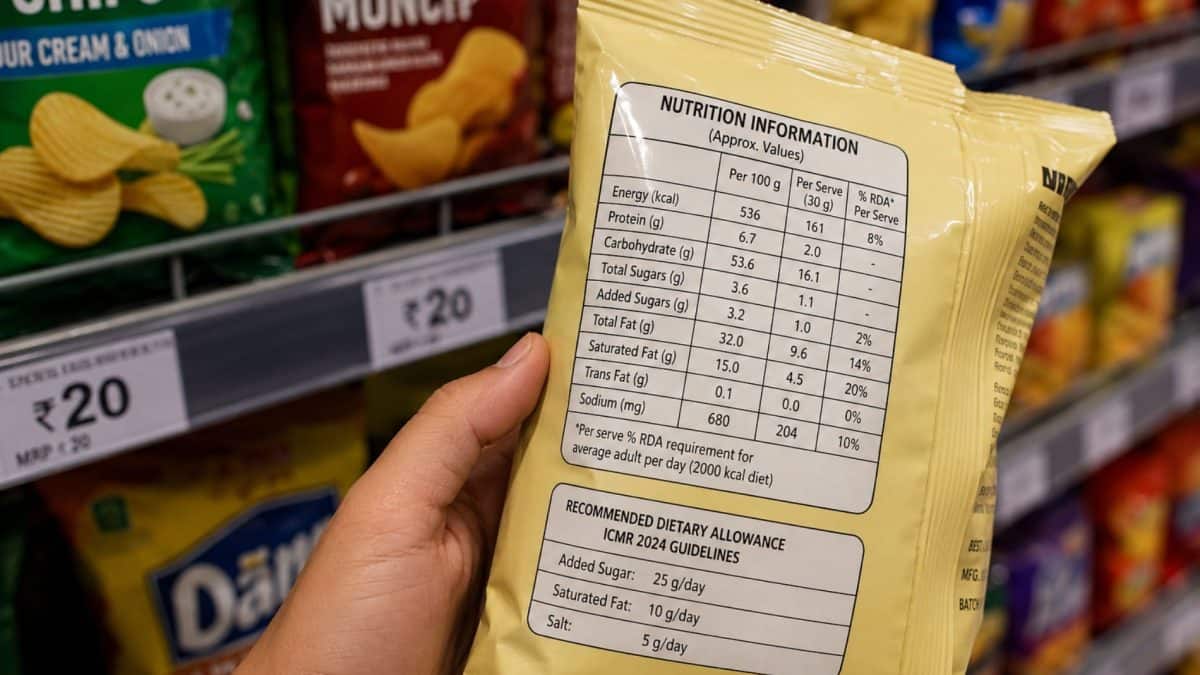
FSSAI instead wants to print numbers showing how much sugar, salt, and fat is inside, along with how much a person should eat in a day.
Many experts say numbers are too hard for people to understand quickly at the store.
The Supreme Court of India is helping decide what should happen.
It said FSSAI's past efforts did not work well and that healthy food is connected to a basic right.
Some food companies do not want warning labels and say labels should inform people without creating fear.
A group called NAPI says warnings are easier for everyone to understand, and countries like Chile, Mexico, and Israel already use them.
FSSAI will keep working on its plan, and the court will keep listening to both sides.
In the end, the question is simple: will Indian food packages get easy-to-see warnings or just numbers?

FSSAI has proposed front-of-pack nutrition disclosures showing added sugar, saturated fat and salt per 100 grams, plus serving size and recommended daily intake based on ICMR guidelines.
The regulator stopped short of mandatory warning labels such as 'High in Sugar' or 'High in Salt,' drawing criticism from public health advocates.
NAPI, a petitioner in the Supreme Court case, said the affidavit reframes the issue and ignores the court's directions for warning labels.
The Supreme Court, which in February 2026 asked FSSAI to consider warning labels, had observed that earlier FSSAI exercises 'not yielded any positive or good result.'
FSSAI cited industry opposition from a March 19, 2026 stakeholder consultation, with most industry bodies arguing labels should inform consumers without creating fear.
- Who
- FSSAI, the Supreme Court of India, public health advocates including NAPI, and food industry bodies.
- What
- FSSAI proposed front-of-pack nutrition disclosures for added sugar, saturated fat and salt without mandatory warning labels, in a compliance affidavit responding to a Supreme Court public interest litigation.
- Where
- India.
- When
- The affidavit was filed on August 3, 2026; a stakeholder consultation was held on March 19, 2026; the Supreme Court had asked FSSAI to consider warning labels in February 2026.
- Why
- To help consumers identify unhealthy packaged foods as India faces rising obesity, diabetes and cardiovascular disease; the court views the issue as connected to the fundamental right to health.
Public health advocates (pro warning labels)
FSSAI and food industry (pro nutrition information)
Warning labels vs. nutrition information
Public health advocates (pro warning labels)
Simple 'High in Sugar', 'High in Salt' or 'High in Saturated Fat' warnings are instantly understood by all consumers and are backed by evidence from countries like Chile, Mexico and Israel.
FSSAI and food industry (pro nutrition information)
Displaying nutrient quantities against recommended daily intake helps consumers make informed choices 'without creating fear amongst the consumers.'
Industry influence on regulation
Public health advocates (pro warning labels)
Allowing industry opposition to shape public health regulation undermines consumer protection, especially as India faces rising obesity, diabetes and cardiovascular disease.
FSSAI and food industry (pro nutrition information)
Most industry bodies opposed mandatory warning labels and argued that labels should help consumers make informed choices without creating fear.
Compliance with court directions
Public health advocates (pro warning labels)
FSSAI has reframed the issue away from warning labels despite repeated judicial observations, and its earlier exercises 'not yielded any positive or good result.'
FSSAI and food industry (pro nutrition information)
FSSAI is proceeding through a proper process: a stakeholder consultation, placing the proposal before the Food Authority, and a public consultation before notification.
Key facts
- Regulator
- Food Safety and Standards Authority of India (FSSAI)
- Core proposal
- Front-of-pack declarations of added sugar, saturated fat and salt per 100 grams, serving size and recommended daily intake
- Warning labels
- Not proposed; no mandatory 'High in Sugar/Salt/Saturated Fat' symbols
- ICMR daily limits cited
- 25g added sugar, 10g saturated fat, 5g salt
- Affidavit filing date
- August 3, 2026
- Stakeholder consultation
- March 19, 2026
- Regulations to be amended
- Food Safety and Standards (Labelling and Display) Regulations, 2020
- Lead petitioner critic
- National Alliance for People's Movements and Nutrition Advocacy in Public Interest (NAPI)
Quotes
Rajiv Shankar Dvivedi
Public interest litigant representing the petitioner
“"We received the copy of the affidavit on August 4, 2026 and are filing our response in a few days."”
 firstpost.com
Sources
Related news

FSSAI Proposes Red Front-Pack Warnings For Unhealthy Foods

Supreme Court gives FSSAI last chance on warning labels

India Proposes Red Front-Pack Warnings for High-Nutrient Foods
FSSAI Proposes Red Hexagon Warnings for High-Salt, Sugar, Fat Foods
India’s Front-of-Pack Food Warning Debate Faces Industry Pushback
India’s Proposed Food Warning Labels Face Health, Industry Backlash

Two Years After RG Kar Doctor's Rape-Murder, Case Remains Unresolved

ED widens Chhattisgarh probes with two arrests and searches

Delhi High Court Orders Madhya Pradesh to Pay Advocate Dues

Haryana sanitation workers’ strike puts BJP government under pressure

Orissa High Court Says Brothel Customers Cannot Face Trafficking Charges