2 hrs ago
Japan's Oil Diversification Could Redraw Global Energy Trade
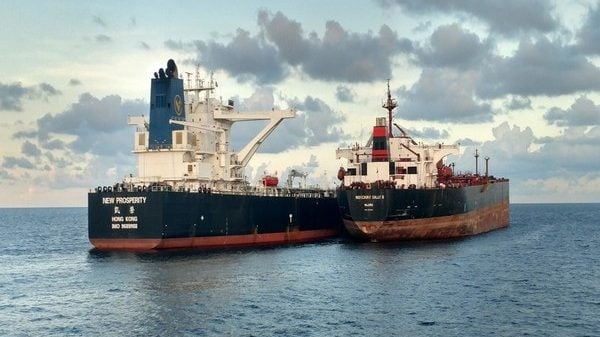
Japan buys almost all of its oil from other countries.
For many years, most of that oil came from the Middle East because the regions are relatively close.
Japan now wants to use more suppliers and different shipping routes.
This could help protect Japan if conflicts disrupt oil deliveries.
South Korea and India are also looking at reducing their dependence on the Middle East.
The United States was Japan's largest oil supplier in July.
Japan has already reduced its use of oil for making electricity.
Using more electric cars and less heating oil could reduce the amount of oil Japan needs to import.
If Japan buys more oil from other regions, Middle Eastern producers may need to find new customers.

Japan is considering diversifying oil suppliers and transport routes to reduce Middle East dependence.
The country imports 99.9% of its oil, 99.7% of its coal, and 97.8% of its natural gas.
The United States supplied 37% of Japan's petroleum imports in July, while Mexico and Latin America supplied 3%.
South Korea plans to limit any region's share of its oil imports to 50%; the Middle East currently supplies more than 75%.
Lower oil demand through electric vehicles, reduced heating use, and other measures could make diversification easier.
- Who
- Japan is leading the proposed shift, while South Korea and India are also seeking more diversified oil supplies.
- What
- Japan is discussing a plan to diversify oil suppliers and transport routes and reduce its structural dependence on Middle Eastern oil.
- Where
- The proposed changes concern oil supplies from the Middle East, the United States, Mexico, Latin America, West Africa, and the Americas.
- When
- The Japanese government is discussing the plan, with a formal announcement potentially coming before year-end; July was the latest monthly import data cited.
- Why
- Japan wants to reduce vulnerability to energy supply instability, transport disruptions, and constraints that could hinder economic growth.
Diversification Advocates
Middle East Supply Continuity
Reducing supply vulnerability
Diversification Advocates
Japan should diversify suppliers and transport routes to reduce exposure to recurring energy instability and disruptions around the Strait of Hormuz.
Middle East Supply Continuity
Japan can continue buying from Middle Eastern producers while reducing transport risks by supporting pipelines that bypass the Strait of Hormuz.
Commercial practicality
Diversification Advocates
Japan's recent purchases from the United States and potential supplies from the Americas show that alternative sources can become sustained flows.
Middle East Supply Continuity
The Middle East and Far East are relatively close, so geographic proximity and high shipping costs make Middle Eastern oil commercially logical.
Reducing total oil demand
Diversification Advocates
Greater electric-vehicle adoption and lower gasoline and kerosene use would make it easier for Japan to diversify its remaining purchases.
Middle East Supply Continuity
Japan still relies on oil for diesel, petrochemical feedstock, transportation, and rural heating, limiting how quickly demand can fall.
Key facts
- Japan's oil import dependence
- 99.9% of its oil needs are imported.
- Japan's other import dependence
- Japan imports 99.7% of its coal and 97.8% of its natural gas.
- Largest supplier in July
- The United States accounted for 37% of Japan's petroleum imports.
- South Korea's current Middle East share
- The Middle East supplies just over 75% of South Korea's oil imports.
- South Korea's proposed limit
- Seoul plans to limit any region's share of its oil imports to 50%.
- Japan's oil consumption
- By 2025, consumption had fallen to less than 3 million barrels per day, a 55-year low.
- Full electric vehicle adoption
- About 2% of new car sales in Japan are full electric vehicles, compared with a 28% average in Europe.
Sources
Related news

Asian Refiners Turn to Argentine Oil Amid Iran War
West Asia Crisis Prompts Calls for India Energy Diversification

India Manages Energy Crisis Amid Middle East Tensions

India’s Russian Oil Share Rose Amid US Tariff Threats

India's LPG Imports Shift as Gulf Disruptions Spur US Supplies

Iran Conflict Escalates as India Faces Pressure Over Oil Dependence
Iran Says Diplomacy Is Only Path in US-Israel Conflict

United States Military Denies Iran's Underwater Drone Capture

Trump Leaves Iran Strikes Possible as Tehran Warns of War

Indian Markets Slide as Oil, Yields and Selling Rise