

5 days ago
Sensex Swings 2,200 Points During BSE Closing Auction
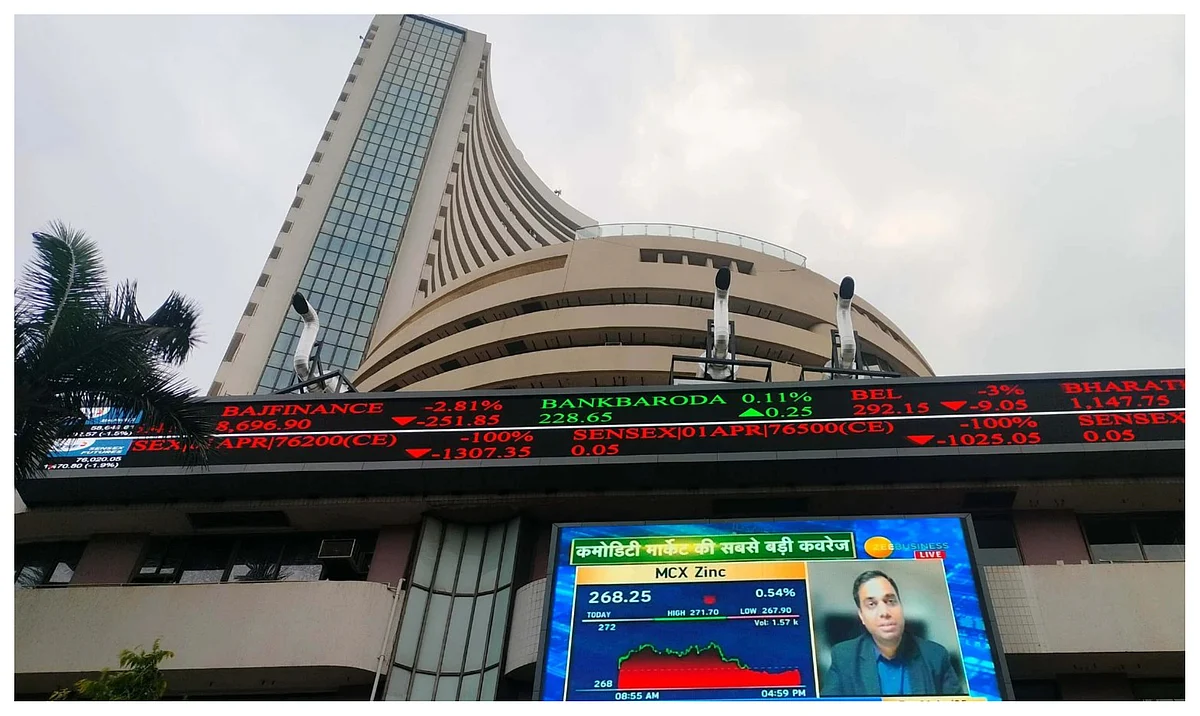
The Closing Auction Session, or CAS, is a special period used to set the final prices of some stocks.
On Thursday, the Sensex moved very sharply during this period.
It dropped more than 2,200 points and then recovered almost 2,000 points.
The Nifty also fell and recovered some of its losses, but its movements were smaller.
Shares such as Reliance Industries, HDFC Bank, ITC and Bharti Airtel also changed prices quickly.
The sharp movements happened on a derivatives expiry day.
Sebi introduced CAS to make closing prices more reliable and visible.
Sebi says indicative prices and a randomly timed close can reduce the effect of last-minute orders.
The regulator is studying feedback and may adjust the system if needed.

The Sensex fell more than 2,200 points and then recovered nearly 2,000 points during Thursday’s Closing Auction Session.
The Sensex closed at 76,934, down 539 points, while the Nifty ended at 24,091, down 117 points.
Reliance Industries, HDFC Bank, ITC and Bharti Airtel recorded sharp movements during the auction window.
The volatility occurred on the first monthly derivatives expiry since the new Closing Auction Session mechanism was introduced.
Sebi said CAS aims to improve closing-price discovery and is monitoring feedback for possible changes.
- Who
- The Sensex, Nifty, eligible stocks, market participants and the Securities and Exchange Board of India were involved.
- What
- The Sensex and several major stocks experienced sharp movements during the Closing Auction Session on a derivatives expiry day.
- Where
- On the Indian stock market, with the sharpest reported index movement occurring on the Bombay Stock Exchange.
- When
- On Thursday, mainly between about 3:18 pm and 3:30 pm.
- Why
- The movements occurred during the CAS window, which was introduced to improve closing-price discovery and reduce the influence of last-minute orders; the articles do not identify a specific cause for the swings.
Sebi’s rationale
Market volatility concerns
Purpose of CAS
Sebi’s rationale
Sebi says CAS strengthens price discovery and provides dependable closing prices for indices, passive investment products and mutual-fund NAV calculations.
Market volatility concerns
The large intraday movements during the CAS window raised concerns about how the mechanism behaves during periods such as derivatives expiry, although no specific cause or participant was identified.
Transparency and trading influence
Sebi’s rationale
Sebi says visible indicative prices and a randomly timed close improve transparency and reduce the ability of last-minute bids to influence closing prices.
Market volatility concerns
The reported swings show that substantial price movements can still occur during the auction period, even though the articles do not establish whether the mechanism caused them.
Future of the mechanism
Sebi’s rationale
Sebi Chairman Tuhin Kanta Pandey described CAS as a major market microstructure reform and said similar systems operate in several global markets.
Market volatility concerns
Sebi is monitoring market feedback and has acknowledged that CAS may need to be tweaked or improved.
Key facts
- Sensex CAS movement
- The index fell more than 2,200 points from 3:18 pm to 3:23 pm, then recovered nearly 2,000 points by 3:30 pm.
- Sensex close
- The Sensex finished at 76,934, down 539 points from the previous session.
- Nifty close
- The Nifty ended at 24,091, down 117 points.
- Reliance Industries movement
- The stock fell from around ₹1,280 to ₹1,250 before recovering to close at ₹1,288.
- CAS coverage
- CAS determines closing prices for around 200 stocks with active equity derivatives contracts; non-derivative stocks continue using a VWAP-based system.
- CAS features
- The mechanism uses indicative prices and a random closing time during an auction in which orders are matched.
- Regulatory response
- Sebi is engaging with market participants, monitoring feedback and has said the framework could be modified if necessary.
Quotes

Tuhin Kanta Pandey
Sebi chairperson
“CAS is a very big microstructure reform, and we have actually lagged behind. Many of our global counterparts have already done this. Japan did it in 2024, Hong Kong has done it, and it is there in the US, Germany, Europe and Australia.”
 businesstoday.in
“CAS is a transparent mechanism. Its pricing is always visible, and what is happening inside it is visible.”
businesstoday.in
Sources

Related news

Closing Auction Session Faces Volatility Despite Hopes For Stability

SEBI Keeps Closing Auction Session Unchanged Amid Expiry Volatility
Sensex CAS Concerns Grow as Thin Liquidity Exposes Market Vulnerabilities

Kirit Somaiya Urges SEBI to Suspend and Redesign CAS

India Draws Record $127 Billion Through Special FCNR Window

Major Banks Cut FCNR Deposit Rates After Subsidy Ends

Uber Driver Returns ₹37,000 Sent by Mistake, Refuses Reward

ICICI Bank Nears HDFC Bank as Nifty’s Top Influence

Brokerages Suggest HDFC Bank, PB Fintech, Parag Milk Foods
