

3 hrs ago
AI Buildout Financing Could Create Systemic Risks, Researcher Warns

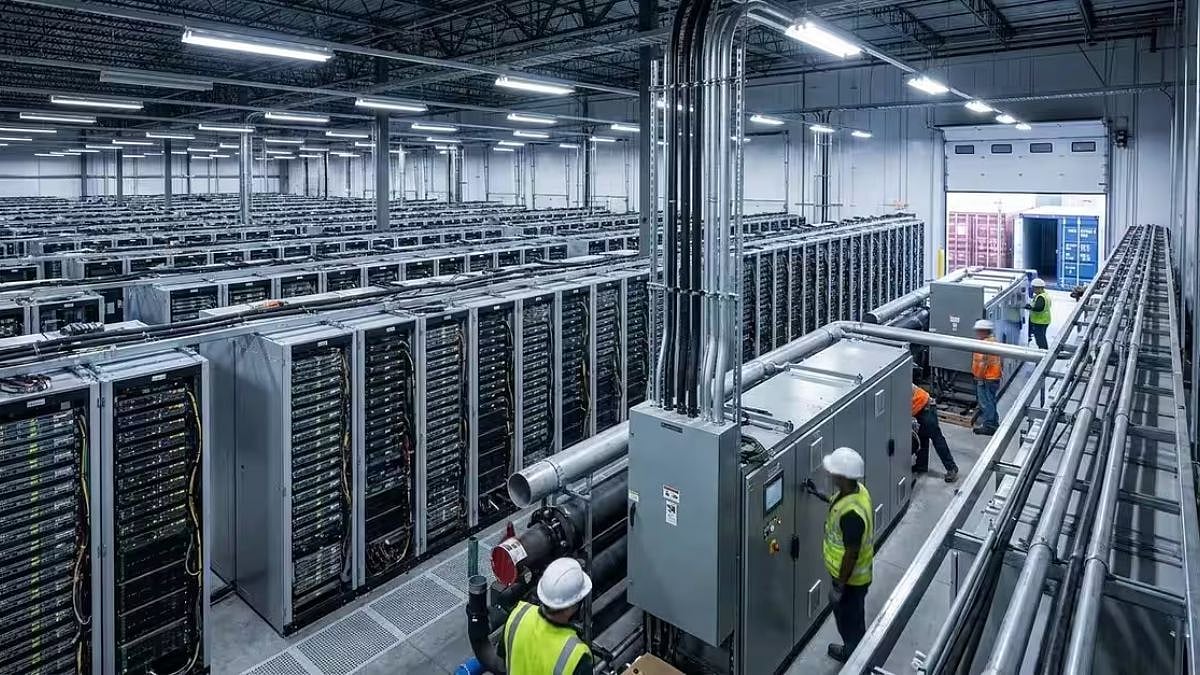
Companies are building many new computers and data centers to support artificial intelligence.
A researcher says this project could become larger than past expansions such as railroads, highways and the internet.
He estimates it could cost more than $10 trillion by 2032.
Companies first paid for the work with their own money, but they are now borrowing from banks and other lenders.
This makes the financial system more complicated and could spread losses if the AI business does not grow as expected.
The researcher compares the complicated financing to arrangements involved in the mortgage crisis.
He says a crisis is not certain because AI could become very useful and produce strong revenues.
However, AI companies may need to earn about $3.7 trillion each year by 2032 to meet expected investment returns.
Current estimated combined revenues for OpenAI and Anthropic are about $100 billion.

A Columbia Business School study estimates AI infrastructure could consume 3.6% of United States GDP annually through 2032.
The projected buildout would require more than $10 trillion and about 183 gigawatts of new data-center capacity.
AI companies are increasingly using outside financing as investment exceeds the major firms’ available cash flows.
Researcher Stijn Van Nieuwerburgh warns that leverage, opaque financing vehicles and unproven revenue streams could amplify a downturn.
AI revenues would need to reach about $3.7 trillion annually by 2032, compared with roughly $100 billion currently estimated for OpenAI and Anthropic combined.
- Who
- Stijn Van Nieuwerburgh, a finance and real estate professor at Columbia Business School, analyzed the risks; AI companies, technology firms, banks and other lenders are involved in the buildout.
- What
- A study warns that the scale and increasingly complex financing of AI infrastructure could create systemic financial risks.
- Where
- The analysis concerns the United States, including its AI and data-center construction markets.
- When
- The projected infrastructure spending covers the period through 2032, with about seven years of new data-center construction estimated.
- Why
- Investment is expanding beyond what major technology companies can fund from their own cash flows, increasing leverage and dependence on unproven AI revenues.
Systemic-risk concerns
Conditions supporting the buildout
Financial structure
Systemic-risk concerns
Van Nieuwerburgh says outside financing, high leverage and opaque special purpose vehicles could distribute risks across the economy and resemble elements of the subprime mortgage crisis.
Conditions supporting the buildout
The study does not say financial distress is imminent; strong AI application growth and high infrastructure use could generate stable cash flows.
Demand and revenues
Systemic-risk concerns
AI revenue streams remain unproven, and the industry may need to grow revenues from about $100 billion currently for OpenAI and Anthropic combined to $3.7 trillion annually by 2032.
Conditions supporting the buildout
Continued improvements in AI model capability and strong demand could support the projected infrastructure and investment returns.
Scale of construction
Systemic-risk concerns
The rapid expansion, execution bottlenecks and uncertain demand could cause a sharp reversal if expectations change.
Conditions supporting the buildout
The planned data-center capacity could be justified if AI adoption and utilization continue to increase.
Key facts
- Projected annual economic share
- About 3.6% of United States GDP through 2032
- Estimated total spending
- More than $10 trillion
- New data-center capacity
- About 183 gigawatts, compared with roughly 57 gigawatts currently installed
- Revenue needed by 2032
- Approximately $3.7 trillion annually to achieve expected investment returns
- Current combined OpenAI and Anthropic revenue estimate
- About $100 billion annually
- Required revenue growth
- Roughly 80% per year
- Historical comparison
- Railroad construction absorbed about 2.2% of annual GDP in the late 1800s; interstate highways and telecommunications each absorbed slightly more than 1% annually
Quotes
Stijn Van Nieuwerburgh
Columbia Business School finance and real estate professor
“These developments do not imply that financial distress is imminent. Strong growth in AI applications, high utilisation, and continued improvements in model capability could support the projected infrastructure and generate stable cash flows”
 CNBC TV 18
“This opacity of all these special purpose vehicles is somewhat reminiscent of what happened in the subprime mortgage crisis”
CNBC TV 18
Sources
Related news

AI Spending Boom Raises Risks for Markets and Economy

AI Boom Faces Debt, Funding and Cheaper Model Risks
US AI Infrastructure Investment May Reach $1.4 Trillion

History Suggests the Artificial Intelligence Bubble Won’t Burst Soon

US Tech AI Boom Drives Bond Surge, Raises Inflation Concerns

Amazon Bets $3 Billion on India’s Quick-Commerce Expansion

YouTube Expands India Shopping Network With Major E-Commerce Partners

AI, cost pressures and restructuring drive 2026 job cuts

Flipkart, Amazon Confirm 2026 Festive Sales, iPhone 17 Deals
