

10 hrs ago
US AI Infrastructure Investment May Reach $1.4 Trillion
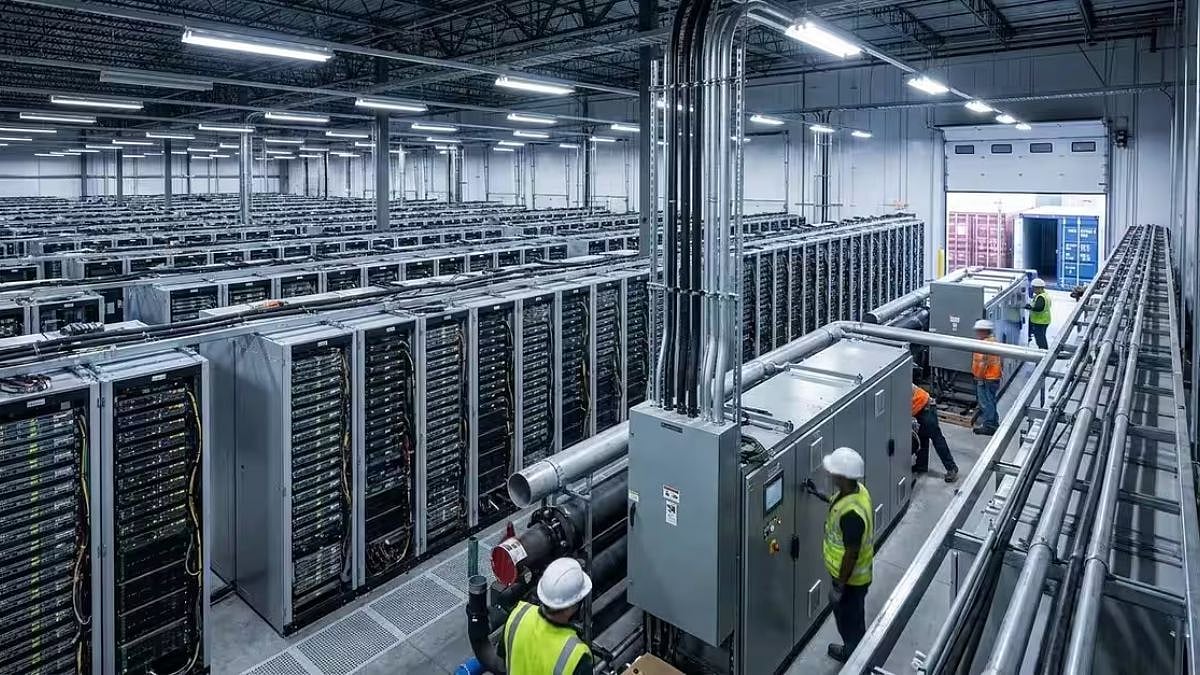
The United States is spending a lot of money to build the computers and data centers needed for artificial intelligence.
David Sacks said spending could reach $1.4 trillion next year.
He compared this construction boom to the railway boom of the 1800s.
He said AI could help create factories, improve the electricity grid and support new jobs.
Data centers need a great deal of electricity to operate.
Some communities worry they could raise electricity prices or affect local areas.
Sacks said companies could build new power plants to supply the centers instead of using existing community power.
He also said local communities should decide whether to accept data centers.
The discussion took place during a G20 session about using new technologies to grow economies.

US AI-related capital expenditure is expected to rise from about $800 billion this year to $1.4 trillion next year.
Former White House AI czar David Sacks compared the build-out with the 19th-century railway expansion.
Sacks said AI infrastructure could support US reindustrialization, grid modernization and advanced manufacturing.
He argued that data centers could reduce electricity costs if AI companies build new power-generation capacity.
Data centers remain politically contentious because of concerns about electricity prices and effects on local communities.
- Who
- David Sacks, a former White House AI czar, told G20 representatives about projected US AI infrastructure investment.
- What
- US investment in AI-related infrastructure is expected to increase to $1.4 trillion next year from about $800 billion this year.
- Where
- The comments were made at a G20 emerging-technologies session; the investment and data-center discussion concerns the United States.
- When
- The investment is expected to reach $1.4 trillion next year; the comments were made during a G20 session.
- Why
- The investment is being driven by companies expanding data centers and computing capacity for developing and operating AI.
AI Expansion and Local Benefits
Community and Infrastructure Concerns
Economic impact
AI Expansion and Local Benefits
Sacks said the AI build-out could support reindustrialization, advanced manufacturing and hundreds of thousands of construction and skilled-trade jobs.
Community and Infrastructure Concerns
The article notes political contention over the rapid construction of data centers and their effects on local communities.
Electricity costs
AI Expansion and Local Benefits
Sacks argued that AI companies could build new generation capacity, lower power costs and return surplus electricity to the grid.
Community and Infrastructure Concerns
Critics are concerned that data centers could affect electricity prices and compete with residents for power from the existing grid.
Government policy
AI Expansion and Local Benefits
Sacks urged governments to nurture the AI boom and avoid regulations that could restrict it.
Community and Infrastructure Concerns
He also emphasized that accepting data centers is fundamentally a local decision and that the federal government had not compelled communities to do so.
Key facts
- Projected investment next year
- $1.4 trillion in US AI infrastructure
- Estimated investment this year
- About $800 billion in US AI-related capital expenditure
- Speaker
- David Sacks, former White House AI czar
- Comparison
- Sacks compared the build-out with the US railway expansion of the 1800s.
- Potential benefits
- Reindustrialization, electricity-grid modernization and advanced manufacturing
- Local example
- Sacks cited Loudoun County, Virginia, as a major US data-center market.
- Local decision-making
- Sacks said communities, rather than the federal government, should decide whether to accept data centers.
Quotes

David Sacks
Former White House AI czar speaking at a G20 emerging-technologies session
“It is fundamentally a local decision, and we respect that and have done nothing to change that even though we do think that ultimately there is a good deal to be had there for local communities if they lean into it.”
 freepressjournal.in
“You have to go all the way back to the railroads in the 1800s to see something of equal scale.”
freepressjournal.in
Sources
Related news
AI Data Centres Turn Power Bills Into 2026 Election Issues

Trump Links Data Centre Opposition to China AI Advantage
AI Data Center Expansion Faces Growing U.S. Backlash
Nvidia CEO Says AI Is Reindustrialising America, Reviving Jobs

Nvidia in talks to invest $3 billion in SB Energy
