

8 hrs ago
AI’s Trillion-Dollar Bet Depends on Productivity Gains Arriving

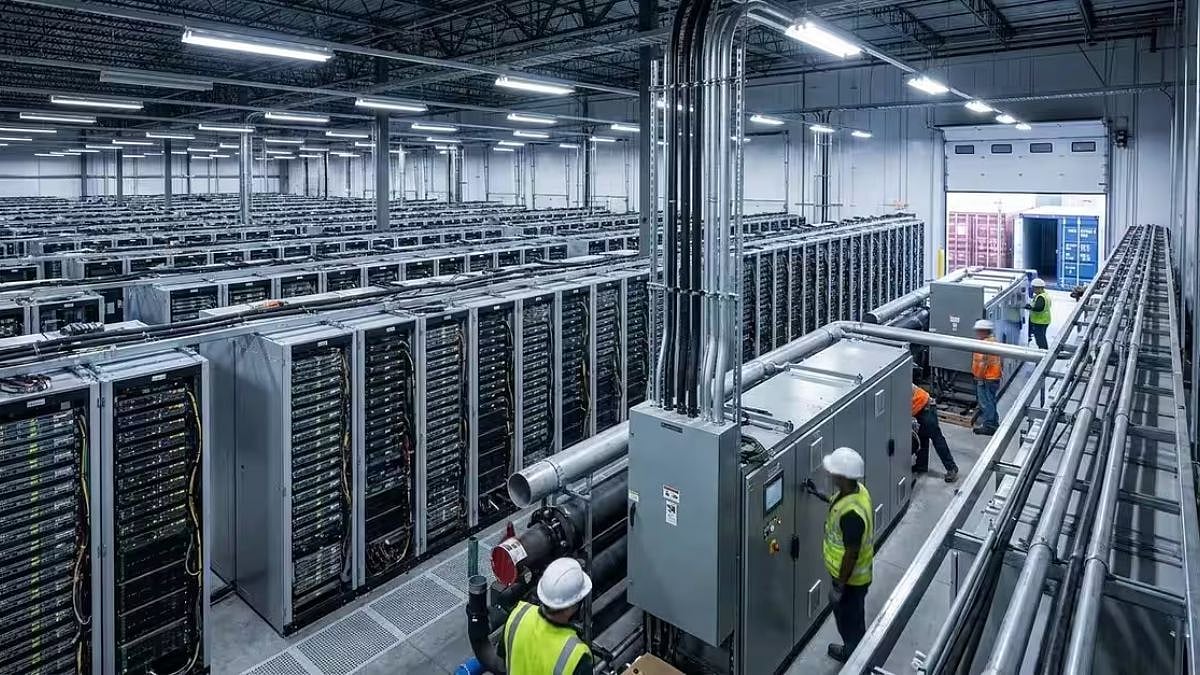
Companies are spending enormous amounts of money to build AI systems and the data centres they need.
They hope AI will help people and businesses do much more work, creating enough money to repay the investment.
But experts say those benefits have not yet appeared broadly, and it is unclear whether they will arrive quickly enough.
Some estimates say businesses will need to earn trillions of dollars from AI.
AI leaders expect rapid progress, including systems that could help improve themselves.
Economists warn that new technology can take many years to change the whole economy.
Some research also finds fewer young workers in certain jobs that AI may be able to do.
Even if investment disappoints, the infrastructure could still be useful later, as railways and the internet continued to be used after earlier investment booms ended.

PwC projects global data-centre spending could exceed $30 trillion by 2050, while Anthropic plans $518 billion in spending in coming years.
Analysts say current markets may not generate enough revenue to support AI infrastructure investments, making new markets and applications important.
JPMorgan estimated US productivity growth would need to reach 3% to 5% annually for a decade to justify Nvidia’s valuation, above a 1.75% baseline forecast.
Columbia Business School economist Stijn Van Nieuwerburgh estimates US AI investment could reach about $9 trillion from 2025 to 2032, requiring roughly $3.55 trillion in annual sector revenue by 2032 for a 10% return.
Researchers report weaker early-career hiring in some AI-exposed jobs, while economists note that benefits from past transformative technologies often took 10 to 50 years to appear.
- Who
- AI companies and infrastructure providers, investors, economists, and workers in some AI-exposed occupations.
- What
- A massive AI investment boom faces uncertainty over whether productivity gains and revenues will arrive soon enough to justify the spending.
- Where
- Globally, with particular attention to the United States, which the article says accounts for about three-quarters of global AI investment by some estimates.
- When
- The article discusses current investment plans and projections through 2050, including US investment from 2025 to 2032.
- Why
- Companies are investing in AI infrastructure in expectation of major productivity gains and future profits, but the scale and timing of those returns remain uncertain.
Reasons for optimism
Reasons for caution
Potential economic transformation
Reasons for optimism
AI leaders say the technology could produce major advances and productivity gains, including through systems that improve themselves.
Reasons for caution
Economists say broad-based productivity gains remain elusive, and existing markets may not justify the current scale of spending.
Investment returns and timing
Reasons for optimism
Supporters expect new AI applications and markets to create future revenue and leave useful infrastructure in place, even if the boom falters.
Reasons for caution
Analysts warn that applications may not arrive in time to fund infrastructure, while debt financing can magnify losses if demand, timelines, or asset values deteriorate.
Effects on employment
Reasons for optimism
The article notes that overall employment remains strong and describes current effects on job seekers as limited.
Reasons for caution
Some researchers report slower early-career hiring in white-collar roles exposed to AI; Anthropic’s economics team also said higher-growth scenarios would mean more jobs lost.
Key facts
- Projected global data-centre spending
- Could exceed $30 trillion by 2050, according to a PwC projection.
- Anthropic spending plan
- $518 billion in coming years, according to an IPO prospectus seen by Reuters; more than 100 times its 2025 revenue.
- Revenue funding gap
- Bain & Company said US hyperscalers and other AI companies need more than $4.2 trillion in new revenue over five years to fund the buildout.
- US AI investment estimate
- About $9 trillion from 2025 to 2032, or 3.2% of US GDP each year, according to Stijn Van Nieuwerburgh.
- Estimated revenue for a 10% return
- The US AI sector would need about $3.55 trillion in annual revenue by 2032, according to Van Nieuwerburgh.
- Productivity growth cited by JPMorgan
- 3% to 5% annually over 10 years to justify Nvidia’s valuation, compared with a 1.75% baseline expectation from the US Congressional Budget Office.
- Early-career employment finding
- Stanford researchers said employment among workers aged 22 to 25 in AI-exposed industries was 19% lower than in jobs they considered harder for AI to replicate.
- Historical technology timeline
- Economist Diane Coyle said productivity effects from past revolutionary technologies have usually taken about 10 to 50 years to feed through.
Quotes
Bain & Company study
A study assessing AI infrastructure investment and the revenue needed to fund it.
“Historical precedent suggests that technology-driven booms often end when infrastructure buildouts cease to deliver sufficient returns.”
 indianexpress.com
“The question is whether the applications arrive in time to pay for it.”
indianexpress.com

Diane Coyle
An economist at the University of Cambridge.
“History is our friend in trying to understand this. As long as one is left with the infrastructure that’s needed to support all the productivity effects down the road, that’s okay.”
indianexpress.com
Sources
Related news
Bain Says AI Needs $6 Trillion Revenue to Sustain Boom

Bain Says AI Market Must Reach $6 Trillion By 2031

AI Buildout Financing Could Create Systemic Risks, Researcher Warns

AI Spending Boom Raises Risks for Markets and Economy

Anthropic IPO Prospectus Reveals Vast AI Ambitions and Costs
