1 hr ago
AI Faces $6 Trillion Annual Revenue Test for Data Centers
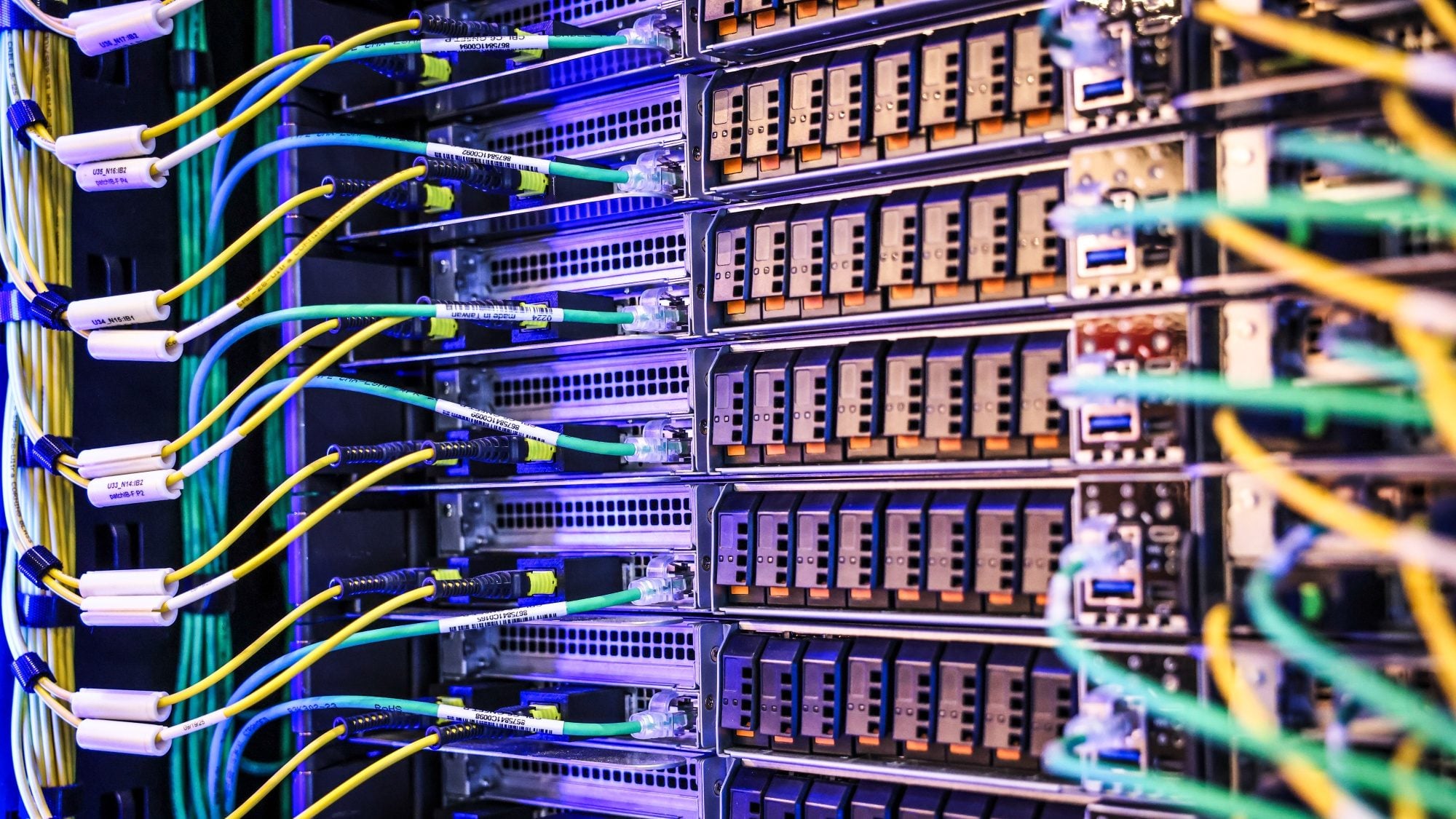
Companies are spending enormous amounts of money to build computer centers for artificial intelligence.
Bain says the AI industry may need to earn $6 trillion every year by 2031 to make that spending worthwhile.
Current AI products might provide up to $1.8 trillion of that money.
The rest would need to come from new uses for AI.
These could include robots, self-driving machines, medicine, mental health and energy.
Data centers are becoming larger and more expensive very quickly.
They also need large amounts of electricity, water, equipment and computer chips.
Some projects have been delayed because communities oppose them or supplies are limited.
Critics are concerned that the expected financial returns from AI have not yet been clearly demonstrated.

Bain says the global AI industry needs $6 trillion in annual revenue by 2031 to justify current data-center investment.
Existing consumer and enterprise AI services could generate up to $1.8 trillion, leaving $4.2 trillion from new markets.
Potential growth areas include autonomous machines, robotics, drug discovery, mental health and energy generation.
Bain projects $5 trillion to $6.5 trillion in data-center spending by 2030 and up to $1.5 trillion annually on AI infrastructure by 2031.
Developers face shortages of transformers, water and power, while local opposition blocked or delayed $68 billion of U.S. projects in the June quarter.
- Who
- Bain & Company, along with major technology companies investing in AI data centers, including Microsoft, Google, Amazon.com, Meta Platforms and Oracle.
- What
- Bain estimates that AI must generate $6 trillion in annual revenue by 2031 to justify the capital being invested in data centers.
- Where
- Globally, with the report noting project blockages and delays in the United States.
- When
- The estimate targets 2031; Bain’s report also projects data-center spending through 2030.
- Why
- To make the rapidly expanding and costly AI infrastructure buildout financially sustainable.
Bain’s investment case
Critics’ concerns
Whether AI can justify infrastructure spending
Bain’s investment case
Bain says new revenue from autonomous machines, robotics, drug discovery, mental health and energy generation could help the industry reach the required scale.
Critics’ concerns
Critics question the still-elusive returns for AI service providers and worry that interconnected technology dependencies are inflating expectations and investment.
Economic impact
Bain’s investment case
Bain says funding AI infrastructure sustainably will require innovation capable of adding roughly 1% to annual global GDP growth.
Critics’ concerns
The report indicates that productivity gains alone will not provide enough revenue to support the infrastructure being built.
Expansion pace
Bain’s investment case
Technology companies are rapidly expanding data-center capacity to meet rising demand for AI computing resources.
Critics’ concerns
Developers face shortages of transformers, water and power, while local opposition has delayed or blocked projects.
Key facts
- Revenue target
- $6 trillion in annual global AI revenue by 2031
- Potential existing revenue
- Consumer and enterprise AI services may generate up to $1.8 trillion
- New revenue needed
- About $4.2 trillion would need to come from emerging AI markets
- Data-center spending by 2030
- Bain projects $5 trillion to $6.5 trillion
- Annual AI infrastructure spending by 2031
- May reach up to $1.5 trillion
- Capacity increase
- At least 150 gigawatts of additional capacity may be needed
- U.S. project delays
- Local opposition blocked or delayed $68 billion in projects during the June quarter
Quotes
David Crawford
Lead author of Bain’s report and chairman of its Global Technology, Media, and Telecommunications practice
“AI infrastructure is being built well ahead of the demand curve and funding it sustainably will require adding approximately 1% to the annual global GDP growth rate.”
 theprint.in
“What the industry needs is a wave of innovation that will dwarf what mobile and cloud unlocked.”
theprint.in
Sources
Related news

AI Infrastructure Investment May Reach $769 Billion Amid Safety Concerns

India’s AI Expansion Faces Growing Power and Infrastructure Demands
US AI Infrastructure Investment May Reach $1.4 Trillion

US AI Boom Requires $110 Billion for New Power Plants

OpenAI Forecasts $278 Billion Cash Burn Through 2030

AMD Joins Trillion-Dollar Club as AI Optimism Drives Rally
Global Semiconductor Market Set to Surpass $1.6 Trillion

China's CXMT Reaches Advanced Memory Production Despite Export Controls
CXMT Says Fifth-Generation Memory Platform Enters Mass Production