

2 hrs ago
Robotics and AI to Advance India’s Precision Healthcare
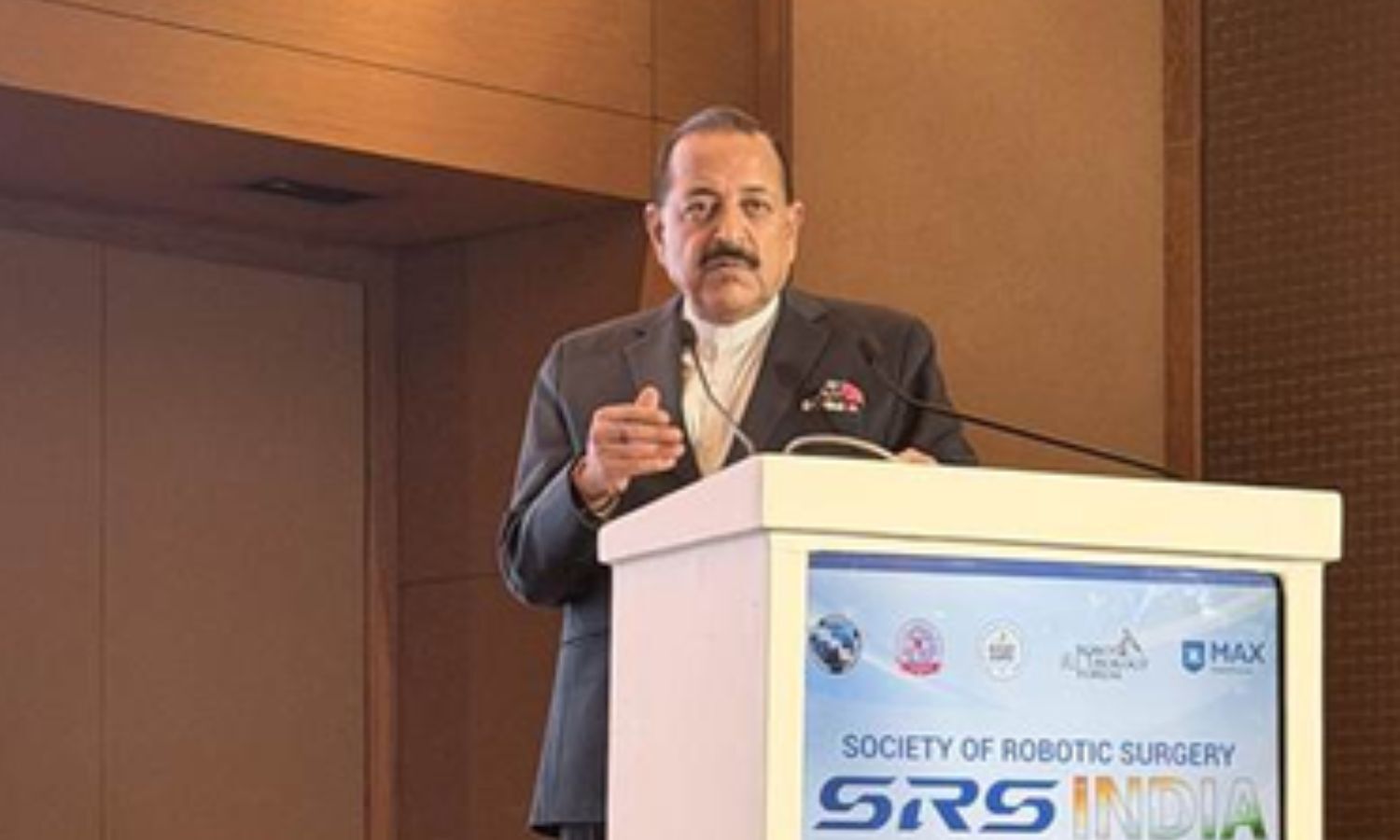
Dr. Jitendra Singh said robots may soon help doctors with much more than surgery.
They could assist with finding illnesses, treating patients and providing therapy.
Artificial intelligence could help doctors study large amounts of health and genetic information.
Nanoscience may help medicines reach the right places in the body.
Future treatments could be designed for each person instead of using the same approach for everyone.
Doctors may consider a person’s genes, lifestyle, diet and surroundings.
India has already sequenced the genes of 10,000 people through the Genome India Programme.
Singh said these technologies could help India build more personalised healthcare.

Dr. Jitendra Singh said robotics will expand beyond surgery into diagnostics, treatment and therapy.
He said robotics, artificial intelligence and nanoscience could form an integrated healthcare ecosystem.
Precision treatment may increasingly consider genetics, lifestyle, diet and environmental factors.
The Genome India Programme has sequenced 10,000 individuals, Singh said.
He highlighted nanomedicine and oral-insulin research as potential tools for improving treatment and drug delivery.
- Who
- Union Minister of State Dr. Jitendra Singh, a physician and diabetologist, addressed the conference.
- What
- He discussed how robotics, artificial intelligence and nanoscience could drive precision and personalised healthcare in India.
- Where
- The International Conference of the Society of Robotic Surgery, SRS India 2026, in New Delhi.
- When
- Friday; the article does not specify the date.
- Why
- These technologies could support customised diagnosis, treatment and therapy based on patients’ genetic, lifestyle, dietary and environmental characteristics.
Key facts
- Speaker
- Dr. Jitendra Singh
- Event
- International Conference of the Society of Robotic Surgery, SRS India 2026
- Location
- New Delhi
- Genome sequencing
- 10,000 individuals have been sequenced under the Genome India Programme
- Technologies highlighted
- Robotics, artificial intelligence, nanoscience, biotechnology, nuclear medicine and nanotechnology
- Potential applications
- Diagnostics, treatment, therapy, personalised medicine and drug delivery
- Population scale
- Genetic data management would involve a population of over 1.4 billion
Sources
Related news

Bill Gates Says AI Could Help India’s Vulnerable

Why Medical Students Must Learn Robotics Early

Intuitive Introduces da Vinci 5 for India’s Robotic Surgery
Telangana Plans Health Innovation Hub Through Technology Collaboration
Indian Surgeons Seek Insurance Coverage to Lower Robotic Surgery Costs

NHS England Chair Says India Could Model Efficient Healthcare

33 Bengal Tourists Injured After Bus Overturns In Ramban
Naidu to Inaugurate Southern States Mission Karmayogi Workshop
CSIR-NIIST, Tata Consumer Products to establish food fortification centre
Nadda Delays Upper-Caste Protest as Reservation Tensions Persist
