2 weeks ago
Putin's Kuril Islands Visit Triggers Sharp Japanese Protest
Two neighboring countries, Russia and Japan, both say some faraway islands belong to them.
The islands are called the Kuril Islands, and Japan calls them the Northern Territories.
Long ago, the islands were Japanese, but Russia took them at the end of World War II.
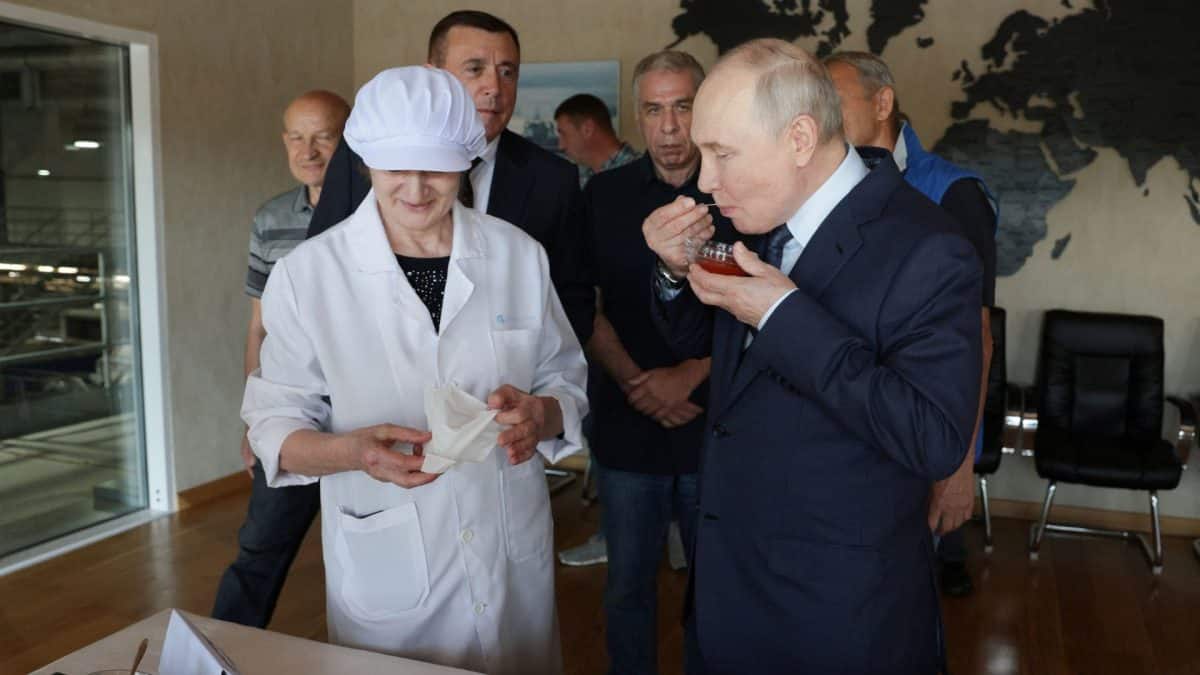
The Russian leader, Vladimir Putin, recently visited the biggest island, called Iturup.
He toured a fish factory and talked with people who live there.
Japan's leader said this made Japanese people upset and that the visit was not acceptable.
Japan officially complained to Russia about the visit.
Russia says the islands are its own and will not give them back.
The two countries still have not signed a peace treaty since World War II because of this fight.
So far, neither side has agreed on who should own the islands.

Russian President Vladimir Putin made his first-ever visit to the disputed Kuril Islands, stepping onto Iturup Island (Etorofu) on Wednesday.
Japan lodged an official diplomatic protest; Prime Minister Sanae Takaichi called the islands an "inherent part of Japan's territory" and the visit "absolutely unacceptable."
The visit is the first by a Russian head of state to the disputed chain since 2010, signaling Moscow views its sovereignty as non-negotiable.
Before landing on Iturup, Putin inspected Russian Pacific Fleet naval exercises off Sakhalin Island and boarded the missile cruiser Varyag.
The trip came amid strained Japan-Russia ties over the Ukraine war, Western sanctions, closer Russia-China and Russia-North Korea ties, and a North Korean ballistic missile launch the day before.
- Who
- Russian President Vladimir Putin; Japanese Prime Minister Sanae Takaichi and Foreign Minister Toshimitsu Motegi, who lodged Japan's protest.
- What
- Putin visited Iturup Island (Etorofu), touring the Yasny fish-processing complex and signaling that Moscow regards sovereignty over the Kuril Islands as non-negotiable.
- Where
- Iturup Island, the largest of the four southern Kuril Islands claimed by Japan, off Hokkaido; the trip began with Pacific Fleet exercises off Sakhalin Island.
- When
- Wednesday, reported on August 13, 2026; the first visit by a Russian head of state to the islands since 2010.
- Why
- To reinforce Russian control over the disputed territory and highlight Moscow's security and economic investment in the islands, reviving a decades-old territorial dispute with Japan.
Japan's Position
Russia's Position
Sovereignty over the islands
Japan's Position
The Northern Territories are an inherent part of Japan's territory, both historically and under international law.
Russia's Position
Russian sovereignty over the Kuril Islands is non-negotiable; Putin's visit affirms Moscow's control and development of the islands.
Cause of the diplomatic breakdown
Japan's Position
Japan joined G7 sanctions and backed Ukraine after Russia's 2022 invasion, which it sees as the source of the rupture.
Russia's Position
Putin says Japan's shift was completely unprovoked, claiming Russia is not threatening Japan while Japan holds territorial claims against it.
Path to resolving the dispute
Japan's Position
True peace requires resolving ownership of all four southern islands, followed by signing a formal post-WWII peace treaty.
Russia's Position
Moscow froze peace treaty talks and visa-free programmes after Japan's sanctions, a 2020 constitutional amendment bans ceding Russian territory, and Russia cites concerns over the US-Japan defence alliance.
Key facts
- Disputed territory
- Four southern Kuril Islands: Iturup (Etorofu), Kunashir, Shikotan, Habomai Islets
- Island chain
- 56 islands and rocks extending ~1,200 km (750 miles) across the North Pacific
- Population
- ~20,000 Russian residents today; ~17,000 Japanese lived there before the 1945 Soviet occupation
- Putin's visit
- First by a Russian head of state since 2010; toured the Yasny fish-processing complex on Iturup
- Japan's response
- Official diplomatic protest lodged with the Russian Embassy and through channels in Moscow
- Peace treaty status
- No post-WWII peace treaty; the 1956 Joint Declaration offered transfer of Shikotan and Habomai, never concluded
- Abe-era diplomacy
- Shinzo Abe's 2016-2019 talks on joint development stalled over security concerns
- Strategic value
- Sea of Okhotsk 'bastion' for Russian ballistic missile submarines; Russia fears United States forces could deploy to returned islands
Quotes
Japanese Foreign Minister Toshimitsu Motegi
Japan’s Foreign Minister
“"The Northern Territories are an inherent part of Japan’s territory, both historically and under international law," and "President Putin’s visit offends the sentiments of the Japanese people and is absolutely unacceptable."”
 firstpost.com
“"Japan has formally lodged a strong protest with the Russian Embassy in Japan and through diplomatic channels in Moscow."”
firstpost.com
Sources
Related news

Putin visits disputed Kuril Islands, samples fish roe, Japan protests
Japan Protests Putin's First Visit to Disputed Islands
Putin's Kuril visit deepens Russia-Japan rift as India watches

Russia protests to Japan's envoy over Takaichi's anti-Russian remarks

US backs Japan sovereignty as Putin visits disputed Northern Territories