

2 weeks ago
RBI Proposes New Loan Interest-Rate Framework, Tighter Floating-Rate Rules
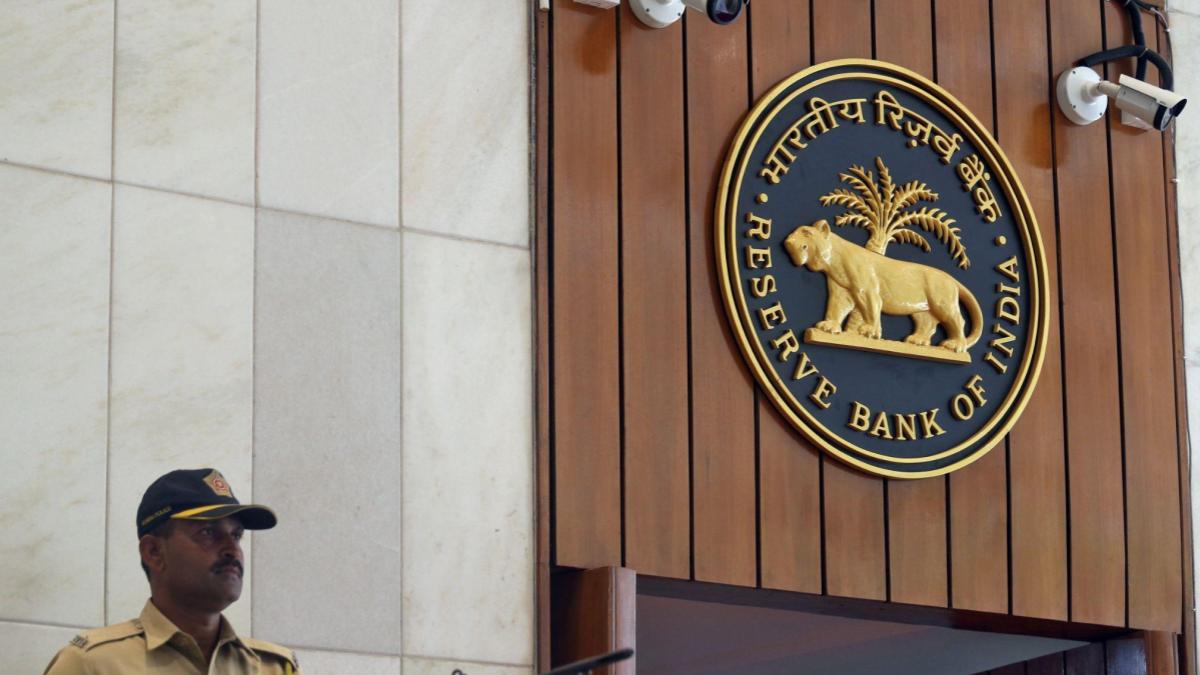
The Reserve Bank of India is the group that watches over money and banks in India.
It has proposed a new rulebook about how banks and other lenders charge interest on loans.
A loan is money you borrow and pay back over time, and interest is the extra money you pay for borrowing it.
Some loans have fixed interest that stays the same, while others have floating interest that can go up or down.
The RBI wants banks to explain clearly how they decide loan interest rates and when those rates can change.
Under the proposed rules, floating interest rates would be reviewed at least every three months.
Banks would not be able to change extra charges on a loan whenever they want.
People who already have floating-rate loans would move to the new rules by April 1, 2029, without paying more.
The new rules would start on April 1, 2027, if they are approved.

The Reserve Bank of India has proposed the draft Interest Rates on Loans and Advances Directions, 2026, which would take effect from April 1, 2027 if finalised.
The framework covers commercial banks, regional rural banks, cooperative banks, all-India financial institutions and non-banking financial companies, including housing finance companies.
Floating-rate loans must reset at least once every three months against a disclosed benchmark, with the reset frequency normally fixed for the loan's tenure.
Lenders may revise the credit-risk premium only when a borrower's credit profile changes, and other spread components no more than once every three years.
Existing floating-rate loans must migrate to the framework by April 1, 2029, with borrower consent and no increase in interest rate or additional charges.
- Who
- The Reserve Bank of India (RBI), India's central banking regulator
- What
- Proposed the draft Interest Rates on Loans and Advances Directions, 2026, a common framework for how lenders set and revise loan interest rates
- Where
- India, covering the domestic operations of banks, all-India financial institutions and NBFCs
- When
- Draft released in 2026; proposed to take effect from April 1, 2027, with comments due by September 11, 2026
- Why
- To improve monetary-policy transmission, bring transparency to loan pricing and promote fair treatment of borrowers
Key facts
- Regulator
- Reserve Bank of India (RBI)
- Draft framework
- Reserve Bank of India (Interest Rates on Loans and Advances) Directions, 2026
- Proposed effective date
- April 1, 2027
- Migration deadline for existing loans
- April 1, 2029
- Floating-rate reset
- At least once every three months; up to 12 months for agricultural loans
- Spread revision rule
- Credit-risk premium only on credit profile change; other components once every three years
- Comments deadline
- September 11, 2026
- Scope
- Commercial banks, regional rural banks, cooperative banks, all-India financial institutions and NBFCs, including housing finance companies
Sources
Related news
RBI's Reset of Loan and Deposit Interest Rate Norms

RBI proposes tighter loan pricing rules for banks and lenders
RBI proposes three-month loan rate resets for faster EMI relief

RBI to standardize lending rate rules for transparency, consumer protection

RBI Proposes Loan Pricing Rules to Improve Borrower Transparency

RBI proposes new MCLR formula on 3-month moving average
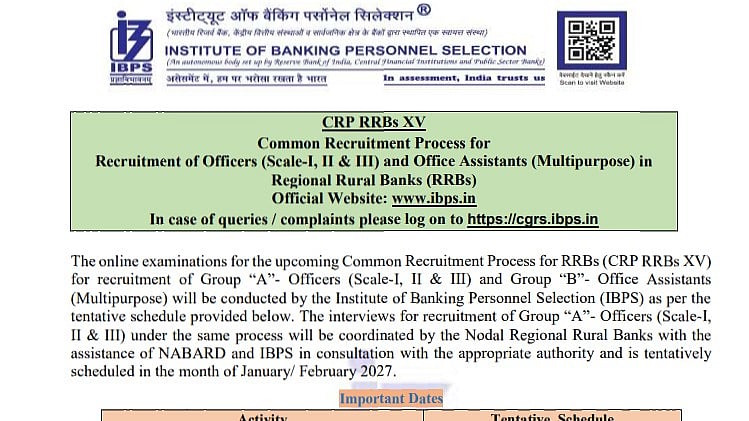
IBPS RRB Recruitment 2026 Registration Opens With Exam Schedule

NABARD, IMD Partner to Deliver Weather Intelligence to Farmers

IBPS RRB 2026 Applications Open Amid Vacancy Count Differences

Anantapur Leaders Discuss Expanded Banking Services for Rural Communities

Bhopal Power Supply Disruptions Listed For September 1
